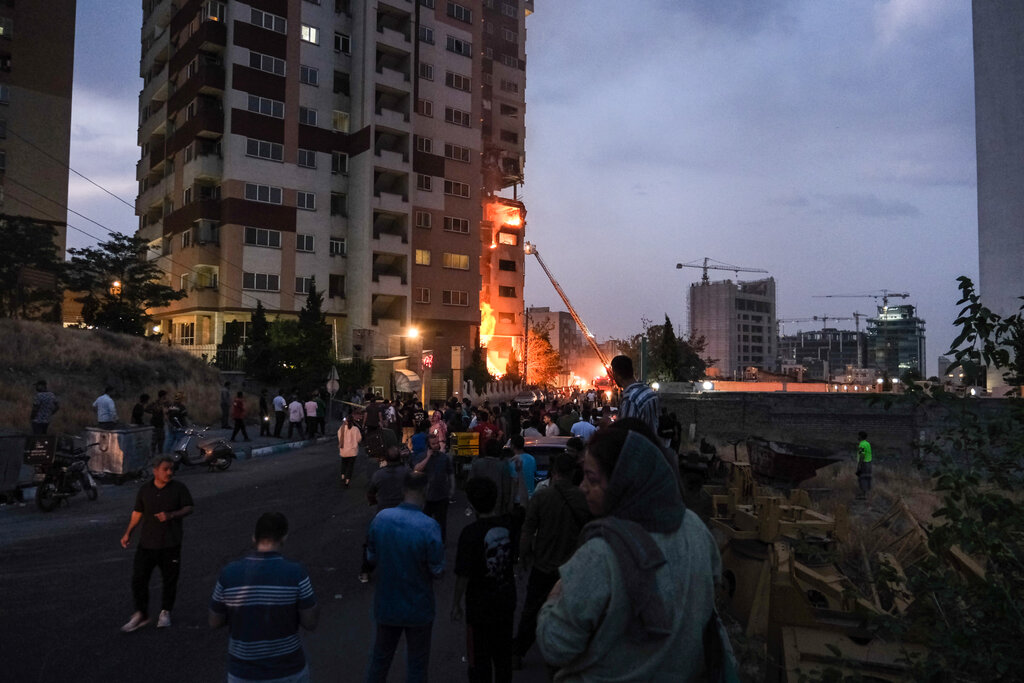
The Israeli military conducted new strikes on targets in the Iranian capital Tehran on Sunday evening, following the detection of seven missile launches from Iran during the day. These strikes come at a sensitive time, as tensions between Israel and Iran escalate, raising fears of military escalation in the region.
In detail, Israeli military sources reported that the strikes targeted military and security sites in Tehran, believed to be linked to Iran's nuclear program. These strikes were carried out late Sunday evening, reflecting an Israeli strategy aimed at undermining Iranian military capabilities before the situation escalates to more dangerous levels.
Details of the Incident
The Israeli forces announced that they had detected seven missile launches from Iranian territory, prompting immediate action. The strikes targeted sites believed to be used for missile and weapon development, which is considered a direct threat to Israeli security. These strikes followed a series of escalating tensions between the two sides, with Israel accusing Iran of seeking nuclear capabilities that threaten regional stability.
Reports also indicated that Iranian air defenses attempted to counter the strikes, but it remains unclear how successful they were. These attacks have heightened concerns in Tehran, where the Iranian government views these strikes as a violation of its sovereignty.
Background & Context
Historically, relations between Israel and Iran have seen increasing tensions since the Islamic Revolution in 1979. Israel has taken several military steps against Iran, including past attacks on nuclear facilities. In recent years, Iran has increased its support for armed groups in the region, raising Israel's concerns about the potential for a comprehensive military conflict.
In this context, the Israeli strikes come as part of a broader strategy aimed at preventing Iran from acquiring nuclear weapons. Israel has repeatedly stated that it will not allow Iran to develop nuclear capabilities, which it considers an existential threat.
Impact & Consequences
These strikes represent a serious development that could lead to greater military escalation in the region. Iran may respond to these strikes with retaliatory operations, potentially leading to a cycle of violence. Additionally, these events could affect relations between major powers, especially with ongoing negotiations regarding the Iranian nuclear program.
Furthermore, these strikes could increase tensions between Iran and its regional allies, threatening the stability of countries like Iraq, Syria, and Lebanon. Concerns about the outbreak of a comprehensive military conflict in the Middle East may intensify.
Regional Significance
These developments are of significant importance to Arab countries, which are directly affected by regional conflicts. The increasing tensions between Iran and Israel could lead to negative repercussions on security and stability in the region, especially given the presence of competing powers in Iraq and Syria.
Moreover, these events may impact relations between Arab countries and Iran, as some nations may find themselves compelled to deal with the consequences of military escalation. It is crucial for Arab states to remain informed about these developments and take proactive steps to protect their interests.
In conclusion, the situation in the region remains tense, and the international community must act swiftly to prevent further escalation that could lead to catastrophic outcomes.