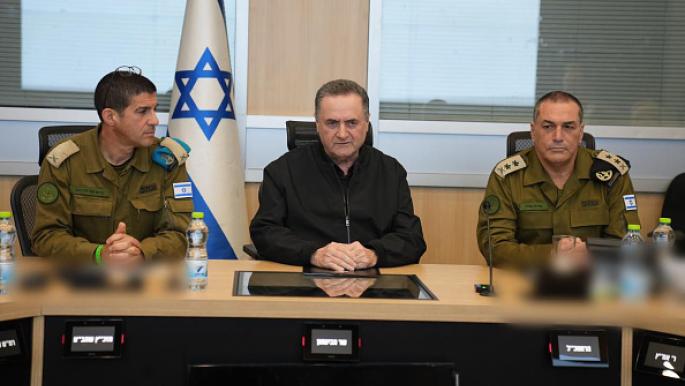
As security tensions in the region escalate, Israeli Security Minister Israel Katz has threatened Hezbollah's Secretary-General Naim Qassem with severe consequences due to the rising rocket fire from Lebanese territory. These statements come at a critical time, as fears of a potential military escalation between the two sides grow.
The tensions between Israel and Hezbollah have intensified, with reports indicating an increase in the number of rockets being fired from Lebanon towards Israeli territory. Katz confirmed that these actions would not go unpunished, stating that Hezbollah would face dire consequences for its actions.
Details of the Incident
Katz's remarks come at a time when the security situation in the region is noticeably tense. Reports have shown that Hezbollah has ramped up its military activities, raising concerns among Israeli authorities. In this context, Katz emphasized that Israel would take all necessary measures to protect its citizens, and any attack on its territory would be met with a strong response.
At the same time, Hezbollah did not delay in responding to these threats, with Qassem asserting that the party is prepared to confront any escalation from the Israeli side. This exchange of threats reflects the rising tensions between the two parties, increasing the likelihood of military escalation in the region.
Background & Context
Historically, the Lebanese-Israeli border has witnessed numerous armed conflicts, with Hezbollah being one of the most prominent armed factions in Lebanon, enjoying significant popular support. Since the 2006 war, relations between Israel and Hezbollah have been marked by ongoing tension, with several rounds of fighting occurring between the two sides.
The rockets fired from Lebanon are part of Hezbollah's strategy to confront Israel, which also includes guerrilla warfare tactics. However, the recent escalation indicates a shift in the dynamics of the conflict, which could lead to greater repercussions for regional security.
Impact & Consequences
The repercussions of these threats extend beyond Lebanese borders, potentially affecting stability across the entire region. Should matters escalate into military confrontation, it could lead to a refugee influx and increased tensions among neighboring countries.
Moreover, military escalation may open the door for international interventions, as major powers like the United States and Russia may seek to mediate in the conflict. Such intervention could significantly impact the unfolding events in the region, complicating the security situation further.
Regional Significance
These tensions are part of the larger picture of the Arab-Israeli conflict, contributing to divisions within the Arab world. Additionally, the escalation between Israel and Hezbollah may affect relations between Arab countries and Iran, which significantly supports Hezbollah.
Ultimately, the situation in Lebanon and Israel remains volatile, necessitating a diplomatic solution to avoid a military escalation that could have dire consequences for the entire region.