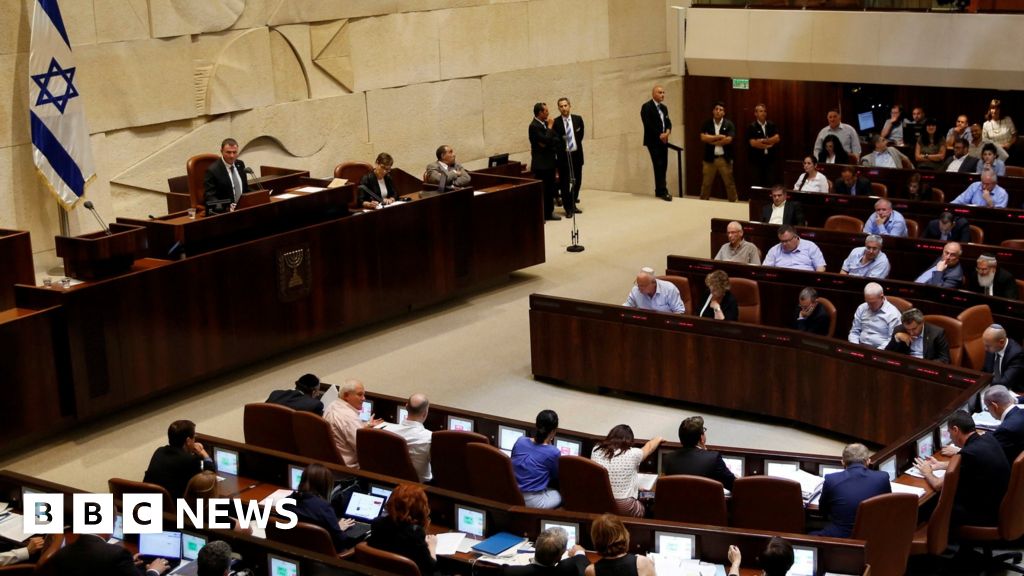
The Israeli parliament approved a law on Tuesday that permits the execution of Palestinian prisoners convicted of murder, igniting widespread controversy within Palestinian and international circles. This law is viewed as a provocative step in Israeli policies towards Palestinians, coinciding with rising tensions in the occupied territories.
The new law, which was passed by a majority of votes from the members, aims to intensify penalties for prisoners accused of committing acts of violence against Israelis. This legislation is part of the current Israeli government's policy, which adopts a more hardline approach to the Palestinian issue, raising concerns about the worsening situation in the region.
Details of the Legislation
The law was approved following heated discussions within the parliament, where some lawmakers expressed their concerns about its implications for security and peace in the region. The law stipulates the possibility of executing prisoners convicted of killing Israelis, which many consider a violation of human rights.
In contrast, the Israeli government defended this law, stating that it is aimed at protecting Israeli citizens from attacks. The Minister of Internal Security indicated that this law would contribute to deterring any future attempts to commit acts of violence against Israelis.
Background & Context
Historically, laws concerning the death penalty have been a contentious issue in Israel, having been enacted in very rare cases. However, the rise in violence in recent years, including armed attacks targeting civilians, has led to increased pressure on the government to adopt stricter policies.
This law comes at a sensitive time, as the Palestinian territories are witnessing escalating tensions between Palestinians and Israelis, raising fears of new confrontations. Recent months have seen a surge in violence, including stabbings and shootings, prompting the Israeli government to take more stringent measures.
Impact & Consequences
The approval of this law is expected to exacerbate the situation in the Palestinian territories, as it may be seen as a call for revenge by Palestinians. Additionally, this law could negatively impact peace efforts in the region, as it is viewed as a step towards escalating violence rather than promoting dialogue and understanding.
Moreover, international reactions to this law may be negative, as Israel could face pressure from human rights organizations and the international community to retract this legislation. Some countries have expressed concern over the implications of this law on the rights of Palestinian prisoners.
Regional Significance
This law serves as a wake-up call for Arab countries, reflecting an escalation in Israeli policies towards Palestinians. This could lead to increased tensions in the region, as Palestinians are considered part of the Arab fabric, and any escalation in the situation may affect relations between Arab countries and Israel.
Furthermore, this law may bring back to the forefront the issue of Palestinian prisoners, which is one of the key issues in the Israeli-Palestinian conflict, necessitating Arab and international action to support their rights.
In conclusion, the passage of the law permitting the execution of Palestinian prisoners demonstrates an escalation in Israeli policies, raising fears of a worsening situation in the region. This law poses a significant challenge to efforts aimed at achieving peace and stability in the Palestinian territories.