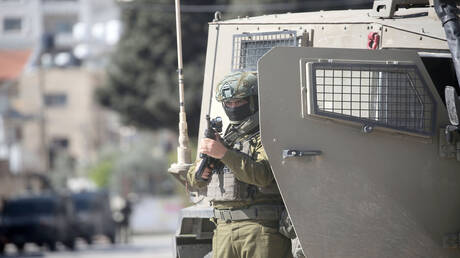
On Friday, an incident of assault occurred in the West Bank involving Israeli soldiers and a crew from CNN, while they were covering illegal land seizures by settlers. A video documented the moment when one soldier attacked the photographer, choking him and throwing him to the ground, showcasing unprofessional and inhumane behavior amid the tense conditions in the area.
The assault took place at a sensitive time, as tensions were escalating in the West Bank due to increasing settlement activities, which many international organizations consider illegal. This incident has sparked widespread reactions from human rights activists, who view such actions as a reflection of Israeli occupation policies towards journalists and reporters.
Details of the Incident
In the video, the Israeli soldier is seen attacking the photographer while the CNN crew was documenting the land seizure process. The soldier, speaking in Hebrew, clearly stated, "The entire West Bank land is ours," reflecting the official Israeli stance towards Palestinian territories. The incident occurred in the northern West Bank, where settlement activities have notably increased in recent years.
This incident is part of a series of assaults that journalists have faced in Palestinian territories, with numerous reports documenting physical assaults and arrests during their coverage of events. Such actions raise concerns about press freedom and human rights in the region.
Background & Context
Historically, the West Bank has witnessed a rise in Israeli settlement activities, which began following the occupation of Palestinian territories in 1967. Since then, the Israeli government has continued to expand settlements, exacerbating the Israeli-Palestinian conflict. These activities are considered illegal under international law; however, the Israeli government continues to support them.
In recent years, tensions in the West Bank have intensified, particularly following an increase in Israeli military operations against Palestinians, leading to violent reactions from the Palestinian side. These conditions make it difficult for journalists to perform their duties freely and safely.
Impact & Consequences
This incident exemplifies the challenges faced by journalists in conflict zones, where freedom of expression is at risk. Assaults on journalists can lead to restricted information available to the public, hindering the international community's ability to understand the real situation in Palestinian territories.
Moreover, this incident may increase international pressure on Israel, as human rights organizations continue to demand an end to violations against journalists. Such pressures could influence Israeli policies in the future, especially with the growing global awareness of human rights issues.
Regional Significance
This incident is part of the larger picture of the Israeli-Palestinian conflict, which directly affects stability in the Arab region. Assaults on journalists reflect a state of repression and censorship, heightening tensions between Palestinians and Israelis.
Additionally, these events may impact relations between Arab countries and Israel, as calls for solidarity with the Palestinian people against occupation grow. It is essential that human rights issues remain at the forefront of Arab and international discussions to ensure justice and peace in the region.
In conclusion, this incident reflects the significant challenges faced by journalists in conflict areas and highlights the urgent need to protect their rights and ensure freedom of expression, which is essential for achieving peace and stability in the region.