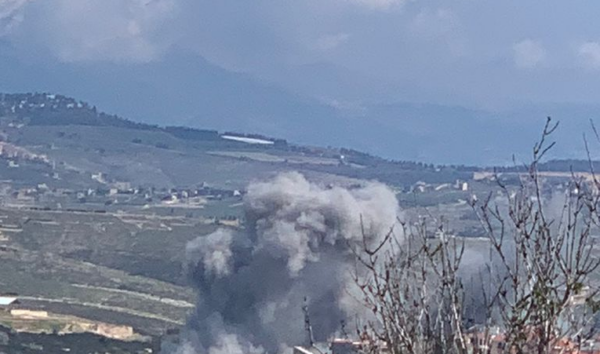
The Israeli army acknowledged today, Sunday, the death of one of its soldiers and injuries to three others during continuous battles in southern Lebanon. This comes as Hezbollah has ramped up its attacks on Israeli occupation sites and forces, utilizing rockets and drones.
The deceased soldier is identified as Sergeant Moshe Yitzhak Katz from the Paratroopers Brigade, who lost his life during the ongoing clashes in the region. The injured soldiers were transported to the hospital for treatment, where their injuries were described as moderate. Consequently, the number of Israeli occupation soldiers killed in southern Lebanon has risen to five, amidst escalating confrontations with Hezbollah.
Details of the Incident
In a related context, Hezbollah announced the execution of a series of attacks targeting military sites and gatherings of Israeli occupation forces. The party confirmed that its operations are conducted "in defense of Lebanon and its people" amid ongoing Israeli attacks since the beginning of March. According to statements released by the party, the Shatula settlement in northern Israel was targeted with a barrage of rockets, in addition to an attack on the Rawiya base in the occupied Syrian Golan using rockets and kamikaze drones.
The attacks also included shelling the border village of Al-Ghajar, extending deeper as the party announced targeting Israeli military bases, including the Ein Shimer air defense base and the Ragafim training base for the Golani Brigade south of Haifa, as well as the Mahfah Alon and Birya bases near the city of Safed. The party also reported that it targeted gatherings of Israeli soldiers at the Malakiyeh site in northern Israel three consecutive times.
Background & Context
These developments come in the context of the extensive escalation witnessed in Lebanon since March 2, where Israeli military operations have resulted in the deaths of over 1,189 people, including 124 children and 86 women, in addition to thousands of injuries and the displacement of more than one million people, according to Lebanese authorities. This escalation is linked to the broader war being waged by Israel and the United States against Iran since late February, leading to an expansion of confrontations regionally, especially with the continued exchange of strikes on multiple fronts.
It is noteworthy that Hezbollah announced targeting an Israeli armored force with artillery shells while attempting to withdraw a damaged vehicle in the town of Deir Sryan, and also fired an air defense missile at an Israeli helicopter over the town of Adaysseh, forcing it to withdraw. In contrast, Israel imposes strict restrictions on publishing details of losses or damages resulting from these attacks, amidst military censorship over the media.
Impact & Consequences
Fears are increasing regarding the escalation of violence in the region, as the continued confrontations between Hezbollah and the Israeli army could lead to a larger escalation that may affect neighboring countries. Additionally, the humanitarian situation in Lebanon is worsening with the rising numbers of displaced individuals and casualties, necessitating international intervention to mitigate the escalation.
At the same time, this escalation demonstrates how the conflict in Lebanon is not merely a local dispute, but part of a broader regional conflict involving major powers such as Iran and the United States. This places the region in a state of instability, affecting regional security.
Regional Significance
These events are indicative of rising tensions in the Middle East, where Arab countries are directly affected. The ongoing conflict between Hezbollah and Israel could have negative repercussions on security and stability in the region, potentially opening the door for new external interventions.
In conclusion, the situation in Lebanon remains tense, as the conflicting parties continue to exchange strikes, complicating the political and security landscape in the region.