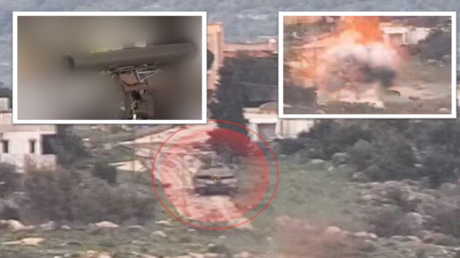
The Israeli army announced on Monday the death of an Israeli soldier in clashes that erupted last night in southern Lebanon, where he was targeted by an anti-tank missile fired by Hezbollah fighters. This incident comes at a time when the security situation in the region is witnessing a noticeable escalation, raising concerns about the potential for conflict to worsen.
The soldier who was killed was part of a military unit conducting operations in the border area, where military activities between the two sides have increased recently. The incident reflects the ongoing tension between Israel and Hezbollah, which is considered one of the most prominent armed factions in Lebanon and possesses a stockpile of advanced weaponry.
Details of the Incident
According to reports, the attack occurred in an area near the Lebanese-Israeli border, where Israeli soldiers were conducting surveillance operations. The missile fired by Hezbollah is of the anti-tank variety, indicating the group's capability to execute complex operations against Israeli forces.
The Israeli army did not specify the number of soldiers injured in the attack, but it confirmed that the incident led to a state of maximum alert in the area. It also announced the reinforcement of troops in border areas in anticipation of any potential escalation.
Background & Context
Historically, the Lebanese-Israeli border has witnessed repeated tensions, especially since the Israeli war on Lebanon in 2006. Hezbollah, which was founded in the 1980s, considers itself a resistance against Israeli occupation and has fought several battles against Israeli forces. In recent years, military activities between the two sides have increased, raising international concerns about the outbreak of a new war.
Many experts believe that the current escalation may be a result of the political and economic pressures facing Lebanon, as Hezbollah seeks to bolster its position domestically by demonstrating its military strength. Conversely, Israel aims to maintain its national security and prevent any threats from its northern border.
Impact & Consequences
The death of the Israeli soldier may lead to military reactions from Israel, increasing the likelihood of conflict escalation. This incident could affect Israeli-Lebanese relations and heighten tensions in the region. Additionally, any military escalation may impact civilians in border areas, raising concerns about humanitarian conditions.
The potential repercussions of this incident may include an increase in military operations by the Israeli army, as well as enhanced surveillance along the border. This incident could also influence domestic politics in Israel, potentially leading to calls for increased security measures against Hezbollah.
Regional Significance
This incident reflects the ongoing tensions in the Middle East, where military conflicts affect regional stability. The escalation between Israel and Hezbollah may impact relations between Arab states and Israel, especially amid normalization efforts being pursued by some Arab countries.
At the same time, the rising tensions may evoke memories of past wars in the region, increasing concerns about the future of peace in the Middle East. It is crucial for Arab nations to closely monitor the situation and work to promote dialogue to avoid any military escalation.