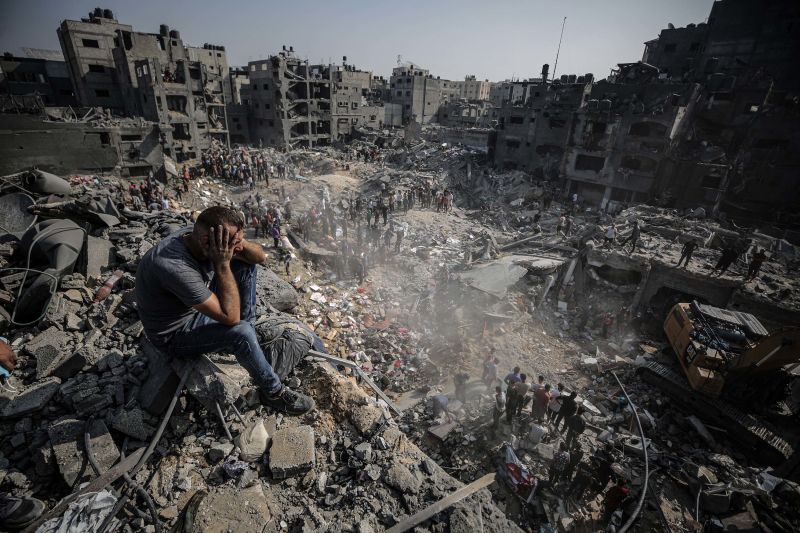
A recent study has shown that the Israeli war on Gaza has not only left behind humanitarian consequences but has also created a massive carbon footprint estimated at around 33 million metric tons of carbon dioxide equivalent. These figures, published in the journal "One Earth" and led by researchers from Queen Mary University in London, indicate that wars leave deep environmental impacts that extend long after the conflict has ended.
The study indicates that these emissions are roughly equivalent to the total emissions of a medium-sized country during the year 2024, or about the annual emissions of approximately 7.6 million gasoline-powered cars. These comparisons are not just numbers; they reflect the magnitude of the climate disaster that arises from armed conflicts.
Details of the Event
The study goes beyond merely pointing out the emissions resulting from direct bombings in Gaza, focusing instead on a series of military activities that contribute to increased carbon emissions. These activities include active military operations, the construction of defensive structures, and reconstruction efforts following the end of the conflict.
The research notes that emissions do not cease once fighting ends; they continue into the post-war phase, where reconstruction requires vast amounts of cement, steel, and energy, further increasing the environmental impact.
Background & Context
Military emissions are often excluded from global climate discussions, raising questions about how the environmental impact of wars is calculated. A significant portion of the emissions resulting from conflicts is not included in international frameworks for reporting emissions.
The study calls for enhanced transparency in reporting military emissions through international mechanisms such as the United Nations Framework Convention on Climate Change, which would contribute to a better understanding of the environmental impact of wars.
Impact & Consequences
The implications of this study go beyond numbers and statistics, opening the discussion about the necessity of holding nations accountable for their military emissions. The environmental impact of wars is not limited to direct damages but extends to long-term effects that influence global climate.
The study highlights the importance of incorporating military emissions into global environmental accounting, which could enhance international efforts to combat climate change.
Regional Significance
These findings demonstrate that conflicts in the region are not merely humanitarian issues but also have profound environmental impacts. In light of increasing climate challenges, it is essential to have a comprehensive response that considers the environmental dimensions of conflicts.
Understanding the climate impact of wars can help shape future policies and emphasizes the importance of international cooperation to address environmental challenges.
In conclusion, this study shows that wars leave behind not only humanitarian consequences but also exacerbate the climate crisis, necessitating a reevaluation of how armed conflicts are managed in the context of climate change.