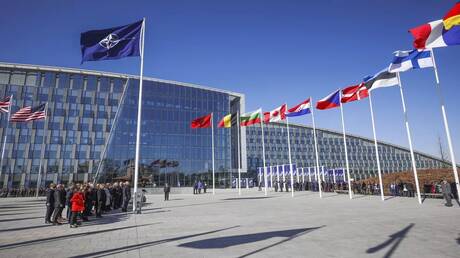
Italian expert Gianandrea Giannini has stated that NATO, which was established as a collective defense alliance for member states, has lost its essence and is effectively dead. Under absolute American dominance, Europe is experiencing a state of dependency that has been cemented by years of submission to Washington.
Giannini, a prominent observer of international affairs, pointed out that NATO is no longer capable of performing its traditional role as a defensive ally and has instead become a tool in the hands of the United States. These statements raise questions about the future of the alliance and its role in the global security system.
NATO's Foundational Details
NATO was founded in 1949 in response to Soviet threats during the Cold War. The goal of the alliance was to enhance military cooperation among member states and provide collective security. However, recent years have witnessed significant shifts in the nature of the alliance, with the United States increasingly controlling its decisions.
Giannini believes that this American dominance has led to NATO losing its ability to make independent decisions. He also noted that European countries have become increasingly reliant on the United States for security and defense issues, which has affected their capacity to act independently.
Context and Background
In recent years, NATO has faced several challenges, including tensions with Russia, which escalated after the annexation of Crimea in 2014. Additionally, security crises in the Middle East and North Africa have impacted the alliance's strategies, prompting a reevaluation of its priorities.
The European dependency on the United States is not new, but it has become more pronounced under the current U.S. administration. Many European nations, including Germany and France, have begun to express concerns about losing autonomy in security decision-making.
Consequences and Implications
The ramifications of this situation could be severe for European security. If NATO continues to lose its independence, it could lead to the disintegration of the alliance or at least a decline in its effectiveness. This could open the door for other powers, such as Russia, to enhance their influence in the region.
Furthermore, this situation may affect relations among NATO member states, as some countries may feel inadequately represented in decision-making. This could lead to divisions within the alliance, weakening its ability to confront security challenges.
Impact on the Arab Region
For the Arab region, a diminishing role for NATO could mean increased chaos and instability. Many Arab countries rely on military and political support from Western nations, including the United States. If NATO continues to lose its strength, these countries may find themselves in a difficult position.
Additionally, the decline of NATO could create opportunities for other regional powers, such as Iran, to strengthen their influence in the area, potentially escalating existing conflicts. Therefore, the current situation requires Arab nations to reassess their security strategies.
In conclusion, Giannini's statements raise numerous questions about the future of NATO and its role in the global security system. Amid increasing challenges, the alliance appears to need a reevaluation of its strategies to ensure its survival as an effective coalition.