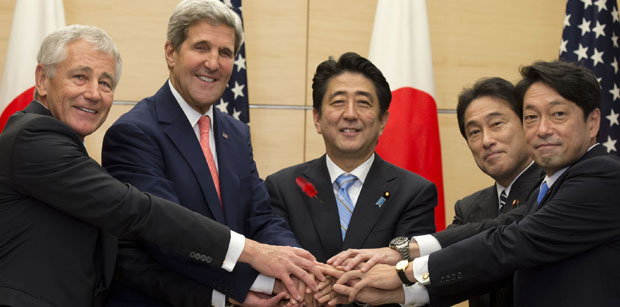
The Japanese government has declared its intention to amend the national security law with the aim of facilitating arms exports, which has sparked widespread debate among opposition parties and citizens. This announcement comes at a time when security tensions in the region are escalating, making it crucial to understand the implications of this decision for Japan and the international arena.
The government, led by the Prime Minister, is seeking to enhance its defense capabilities by expanding the scope of arms exports. Officials have indicated that this amendment will enable Japan to support its allies in the face of increasing threats, particularly amid rising tensions with North Korea and China.
Details of the Event
The Japanese government's plan includes amending existing laws that impose strict restrictions on arms exports. The new bill is expected to be presented to the parliament for discussion, where it faces strong opposition from political parties that fear this direction could lead to increased military tensions in the region.
At the same time, many Japanese citizens have expressed their concerns about this direction, believing that arms exports could place their country in dangerous situations and increase the likelihood of conflicts. Protests have erupted in several Japanese cities expressing opposition to this decision.
Background & Context
Historically, Japan has adopted a policy of not exporting arms since the end of World War II, with strict restrictions imposed on the manufacturing and export of weapons. However, in recent years, the government has begun to reconsider this policy in light of rapid geopolitical changes in the region.
This move is part of a broader strategy to enhance Japan's defense capabilities, especially following increased military activities by its neighbors. Recent years have seen a rise in tensions between Japan and North Korea, in addition to growing concerns over China's military expansion in the East China Sea.
Impact & Consequences
This decision could have far-reaching effects on regional and international security. An increase in arms exports may lead to an arms race in the region, heightening the chances of conflict. Furthermore, this direction could place Japan in a sensitive position among its allies, as it may be perceived as contributing to escalating tensions rather than alleviating them.
Moreover, this decision could affect Japan's relations with neighboring countries, where Japan might be viewed as an increasing threat by some nations. This could lead to negative reactions from these countries, complicating the security situation in the region.
Regional Significance
Although this decision pertains to Japan, it has potential implications for the Arab region. Increased tensions in East Asia could affect global stability, which may reflect on the situations in the Middle East. Additionally, arms exports by any country could lead to increased conflicts in other areas, including Arab nations.
In conclusion, this Japanese direction represents a controversial step in the context of global security policy. As concerns about its implications grow, the question remains about how the international community will respond to this change and whether Japan can achieve a balance between enhancing its defense capabilities and maintaining regional peace.