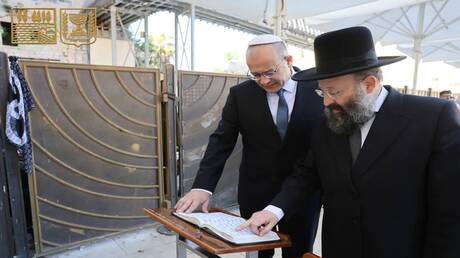
Newly appointed Israeli Mossad chief Roman Goffman performed religious rituals on Friday at the Buraq Wall (Western Wall) in the Old City of occupied Jerusalem, marking his first visit to the important religious site since officially assuming leadership of Israel's most secretive intelligence apparatus.
The visit comes at a sensitive time as the region witnesses unprecedented escalation against the backdrop of the continued war in the Gaza Strip. Goffman appears to be seeking through this step to send multifaceted messages, both to the internal Israeli security establishment and to local and regional public opinion.
Event Details and Symbolism
According to circulated images, Goffman appeared wearing a kippah (traditional Jewish skullcap) while standing at the Buraq Wall in a scene reflecting traditional rituals performed by Israeli officials upon assuming senior security positions. This tradition represents part of Israel's attempt to link religious identity with the security establishment, particularly in the current context witnessing escalating tensions in Jerusalem.
Goffman had officially assumed his position as Mossad chief, succeeding David Barnea in recent weeks, becoming the third most powerful figure in the intelligence apparatus after the Israeli Prime Minister and Security Minister. His selection for this position comes amid grave intelligence challenges facing Israel, particularly regarding the Iranian file and the Palestinian issue.
Background and Security Context
Roman Goffman is considered a prominent figure in the Israeli security establishment, having previously held senior positions in the Shin Bet (Israeli General Security Service), distinguished by his extensive experience in Palestinian affairs and combating what Israel calls terrorism. He became known for managing sensitive files during his tenure in various responsibilities in the West Bank and Gaza Strip.
The Buraq Wall (known to Jews as the Western Wall) carries major religious and political symbolism, as Palestinians and Muslims consider it part of the blessed Al-Aqsa Mosque, while Jews consider it remains of Solomon's Temple. Official Israeli visits to this site constitute an affirmation of Israel's claimed sovereignty over the holy city, provoking widespread Palestinian and Arab resentment.
Political Implications and Impact
Goffman's visit comes in the context of Israeli efforts to enhance Jewish presence in occupied East Jerusalem, outlining the features of the upcoming phase of Mossad operations under his new leadership. Analysts see this step as potentially reflecting a more hardline approach in dealing with sensitive security files, particularly amid continued military operations in the Gaza Strip and escalating tensions with Iran and its allies in the region.
This visit also indicates the new Mossad chief's attempt to enhance his internal legitimacy among Israel's religious right-wing, which represents a broad social and political base in Israel. The goal may be to convey a message that the intelligence apparatus will remain committed to protecting Israeli interests including control over religious sites in Jerusalem.
Regional Reactions and Concerns
Such visits raise increasing concern in Arab and Palestinian circles, considered a clear provocation of Islamic sentiments and disregard for the legal and historical status of Jerusalem as occupied Palestinian land. These movements come as the Israeli government seeks to enforce a fait accompli policy in the holy city through enhancing settlement and Judaization policies.
The visit reflects the extent of challenges facing Arab and international efforts to protect Islamic and Christian holy sites in Jerusalem, amid the continued support by the Israeli security establishment for settlement policies. The question remains regarding the impact of these actions on regional stability and on the path of any future political settlements in the Palestinian-Israeli conflict.