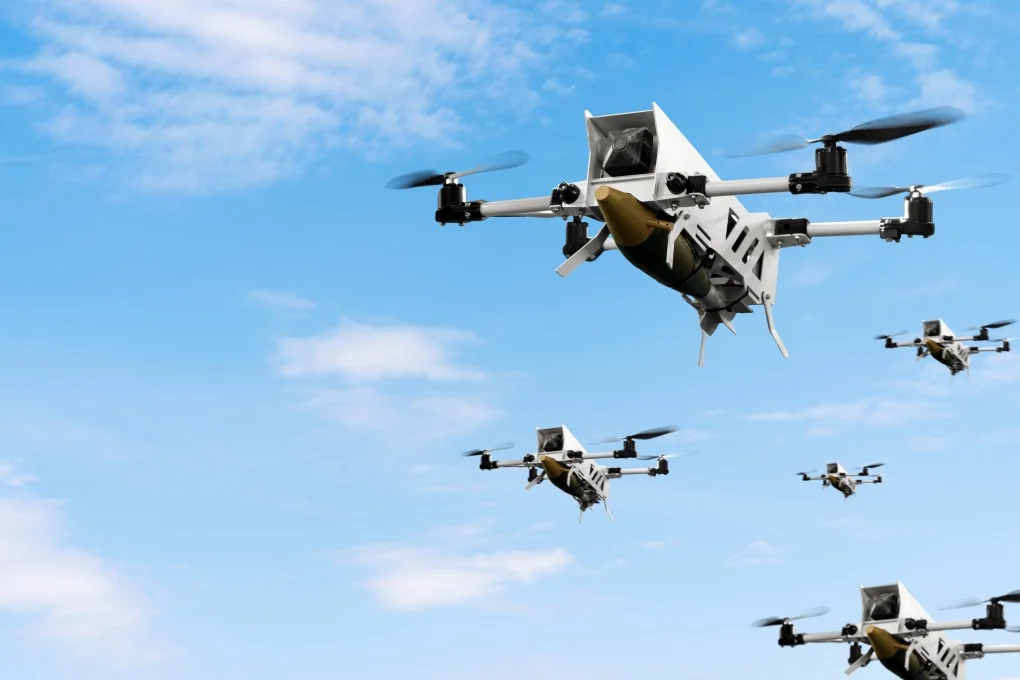
Japanese media reports indicate that the Japanese government plans to develop a fleet of suicide drones and low-cost missiles to strengthen its deterrence against regional threats, particularly from China. This initiative is part of a new strategy focusing on integrated attacks using unmanned aerial vehicles and long-range missiles, according to reports from the Yomiuri and Kyodo newspapers.
According to government sources, this strategy aims to enhance Japan's ability to confront increasing threats in the region, where Chinese military activities are noticeably escalating. These drones and missiles are expected to be used to dismantle enemy air defenses, thereby enhancing the effectiveness of Japanese military strikes.
Details of the Initiative
Japan, which has witnessed a significant shift in its defense policy in recent years, is seeking to bolster its military capabilities in line with growing security challenges. This plan is expected to include the development of new technologies in the field of unmanned aerial vehicles, which will conduct precise offensive operations against strategic targets.
The use of low-cost missiles also represents a strategic move aimed at reducing military expenses while maintaining deterrent effectiveness. Experts indicate that this step is part of Japan's efforts to strengthen its security alliances with other nations, particularly with the United States, in the face of regional threats.
Background & Context
Historically, Japan has adopted a defense policy based on non-military intervention; however, geopolitical changes in the region, including the rise of China's military power, have prompted Tokyo to reassess its defense strategy. In recent years, Japan has enhanced its military cooperation with the United States and other regional countries, reflecting a shift in its stance towards regional security.
In 2014, the Japanese parliament passed a law allowing Japanese forces to participate in military operations abroad, marking a radical shift in Japan's defense policy. Since then, Japan has been developing its military capabilities further, including increasing its defense budget and modernizing its weaponry.
Impact & Consequences
This initiative indicates a significant shift in Japan's military strategy, as Tokyo seeks to enhance its deterrent capabilities in the face of regional threats. This move is expected to increase tensions in the region, as China may perceive these actions as a direct threat to its security.
Moreover, strengthening Japan's military capabilities could affect relations with neighboring countries, including South Korea and Russia. This could lead to an arms race in the region, as other countries seek to enhance their military capabilities to address new challenges.
Regional Significance
Although this development occurs in a region far from the Arab world, it has indirect implications for regional security. Increased tensions in East Asia could impact global stability, reflecting on oil prices and financial markets, which is of concern to oil-producing Arab nations.
Furthermore, the enhancement of Japanese military capabilities may encourage other countries in the Arab region to reassess their defense strategies, potentially leading to changes in military and political alliances in the future.
In conclusion, Japan's plan to bolster its military capabilities represents an important step in the context of increasing security challenges in the region. As military activities in East Asia escalate, the question remains as to how this will affect global stability and regional security.