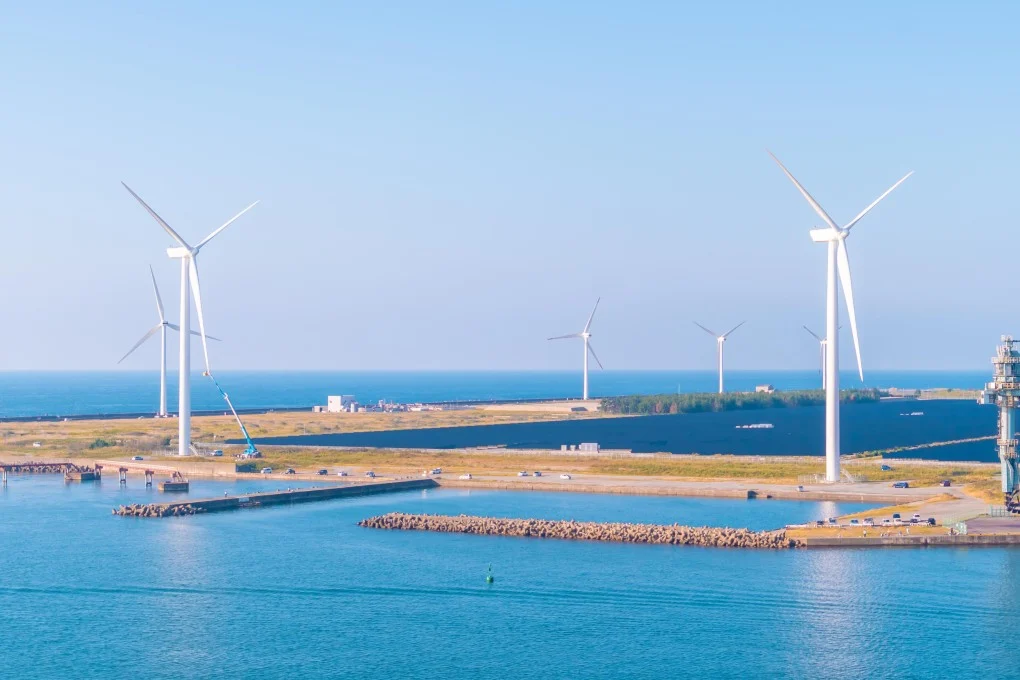
Japan is striving for a historic achievement with its plan to construct the world's largest floating wind farm, expected to generate energy reaching gigawatts off the Izu Islands. This ambitious project aims to provide Tokyo and the surrounding islands with clean energy, reflecting Japan's commitment to transitioning to renewable energy sources.
Governor Yuriko Koike announced this project during a climate change conference, emphasizing the importance of shifting to clean energy to tackle environmental challenges. However, this plan raises numerous questions about its ability to be implemented by 2035, especially given the technical and financial challenges it may face.
Project Details
The floating wind farm plan includes the installation of several turbines in the sea, allowing it to harness the strong winds in the area. This project is part of Japan's strategy to achieve its goals of reducing carbon emissions and increasing reliance on renewable energy. Nevertheless, concerns remain regarding the timeline for executing the project, as it requires advanced technology and coordination with various stakeholders.
This initiative comes at a time when Japan is seeking to enhance its energy security following natural disasters it has faced, such as the earthquake that struck Fukushima in 2011. This incident led to a comprehensive reevaluation of the country's energy policies, pushing it towards exploring alternative and sustainable energy sources.
Background & Context
Historically, Japan has heavily relied on nuclear energy and coal to meet its energy needs. However, after the Fukushima incident, the Japanese government began reassessing its energy strategies, leading to increased interest in renewable energy sources. The floating wind farm is part of this shift, with Japan aiming to achieve 50% of its energy from renewable sources by 2030.
The Izu Islands are considered an ideal location for such projects due to their strong and consistent winds, making them a perfect site for wind energy generation. However, implementing this project requires substantial investments and collaboration between the public and private sectors.
Impact & Consequences
If Japan successfully implements this project, it could lead to a significant transformation in the way energy is produced in the country. The floating wind farm would contribute to reducing dependence on fossil fuels, aiding Japan in achieving its carbon emission reduction goals. Additionally, this project could inspire other countries in the region to adopt similar strategies in renewable energy.
However, significant challenges remain, including the need to develop the necessary technology to ensure efficient energy production. The Japanese government must also address environmental and social concerns related to such projects, including their impact on marine life and local communities.
Regional Significance
Although the project focuses on Japan, its success could have positive implications for Arab countries that are also seeking to diversify their energy sources. Arab nations, rich in natural resources, could benefit from Japan's experiences in renewable energy, especially in light of the global shift towards sustainability.
This initiative could serve as a model for Arab countries aiming to achieve sustainable development goals, enhancing regional cooperation in the field of clean energy.