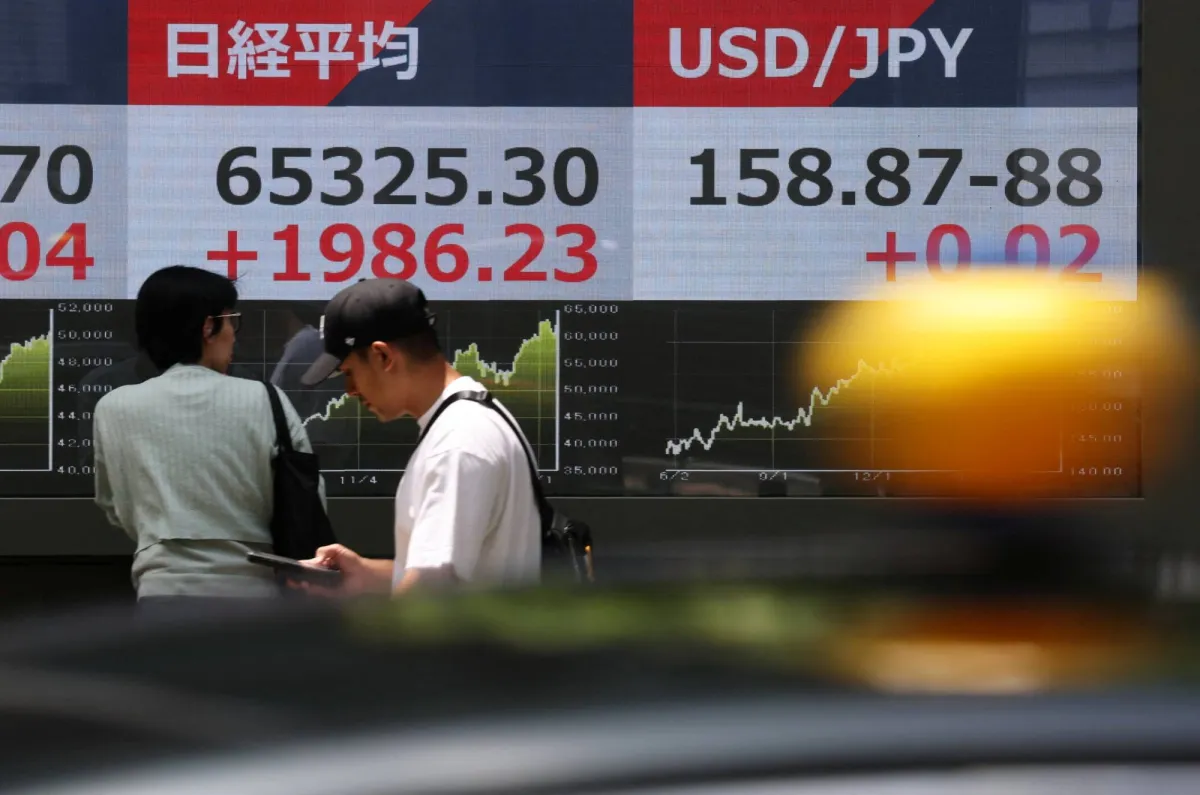
The Japanese yen has returned to critical levels that prompted government intervention a month ago, raising questions about Tokyo's ability to support its struggling currency amid increasing speculation.
Japan has spent approximately 63 billion dollars in multiple rounds of yen purchases at the end of April and beginning of May, which is a small fraction of its financial reserves totaling one trillion dollars. However, traders believe that spending this amount, or even a significant portion of it, is unrealistic.
Details of the Situation
As speculation against the yen rises again, Japanese authorities are striving to keep the markets on alert. Daisaku Ueno, the chief foreign exchange strategist at Mitsubishi UFJ Morgan Stanley Securities, noted that "the lower Japan's foreign currency reserves, the more vulnerable it becomes to speculators."
The pressure on the yen continues without any signs of retreat, making the "nerve war" between the authorities and the market ongoing. Intervention by purchasing yen requires selling foreign assets, with Japan's assets valued at around one trillion dollars at the end of April.
Background & Context
After deducting nearly 10 trillion yen (62.78 billion dollars) spent in the April and May measures, approximately 150 trillion yen remains, sufficient for about 30 rounds of intervention, according to economist Yuriko Tanaka from Goldman Sachs. However, exhausting all of Japan's foreign assets is not feasible, as it would negatively impact the value of U.S. Treasury bonds.
The U.S. Treasury is conducting what is termed "interest rate reviews," which contributed to lowering the dollar's exchange rate against the yen in January. Takeshi Ueno, chief economist at the NLI Research Institute, emphasized that "U.S. understanding is crucial" for the sustainability of any intervention's impact.
Impact & Consequences
Another potential mechanism to limit intervention is the International Monetary Fund's standard, which could risk the country losing its status as a "freely floating" currency. However, chief currency diplomat Atsuki Mimura stated that IMF rules do not restrict the number of times the government can intervene.
The yen fell to 159.65 on Thursday, its weakest level since April 30, when Japan is suspected of having intervened for the first time in nearly two years. The Ministry of Finance is set to announce the total amount spent on foreign exchange market intervention.
Regional Significance
The yen has been significantly affected by the ongoing Middle East crisis, as high energy prices have shocked Japan's terms of trade, which imports most of its oil needs. This situation may also impact energy markets in the Arab region, where many countries rely on stable oil prices.
While the current Japanese government focuses on defending the 160 yen per dollar level, some market participants are preparing for new interventions. Forecasts suggest that the next intervention may occur before reaching 162 yen, reflecting the challenges Tokyo faces in maintaining its currency's stability.