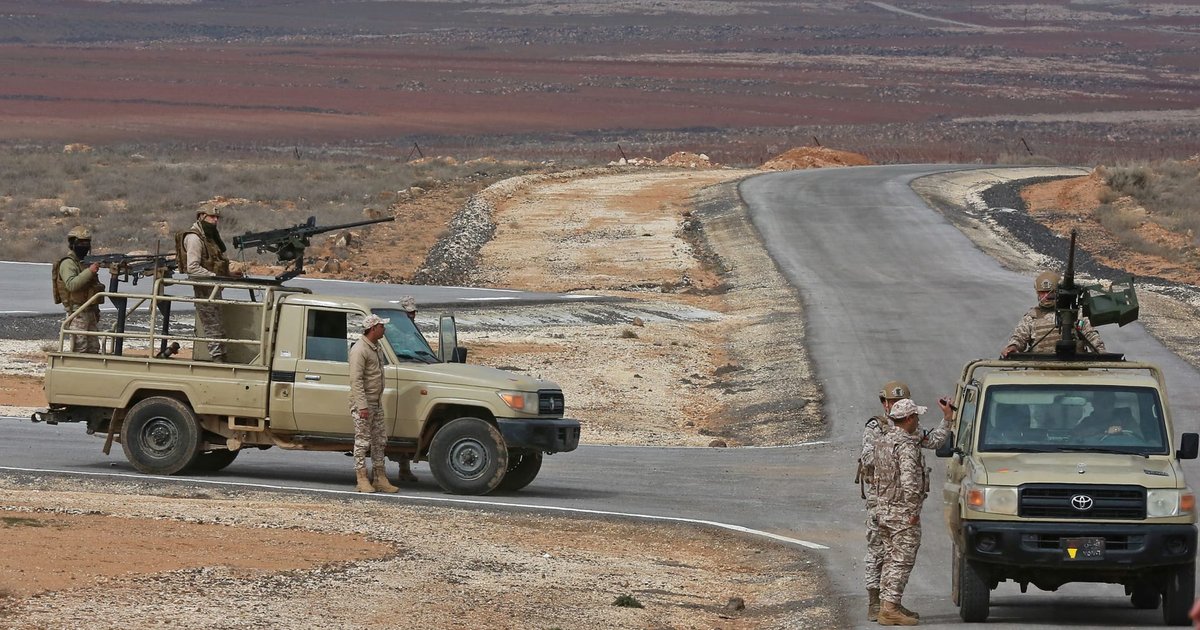
The Jordanian Armed Forces announced today, Wednesday, that the kingdom's territory was subjected to an Iranian attack involving the launch of five missiles and a drone within the last twenty-four hours. The Military Media Directorate of the General Command of the Jordanian Armed Forces reported that the Royal Air Force managed to intercept five of these attacks, while the defenses failed to intercept one missile.
This escalation comes at a sensitive time when the region is witnessing increasing tensions, as these attacks reflect a surge in Iranian military activities, raising concerns about regional security and the stability of Jordan. The statement indicated that the Jordanian Armed Forces continue to be prepared to confront any potential threats, reflecting the kingdom's commitment to protecting its territory and the safety of its citizens.
Details of the Incident
According to the statement issued by the Military Media Directorate, the Iranian attacks targeted various areas in Jordan, leading to a state of alert among the armed forces. The drones and missiles were detected before reaching their targets, allowing the air force to intervene in a timely manner. However, the inability of the defenses to intercept one of the missiles raises questions about the effectiveness of the defense systems in facing increasing threats.
In this context, military sources confirmed that the Jordanian Armed Forces are working to enhance their defensive capabilities, including updating missile and drone detection and interception systems. Cooperation with regional and international allies has also been strengthened to confront common threats.
Context and Background
These attacks come amid escalating tensions between Iran and Arab countries, as the region has witnessed several similar incidents in recent years. There have been multiple attempts by Iran to target neighboring countries, leading to increased military readiness in those nations. Recent events in Iraq, Syria, and Lebanon have also contributed to the worsening situation, as Iran continues to support armed groups that threaten regional stability.
Historically, relations between Jordan and Iran have been tense, with Jordan being part of Arab alliances aimed at countering Iranian influence in the region. In recent years, Jordan has made efforts to bolster its national security through cooperation with the United States and Gulf Arab countries.
Implications and Effects
These attacks raise significant concerns about regional security, as they could lead to greater military escalation in the area. Additionally, the failure of Jordanian defenses to intercept one missile may undermine confidence in the defense systems, necessitating a comprehensive review of Jordan's military capabilities.
At the same time, these developments could lead to increased international support for Jordan, as major powers may seek to provide military and technical assistance to enhance the kingdom's defensive capabilities. Furthermore, these events could affect relations between Jordan and neighboring countries, as some nations may seek to strengthen security cooperation to address common threats.
Impact on the Arab Region
These attacks are part of a broader Iranian strategy aimed at expanding its influence in the region, raising concerns among other Arab nations. With the increasing threats, the region may witness more military alliances among Arab countries to confront shared challenges.
Moreover, these events could lead to heightened tensions between Iran and Western countries, as the United States and its allies may seek to take action against Iranian activities in the region. Thus, the situation in Jordan could have wide-ranging implications for regional stability.
In conclusion, developments in Jordan remain under observation, as the armed forces are expected to continue enhancing their defensive capabilities to face any future threats. Jordanians hope that international efforts will contribute to achieving stability and security in the region.