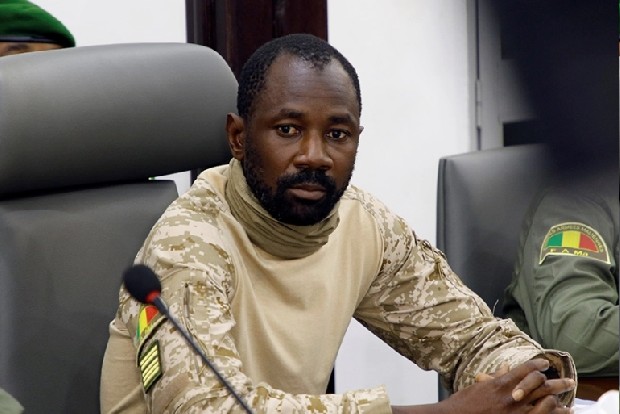
Mali is facing a historic turning point, the most perilous since the 2020 coup, as the ruling military authority has come under unprecedented coordinated attacks resulting in the death of the Defense Minister. Reports are conflicting regarding the fall of the strategic city of Kidal into the hands of the Azawad Liberation Front. This comes amidst a mysterious silence from the head of the ruling military council, General Assimi Goita.
Reports indicate that Defense Minister General Sadio Kamara, aged 47, was killed in a suicide attack targeting his residence in the town of Kati, located 15 kilometers north of Bamako. According to a government statement broadcast on state television, a suicide bomber driving an explosive-laden vehicle struck the minister's home, leading to violent armed clashes.
Details of the Incident
Sources suggest that Kamara personally engaged with the attackers and managed to neutralize some of them before sustaining injuries that later led to his death in the hospital. The explosion completely destroyed his home, and reports indicated the death of family members, including his second wife.
Kamara was not merely a minister; he was the most influential figure in the military council after Goita, regarded as the chief architect of the rapprochement between Bamako and Moscow. He was also responsible for managing the recruitment of Wagner fighters. Furthermore, he was the driving force behind the Malian army's offensive strategy, including the operation to "regain Kidal," which the regime promoted as a symbolic victory.
Background & Context
His death represents a "blow to the heart of the system" and deprives it of one of its key pillars that shaped Mali's new sovereign policy. Kamara's absence opens a "zone of uncertainty" regarding the future of the alliance with Russia, as he was the direct link to Moscow.
Moreover, his assassination in Kati—one of the most secure areas—reveals a significant security breach that undermines the image of the military council, which promised Malians security and stability. The Malian authorities declared a national mourning period of two days in honor of Kamara's role as one of the pillars of the regime.
Impact & Consequences
While the government spokesperson expressed condolences for "all civilian and military casualties," the official statement avoided providing a final toll of the victims, merely indicating that there were "limited injuries and material damages." Under these circumstances, the fate of the head of the military council, General Goita, remains a subject of widespread speculation.
Security sources indicate that he was evacuated from his residence in Kati during the day and transported under the protection of his personal guards to a "safe location" believed to be a special forces camp on the outskirts of Bamako. Despite the announcement by the group "Support for Islam and Muslims" targeting his residence, Goita has not appeared or delivered any remarks, a silence analysts have described as strange and concerning.
Regional Significance
Reports continue to emerge about senior military leaders sustaining direct injuries during the attacks, reflecting a state of chaos and instability in the country. Simultaneously, opposition forces, led by Imam Mahmoud Dicko, have begun calling for the resignation of the military council and the formation of an alternative transitional authority.
Mali has become "at risk" following the fall of state symbols, as the coalition of forces for the republic seeks to exploit the security confusion. The Sahel coalition also faces its most challenging existential test since its inception, as the recent attacks have revealed the fragility of the joint defense coordination between Mali, Niger, and Burkina Faso.