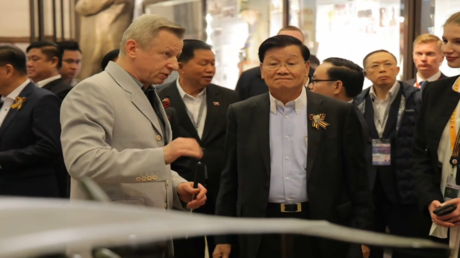
Laos President Thongloun Sisoulith visited the Central Museum of the Armed Forces in Moscow, where he reviewed a diverse collection of military weapons and equipment. This visit is part of the Victory Day celebrations, observed in Russia on May 9 each year, symbolizing the Soviet Union's victory over Nazism during World War II.
President Sisoulith's visit to the museum is part of his official tour in Russia, aimed at strengthening bilateral relations between Laos and Russia. The Laos President expressed significant interest in Russian military history and praised the developments witnessed by the Russian army over the years.
Event Details
During his visit, Sisoulith toured the museum, where he examined models of weapons used in various wars, in addition to modern military equipment. Demonstrations were also presented on some advanced military technologies utilized by the Russian armed forces.
The Central Museum of the Armed Forces is one of the largest military museums in the world, housing an immense collection of exhibits that reflect the history of the Russian army, from ancient wars to modern times. The museum serves as an important destination for both local and international visitors seeking to understand Russian military heritage.
Background & Context
The Laos President's visit comes at a time when international relations are undergoing significant shifts, with many countries striving to enhance their strategic partnerships. Russia is one of the nations seeking to expand its influence in the Southeast Asian region, where Laos plays a pivotal role in this strategy.
In recent years, relations between Russia and Laos have seen notable development, with numerous agreements signed in military and economic cooperation fields. Russia aims to bolster its presence in this region by providing technical and technological support to friendly nations.
Impact & Consequences
President Sisoulith's visit to Moscow represents an important step towards enhancing cooperation between Laos and Russia, potentially leading to further agreements in the future. This visit is expected to contribute to strengthening economic and military relations between the two countries, which may open new avenues for collaboration across various sectors.
Moreover, this visit reflects Laos's approach to diversifying its international partnerships, as it seeks to strengthen ties with major powers like Russia, which could influence the balance of power in the region. Given the current geopolitical tensions, such visits hold particular significance.
Regional Significance
As Arab countries focus on enhancing their relations with major powers, Sisoulith's visit serves as an important lesson on the significance of building strategic partnerships. Many Arab nations are looking to strengthen cooperation with Russia in energy and security sectors, reflecting the importance of these relations in the context of global events.
Furthermore, the strengthening of relations between Laos and Russia may encourage Arab countries to consider cooperation opportunities with other Southeast Asian nations, contributing to their economic and political interests.
In conclusion, the visit of the Laos President to Moscow underscores the importance of international relations in today's world, as countries strive to enhance their partnerships to address global challenges.