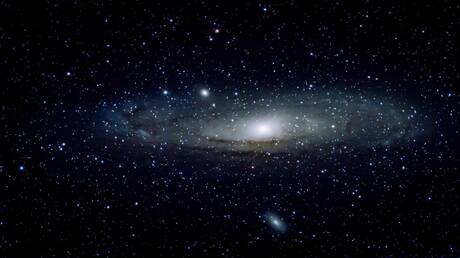
The Moscow Institute of Physics and Technology has announced the launch of new research aimed at studying the nature of dark matter in the universe. This step comes at a time when there is an increasing need to understand the mysterious elements that make up approximately 27% of the universe, which cannot be seen or measured directly.
Dark matter is considered one of the greatest mysteries in astronomy and physics, as it does not interact with light or any form of electromagnetic radiation, making its study a significant challenge for scientists. However, its gravitational effects can be observed through its influence on the motion of galaxies and the distribution of matter in the universe.
Event Details
The new research led by the Moscow Institute aims to utilize advanced techniques in the fields of astrophysics and theoretical physics. Researchers intend to develop new mathematical models to understand how dark matter affects the formation and distribution of galaxies. The institute is also seeking to collaborate with global research institutions to enhance these studies.
The research includes the use of advanced devices to monitor astronomical phenomena that may indicate the presence of dark matter, in addition to experiments in specialized laboratories aimed at simulating the conditions that may lead to the emergence of this substance.
Background & Context
Historically, studies on dark matter began in the 20th century, when scientists noticed that the motion of galaxies did not correspond with their visible mass. Since then, several theories have been proposed regarding the nature of this matter, including the hypothesis of unknown particles. With advancements in technology, it has become possible to conduct more precise experiments to understand this phenomenon.
Dark matter is considered a fundamental part of the standard model of cosmology, which describes how the universe has evolved since the Big Bang. However, many questions remain unanswered, making current research highly significant.
Impact & Consequences
If the new research successfully identifies the nature of dark matter, it could lead to radical changes in our understanding of the universe. This potential discovery could open new horizons in the fields of astrophysics and cosmology, impacting many current scientific theories.
Understanding dark matter may also aid in the development of new technologies in energy and information fields, which could have positive effects on modern technology.
Regional Significance
As Arab countries strive to enhance their capabilities in science and technology, research on dark matter could serve as an inspiration for Arab scientists. Collaboration with institutions like the Moscow Institute could open new avenues for scientific research in the region.
Moreover, understanding dark matter could contribute to enhancing scientific understanding among Arab youth, encouraging further innovations in science and technology.
The new research launched in Moscow represents an important step toward unraveling the mystery of dark matter, which may lead to radical changes in our understanding of the universe. Amid current scientific challenges, hope remains pinned on scientists to achieve tangible progress in this field.