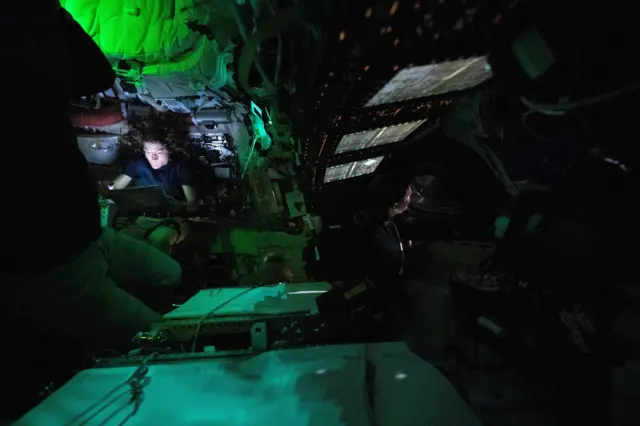
The Artemis 2 mission, part of the lunar return program, represents a landmark achievement in the history of space exploration. This flight was not merely a fleeting experience; it was a true test of what awaits humanity in outer space. During this journey, astronauts experienced 40 minutes of silence behind the moon, providing them with a unique opportunity to witness breathtaking natural scenes, along with a solar eclipse never seen before.
The Artemis 2 mission is a crucial step towards achieving larger goals in space exploration. This mission has demonstrated humanity's ability to adapt to the harsh conditions of space, enhancing hopes for future missions to Mars and other planets. Furthermore, this journey signifies a new beginning for space exploration, as NASA aims to return humans to the moon by 2025.
Event Details
The Artemis 2 spacecraft launched from the Kennedy Space Center in Florida, embarking on a multi-day journey around the moon. During this mission, astronauts were able to conduct multiple scientific experiments, including studying the effects of low gravity on the human body. Stunning images of Earth from space were captured, allowing scientists to analyze climate and environmental changes.
The mission also involved the use of new communication technologies, with improved systems facilitating faster and more efficient information exchange between the spacecraft and Earth. Life support systems were tested under harsh conditions, reinforcing humanity's ability to survive in space for extended periods.
Background & Context
The Artemis 2 mission is part of the Artemis program launched by NASA in 2019, aiming to return humans to the moon and explore new areas. This program also seeks to enhance international cooperation in space, with many countries participating in the development of new technologies to support these missions.
Space exploration is not new; humanity has witnessed numerous successful space missions over the past decades. However, the Artemis program represents a significant shift in how humanity views space, striving to achieve ambitious goals that go beyond merely orbiting the moon.
Impact & Consequences
The Artemis 2 mission is an important step towards achieving larger objectives in space exploration, enhancing humanity's adaptability to extreme conditions. This journey also presents an opportunity to develop new technologies that could benefit various fields, including medicine and environmental science.
The impact of this mission extends to economic sectors, potentially opening new avenues for investment in the space industry. Additionally, international cooperation in this field may lead to the development of new partnerships among nations, fostering global peace and stability.
Regional Significance
The Artemis 2 mission presents an opportunity for Arab countries to enhance their participation in the field of space. Many Arab nations have shown significant interest in space exploration, launching their own space projects. This could lead to the development of new technologies and strengthen cooperation among Arab countries in this domain.
Moreover, the success of this mission could inspire Arab youth to engage in science and technology fields, contributing to building a better future for the region. Investment in education and technology can lead to significant achievements in the future.