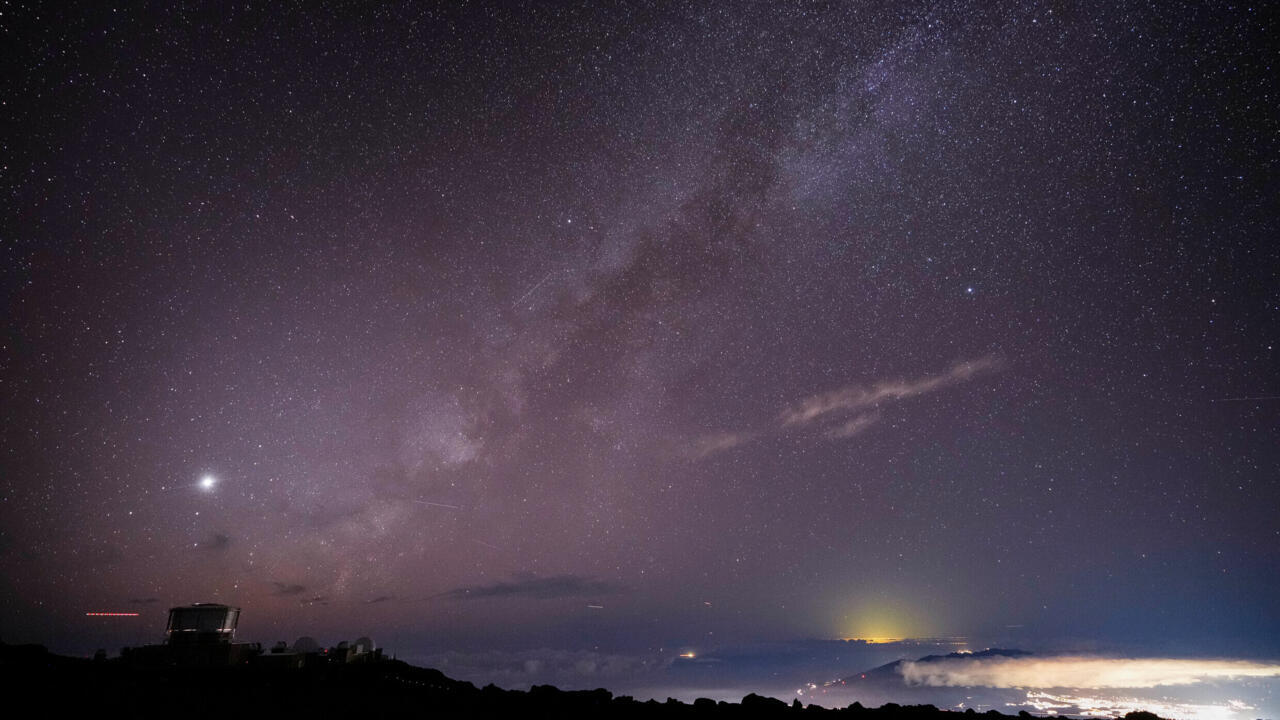
A new adventure in space begins with the launch of the Artemis 2 mission, as four astronauts head towards the Moon. This mission is the first of its kind since 1972, aiming to pave the way for humans to return to the lunar surface by 2028 during the Artemis 3 mission.
While most experts agree that there is no life on the Moon, scientists believe that the search for extraterrestrial beings is not just a fantasy but a real possibility. With advancements in technology in astronomy, scientists are expected to be able to observe Earth-like planets within the next decade.
Mission Details and Objectives
The Artemis 2 mission seeks to return humans to the Moon, where scientists hope this mission will contribute to the exploration of lunar soil once again. In this context, Christian Mustain, an expert in astrobiology, explains that there is a close relationship between manned space missions and the search for signs of life. He emphasizes that a well-equipped human can search more effectively than robots.
The questions surrounding the existence of life beyond Earth are renewed, a subject that has captivated humanity throughout history. In a recent podcast, former U.S. President Barack Obama expressed his belief in the existence of other life forms in the universe, which sparked varied reactions, including his predecessor Donald Trump's promise to release classified documents about unidentified flying objects.
Background & Context
Historically, there have been indications of ancient life on Mars, but there is no conclusive evidence of its continued existence today. In our solar system, studies indicate the presence of liquid water on icy moons such as Enceladus and Europa, enhancing hopes for the potential of microbial life.
Impact & Consequences
About a hundred scientists from the SETI Institute in California are working to explore the skies for signs of life. French-American astronomer Frank Marchis estimates that there are trillions of galaxies, each containing hundreds of billions of stars, increasing the likelihood of intelligent life in the universe. Despite sending messages to presumed life forms, such as the golden record included in NASA's Voyager probes, the universe remains silent. However, many scientists assert that the absence of extraterrestrial beings would be thought-provoking.
Regional Significance
The Artemis 2 mission not only represents a leap in space exploration but also fosters international scientific collaboration. As nations unite in the quest to explore the cosmos, the implications of discovering life beyond Earth could reshape our understanding of humanity's place in the universe.
In conclusion, the Artemis 2 mission marks a significant step towards space exploration and understanding the possibility of life beyond our planet. As scientists continue to push the boundaries of knowledge, the excitement surrounding this mission may inspire future generations to look towards the stars.