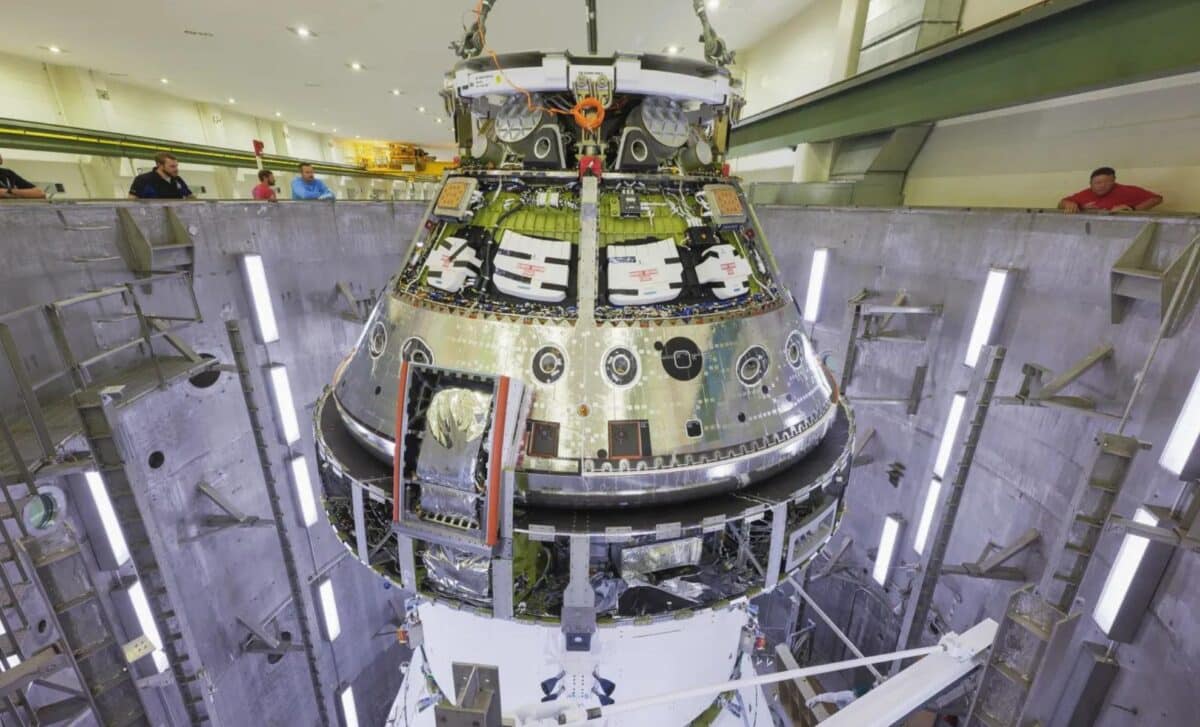
The Artemis 2 mission has embarked on its historic journey to the Moon, with the Orion spacecraft entering deep space to conduct a series of vital tests. This mission represents a historic return to lunar exploration, as no space agency has sent a crewed mission to the Moon since the Apollo program ended in 1972. If successful, the four-member crew will become the first humans to reach the farthest point from Earth, witnessing unexplored areas of the Moon's far side.
After launch and entering Earth orbit, the most complex phase of the mission begins, lasting for 10 days. On the first day, the Orion spacecraft gradually increased its orbit's altitude, propelled by the upper stage of the rocket. Following this, the upper stage separated from the spacecraft to serve as a companion for future experiments.
Event Details
In the following days, Orion will conduct tests on propulsion and life support systems. If these systems prove efficient, the spacecraft will perform a critical maneuver known as the "lunar transfer injection," which is a crucial step in any lunar mission. The Artemis 2 mission is unique in that it will perform this maneuver only once, as the trajectory has been designed to ensure a safe return to Earth.
After four days of travel, Orion will enter the Moon's gravitational field, where it will maneuver around the far side of the Moon at an altitude of 7,400 kilometers. This moment will be historic, as it will be the first time astronauts see the far side of the Moon directly, although the lighting will not be optimal.
Background & Context
Historically, the Apollo program represents humanity's greatest achievement in space exploration, sending astronauts to the Moon multiple times between 1969 and 1972. After the conclusion of this program, no crewed missions were sent to the Moon, making the Artemis 2 mission a significant step towards regaining leadership in space exploration. NASA aims through this mission to develop the necessary technology for returning to the Moon and preparing for future missions to Mars.
This mission is part of NASA's broader vision, aiming to establish a permanent base on the Moon, which will aid in deep space exploration and the development of technologies necessary for future journeys.
Impact & Consequences
If the Artemis 2 mission succeeds, it will enhance the United States' position in space exploration and revive global interest in space. This mission will also open new avenues for international cooperation in space, as other countries may participate in future projects.
The mission is also an opportunity to enhance scientific research, as scientific experiments will be conducted during the journey, contributing to a better understanding of space and its effects on living organisms.
Regional Significance
For the Arab region, the success of the Artemis 2 mission represents an opportunity to enhance cooperation in the field of space. Many Arab countries have begun developing their own space programs, such as the United Arab Emirates, which launched the Hope Probe to Mars. This mission could encourage Arab countries to invest in technology and scientific research, enhancing their capabilities in space-related fields.
In conclusion, the Artemis 2 mission represents an important step towards space exploration, opening new horizons for research and international cooperation, which may positively impact the Arab region.