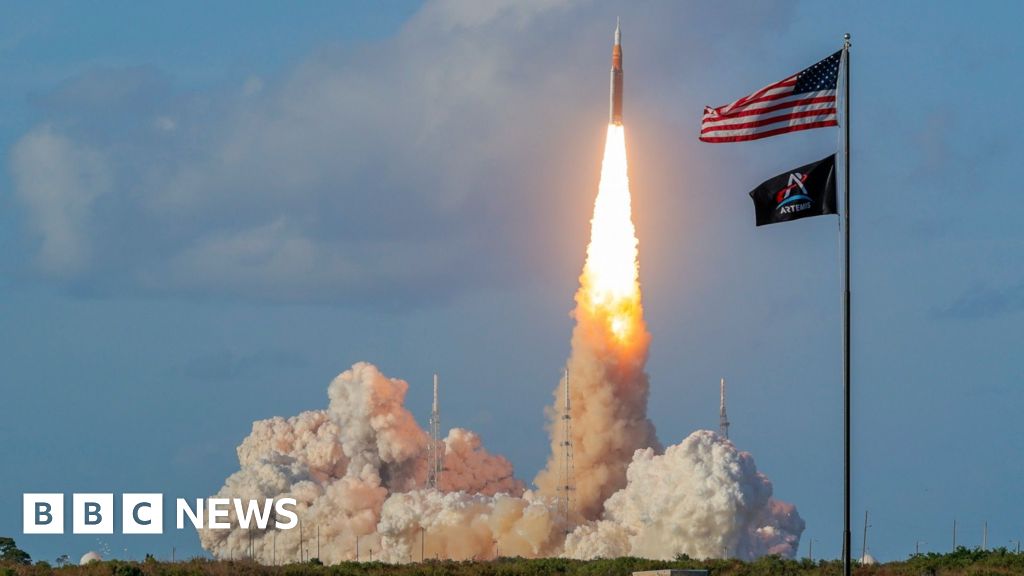
The Artemis 2 mission, regarded as the first crewed mission to the Moon in fifty years, has successfully launched from the Kennedy Space Center in Florida, USA. After multiple delays due to technical issues, the spacecraft has reached Earth orbit, marking a significant achievement in the field of space exploration.
This mission is part of the Artemis program, which aims to return humans to the Moon, and is considered a component of a larger vision for exploring Mars and outer space. Four astronauts are participating in this mission, which will take them to the Moon on a journey lasting several days before returning to Earth.
Event Details
The launch was executed successfully after all technical systems of the spacecraft were verified, alleviating previous concerns about potential further delays. The spacecraft is equipped with the latest technologies to ensure the safety of the crew and the success of the mission. This launch is seen as a crucial step towards achieving the ambitious goals of the U.S. space agency, NASA.
During the mission, the astronauts will conduct a series of scientific experiments in addition to exploring the lunar surface. This project is part of global efforts to explore space, as many countries strive to develop their own space programs.
Background & Context
Historically, the last crewed mission to the Moon was Apollo 17, launched in 1972. Since then, humanity has not witnessed any crewed missions to the Moon, making Artemis 2 a historic event. This mission reflects the significant technological advancements humanity has made in the field of space, with the development of safer and more efficient spacecraft.
This mission comes at a time when the space industry is experiencing increasing competition among nations, each striving to enhance its capabilities in this field. There is also growing interest from the private sector in space exploration, opening new avenues for international collaboration.
Impact & Consequences
The Artemis 2 mission is considered an important step towards achieving NASA's ambitious goals, as the agency aims to establish a permanent base on the Moon by the end of this decade. This mission is expected to contribute to enhancing scientific research and developing new technologies that can be utilized in Mars exploration.
Moreover, this mission may encourage other countries to develop their own space programs, thereby enhancing international cooperation in the field of space. Space is a vital area for competition among nations, where new discoveries could improve life on Earth.
Regional Significance
As Arab countries focus on developing their space programs, the success of the Artemis 2 mission serves as an impetus for these nations to bolster their investments in this field. This mission may encourage Arab countries to collaborate with global space agencies to develop new technologies and achieve their goals in space exploration.
Furthermore, this mission could contribute to enhancing education and scientific research in Arab countries, as space is an area that attracts the interest of youth and stimulates innovation and development.
In conclusion, the success of the Artemis 2 mission is a historic achievement that brings humanity back to the Moon after fifty years of absence. This accomplishment showcases the significant progress in the field of space and reinforces the importance of international cooperation in space exploration.