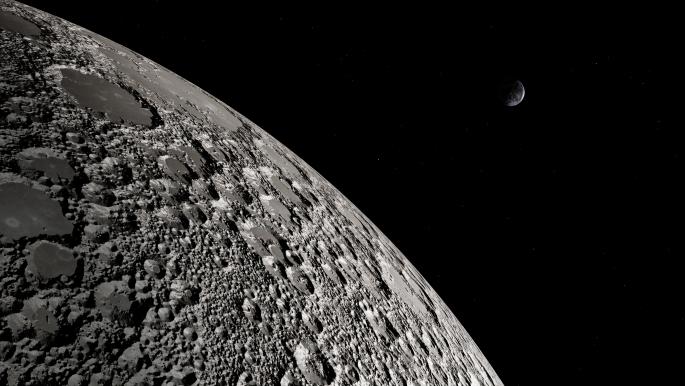
The Artemis 2 mission has launched towards the Moon, reigniting a wave of conspiracy theories and misinformation that have historically accompanied lunar missions. This mission marks a significant step in space exploration as NASA aims to return humans to the lunar surface after decades of absence.
Artemis 2 is part of the broader Artemis program, which seeks to establish a permanent presence on the Moon and explore further into outer space. However, each step in this program brings with it a set of doubts and questions, opening the door to conspiracy theories surrounding the lunar landings.
Event Details
The Artemis 2 mission involves sending astronauts into orbit around the Moon, where they will conduct scientific experiments and evaluate new technologies. This mission follows the successful Artemis 1 mission, which was uncrewed and demonstrated the capabilities of the rockets and technologies used in the program.
As the launch date approached, media outlets and social media began circulating conspiracy theories regarding the mission's feasibility, with some claiming that the Moon landing was merely a hoax. These theories date back decades, with some voices still questioning the validity of the first Moon landing in 1969.
Background & Context
The history of lunar landings dates back to 1969 when Neil Armstrong and Buzz Aldrin became the first humans to walk on the Moon. Since then, this mission has become a symbol of scientific and technological progress. However, doubts about the legitimacy of this mission have not ceased, as conspiracy theories continue to emerge, reflecting a lack of trust in scientific institutions.
In recent years, these theories have notably increased, especially with the rise of social media that allows information to spread rapidly. This raises questions about how these theories impact the public and their ability to influence public opinion.
Impact & Consequences
The Artemis 2 mission raises numerous questions about how conspiracy theories may affect future scientific programs. While space agencies strive to achieve new milestones, the doubts raised by these theories could impact funding and public support for these projects.
Moreover, these theories could lead to a erosion of trust in scientific institutions, hindering progress in other fields such as medicine and technology. It is crucial for space agencies to adopt effective strategies to communicate with the public and clarify scientific facts.
Regional Significance
As attention turns to space, Arab countries have also begun developing their own space programs. However, the spread of conspiracy theories may affect how these programs are received by the public. It is essential for these countries to build trust with their populations through transparency and effective communication.
Additionally, the success of the Artemis 2 mission could inspire Arab nations to enhance their investments in space, potentially leading to new scientific achievements that benefit the region.
In conclusion, the Artemis 2 mission is not just a journey to the Moon; it is also a test of trust in science and technology. Amid the proliferation of conspiracy theories, the greatest challenge remains how to promote scientific understanding and effective communication with the public.