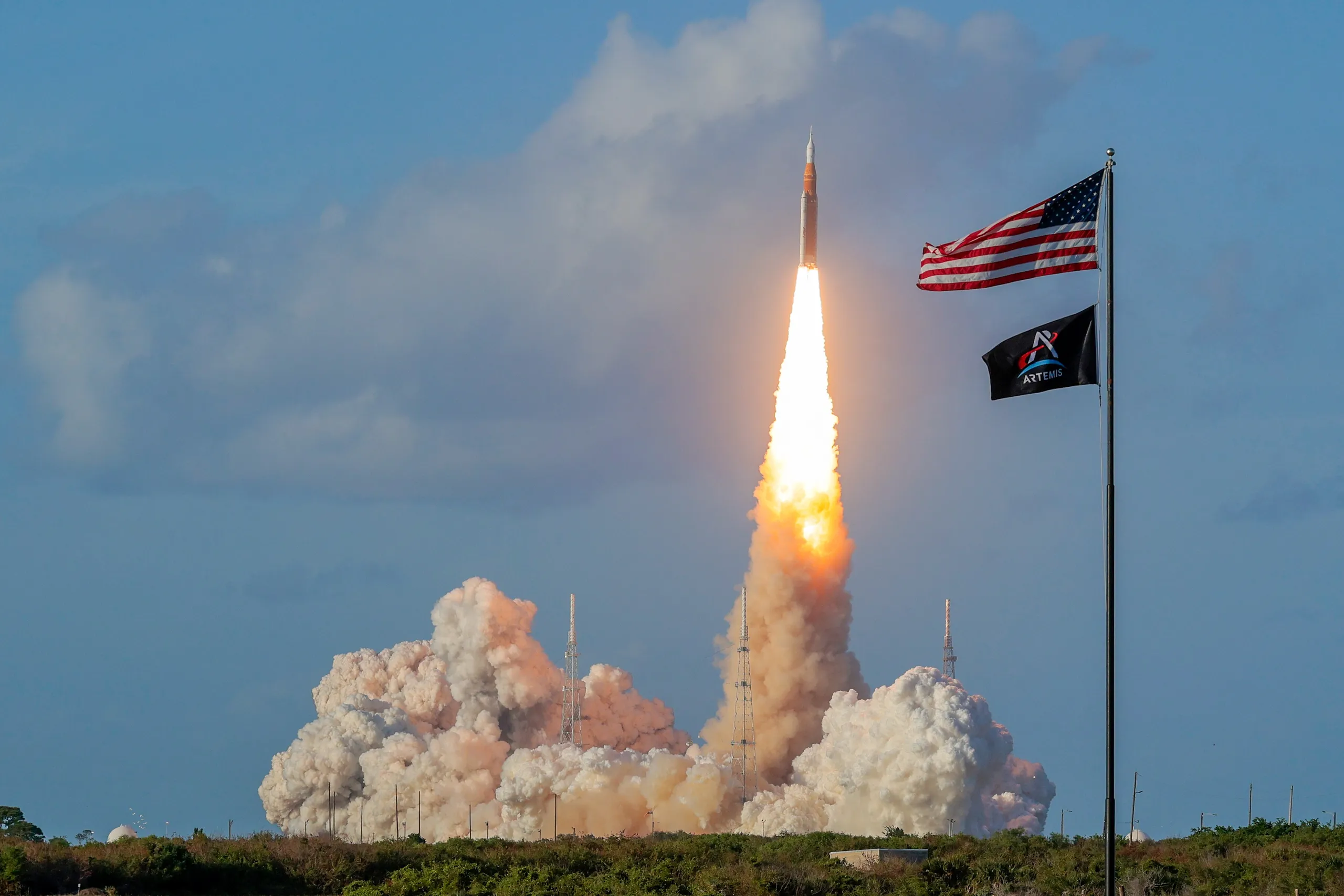
In a historic step, the Artemis II mission launched on April 2, 2024, with a Space Launch System rocket carrying the Orion capsule into space. Onboard were astronauts Reid Wiseman, Victor Glover, Christina Koch, and Jeremy Hansen, making them the first humans to leave low Earth orbit since the Apollo 17 mission in 1972.
This mission aims to test vital technological systems that will be used in future missions, such as radiation protection systems and communication methods between the capsule and Earth over lunar distances. One of the most notable features of the Artemis II mission is the trajectory it will follow during its journey.
Event Details
After launch, the first stage of the SLS rocket separated from the rest of the vehicle, including the upper stage Interim Cryogenic Propulsion Stage (ICPS) and the Orion capsule. The upper stage carried the capsule into a high orbit around Earth, where the crew orbited for nearly 23 hours. After conducting all necessary checks, the upper stage separated from the capsule, marking the true beginning of the journey to the Moon.
The mission will reach its midpoint on the evening of April 6, where astronauts will travel approximately 10,300 kilometers behind the Moon, thus setting new records for distance from Earth. The previous record was held by the Apollo 13 mission, which reached about 400 kilometers behind the Moon.
Background & Context
The Artemis II mission is part of the Artemis program launched by the American space agency NASA, which aims to return to the Moon and explore deep space. The program represents an important step toward achieving larger goals, such as sending humans to Mars. Historically, the Apollo missions were pioneers in lunar exploration, demonstrating humanity's ability to travel into outer space.
This mission comes at a time when the world is witnessing an increasing interest in space, with many countries and private companies competing to achieve new milestones in this field. The success of the Artemis II mission will enhance the United States' position in the space race.
Impact & Consequences
This mission is a vital step toward developing space technology, as it will help test new systems that may be necessary for future missions. The trajectory the capsule will follow, which includes using gravity as a means to return to Earth, represents a significant advancement in understanding how to navigate in space.
Furthermore, the success of the mission may encourage more investments in the space sector, opening the door to further innovations and developments in this field. The results from this mission will also benefit the development of space technology in other countries.
Regional Significance
The Artemis II mission holds particular significance for Arab countries, reflecting the global trend toward space exploration. These achievements can inspire Arab nations to develop their own space programs and enhance cooperation in the fields of science and technology.
Moreover, the success of this mission may open doors for new partnerships between Arab countries and global space agencies, contributing to the enhancement of scientific and technological capabilities in the region.