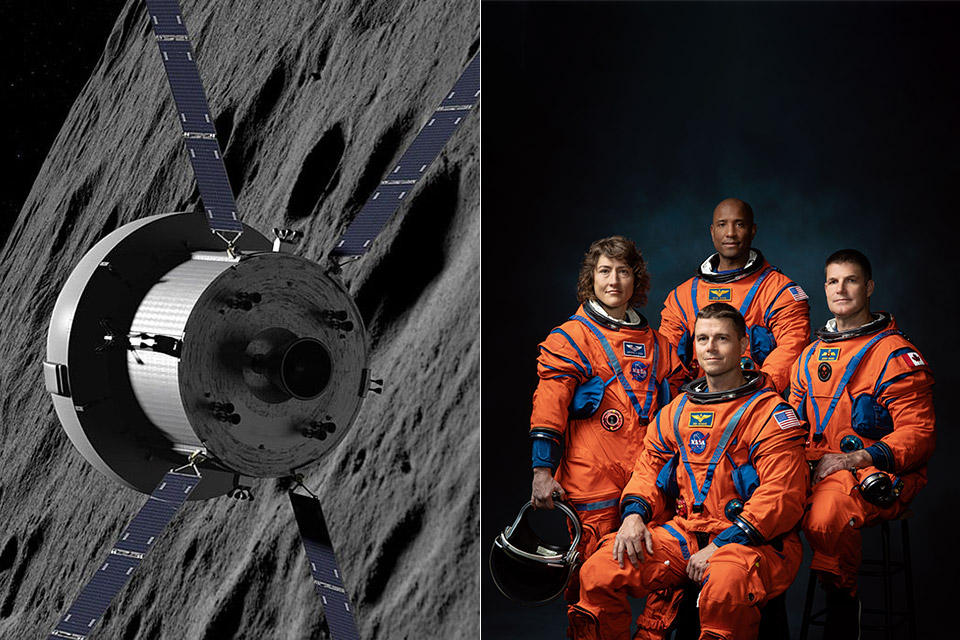
NASA is gearing up to launch the Artemis II mission, marking the first crewed journey to the Moon in over 50 years. The mission is scheduled to take off on Wednesday, April 1, from the Kennedy Space Center in Cape Canaveral, Florida. The crew will consist of four astronauts, three Americans and one Canadian, embarking on a 10-day journey covering a distance of up to 2.25 million kilometers.
This mission, considered a significant step in the Artemis program, aims to explore deep space and validate the necessary systems to support astronauts in future missions. Although Artemis II will not involve a landing on the Moon, it will orbit the lunar body, rekindling the excitement that the United States experienced during the Apollo missions half a century ago.
Event Details
The Artemis II crew includes American astronauts Reid Wiseman, Victor Glover, and Christina Koch, along with Canadian astronaut Jeremy Hansen. Glover is recognized as the first astronaut of African descent to travel near the Moon, while Koch will be the first woman to achieve this milestone. Hansen will also be the first non-American astronaut to surpass low Earth orbit.
The mission will utilize the Orion spacecraft, which will launch aboard the powerful SLS rocket. Following the launch, the spacecraft will orbit Earth to conduct multiple tests to ensure its safety and reliability. If all goes as planned, the spacecraft will head towards the Moon, where it will orbit before returning to Earth using the Moon's gravity to minimize fuel consumption.
Background & Context
The concept of lunar exploration dates back to the 1960s when the United States launched the Apollo program, which witnessed the first human landing on the Moon in 1969. However, crewed space activities diminished after the Apollo program concluded, until NASA revived its interest in the Moon through the Artemis program. This program aims to establish a base on the Moon, paving the way for future missions to Mars.
Artemis II is seen as a continuation of the Artemis I mission, which was an uncrewed test flight around the Moon in 2022. Following Artemis II, Artemis III is scheduled for 2027, which will involve landing astronauts on the lunar surface.
Impact & Consequences
The Artemis II mission holds significant technical and operational importance, representing the first crewed flight into deep space in decades. However, the mission faces several challenges, including previous issues with the SLS rocket, such as hydrogen fuel leaks during prior tests. Additionally, the spacecraft's re-entry trajectory into Earth's atmosphere was modified after the heat shield encountered problems during the Artemis I mission.
Competition in the space sector is intensifying, with the United States facing challenges from other nations, such as China, which has launched robotic missions to the far side of the Moon. Through the Artemis program, NASA aims to enhance its presence in space and explore potential economic opportunities on the Moon and Mars.
Regional Significance
While the Artemis II mission focuses on outer space, it has potential implications for the Arab region. This mission could inspire new generations in the Arab world to foster interest in science and technology, contributing to the development of local space programs. Furthermore, international collaboration in space could open new avenues for Arab countries in research and development.
In conclusion, the Artemis II mission represents a crucial step towards exploring deep space, reviving the old dream of returning to the Moon. The success of this mission could pave the way for further space discoveries and enhance international cooperation in this field.