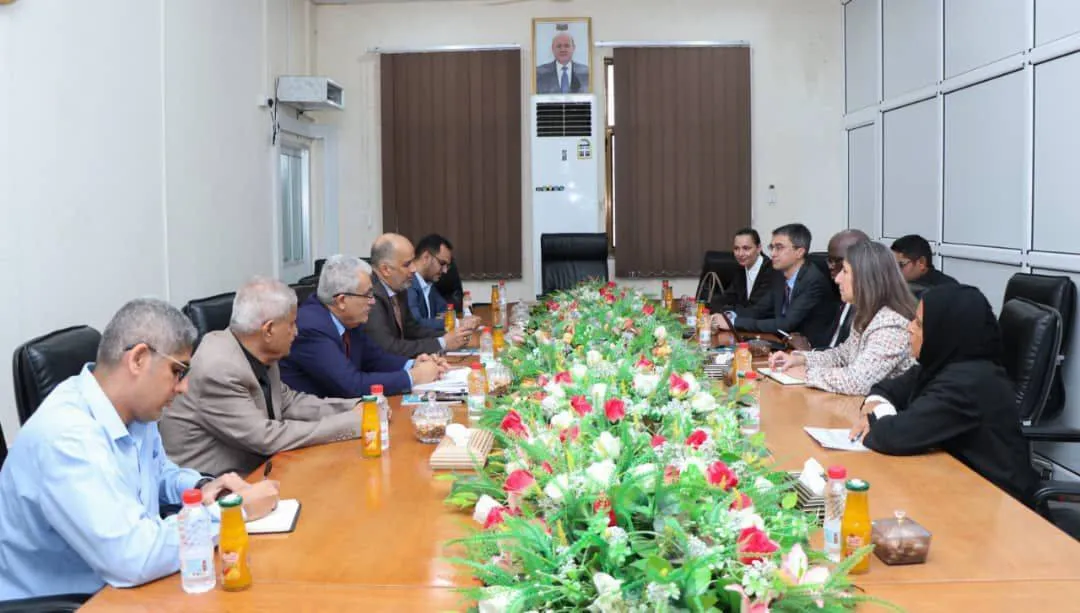
The Yemeni Ministry of Finance has announced the launch of a comprehensive financial and structural correction program, aimed at resuming the implementation of the government's economic reform priorities. This program is part of the government's efforts to sustainably stabilize the economic situation and enhance the efficiency of financial management.
The new program aims for an integrated management approach that connects the restoration of public resources and their governance, while eliminating illegal fees and levies. It also seeks to subject various revenue sources and economic entities to state oversight, thereby enhancing financial management efficiency and reducing waste and economic distortions.
Event Details
This step follows the approval by the Executive Board of the International Monetary Fund of the results of the Article IV consultations for 2025, which are considered a pivotal window for reintegrating the Yemeni economy into the international financial system after a disruption lasting over 11 years. The International Monetary Fund praised the efforts made by the Yemeni government, which contributed to stabilizing the economy and initiating a gradual recovery from the deep recession that followed the halt of oil exports in 2022.
The Ministry of Finance confirmed that this direction represents an urgent response to address the structural imbalances in the national economy, which resulted from the war imposed by the Houthi militia. This war has caused severe financial shocks, most notably the disruption of foreign currency sources and the cessation of crude oil exports, which account for 65% of the state’s general budget resources.
Background & Context
The war in Yemen has led to a disruption in the flow of central resources to the public treasury, which has reduced the state's financial space and limited its ability to intervene economically. This situation has increased the economy's exposure to internal and external shocks, necessitating urgent measures to stabilize the financial and economic trajectory.
The Ministry of Finance confirmed that it is leading vigorous efforts to recalibrate the financial and economic course, transitioning from diagnosis to actual institutional implementation. It also anticipated that this step would enhance transparency and establish the government's creditworthiness among donors and investors, thereby creating an attractive environment for external support and investment flows.
Impact & Consequences
Success in implementing this program requires activating oversight tools, including the Central Authority for Auditing and Accountability and the National Anti-Corruption Commission. The High Committee for Government Tenders and Auctions must also be reactivated to enhance oversight of public funds and ensure the completion of documentation processes within legal frameworks.
The Ministry of Finance emphasized that the upcoming phase requires translating these directions into sustainable institutional practices, as they are the essential entry point for extricating the national economy from its current crisis and achieving the desired financial and economic stability.
Regional Significance
These reforms come at a sensitive time for the region, where many Arab countries are facing similar economic challenges. The success of the Yemeni government in implementing these reforms could serve as a model for other countries seeking to improve their economic conditions.
In conclusion, it appears that the Yemeni government is moving in the right direction towards achieving economic stability, but success depends on the effective implementation of reforms and the activation of necessary oversight to ensure that past mistakes are not repeated.