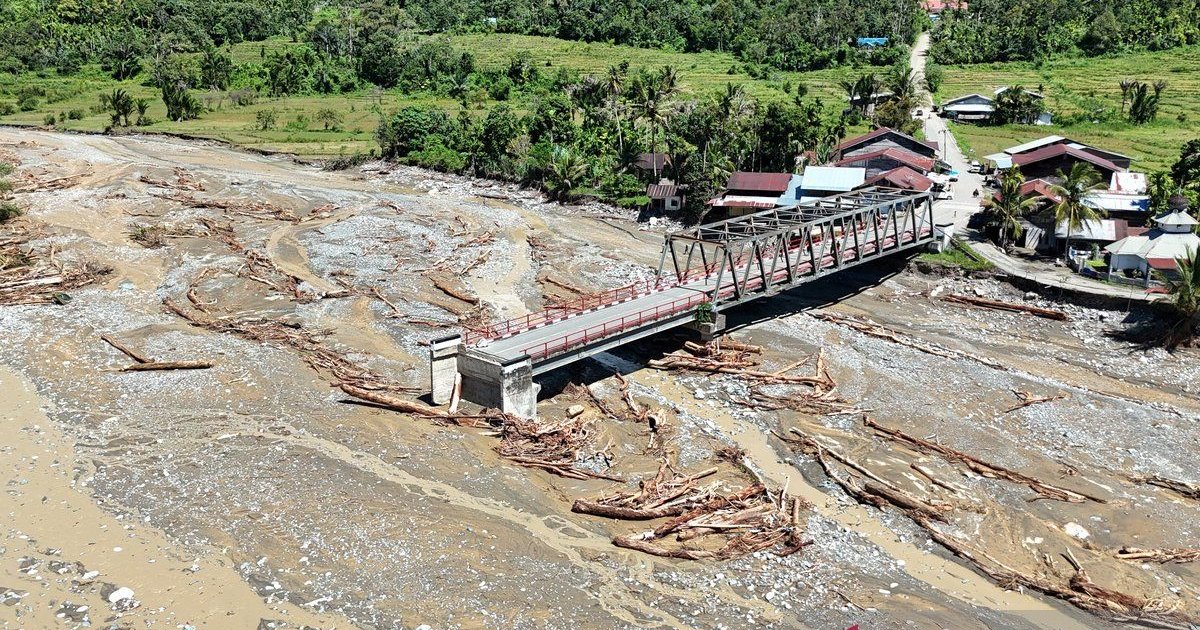
The Indonesian government has initiated the implementation of a comprehensive plan to rehabilitate areas in Sumatra affected by natural disasters, with recovery expected to last until the end of 2028. This move is part of the government's efforts to enhance the affected regions' capacity to recover from the impacts of disasters and improve the living conditions of the population.
The Satgas PRR (Disaster Response Task Force) is working on establishing clear priorities within the rehabilitation plan, focusing on addressing the most urgent needs across various sectors. Mohammad Tito Karnavian, the head of the task force, confirmed that the goal is to expedite the recovery process by identifying priorities that directly affect citizens' lives.
Details of the Plan
The plan devised by the Indonesian government includes several key areas, such as housing and infrastructure. Karnavian explained that rebuilding housing is a top priority, as officials aim to reduce the duration citizens spend in evacuation centers. The plan also encompasses the improvement of damaged roads and bridges, along with the removal of mud and debris from affected areas.
The rehabilitation process requires close coordination among various ministries and government agencies, as the plan will become a legal document that budgets for the projects will be based on. It is anticipated that approximately 120 trillion Indonesian rupiah (around 8.5 billion USD) will be allocated to finance these projects over three years, with 40 trillion rupiah designated for the first year alone.
Background & Context
Historically, Sumatra has experienced numerous natural disasters, including earthquakes and landslides, resulting in widespread destruction of infrastructure and homes. In recent years, the Indonesian government has worked to improve its disaster response by establishing specialized teams like the Disaster Response Task Force, aimed at accelerating relief and rehabilitation efforts.
This plan is part of a broader strategy to enhance the country's ability to cope with natural disasters, as the government seeks to improve early warning systems and raise community awareness about disaster risks.
Impact & Consequences
Estimates suggest that the rehabilitation process will positively impact the local economy by creating new job opportunities and contributing to improved living standards for residents. Additionally, rebuilding infrastructure will bolster communities' capacity to recover swiftly from any future disasters.
This initiative also serves as a model for disaster management, where other countries can learn from Indonesia's experience in coordinating among various government entities and effectively setting priorities.
Regional Significance
Although Indonesia is far from the Arab world, its disaster management experiences can be beneficial for Arab nations facing similar challenges. Natural disasters do not recognize borders, making it crucial for countries to share expertise and experiences in this field.
In conclusion, the rehabilitation plan in Sumatra represents a significant step towards building a more resilient community capable of facing future challenges, reflecting the Indonesian government's commitment to improving the lives of its citizens and enhancing their ability to recover from crises.