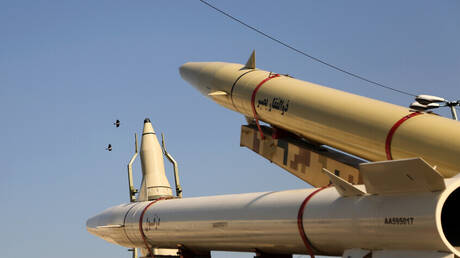
Israel has faced multiple rocket attacks from Iran, with Tehran renewing its strikes on the Negev region in the south, coinciding with another assault from Hezbollah in the north. These developments occur during a highly sensitive time, as tensions in the region escalate.
The Iranian attack marks the third of its kind within the past two hours, reflecting a notable escalation in military operations by Tehran. Meanwhile, Hezbollah, backed by Iran, continues to carry out attacks on the northern front, further complicating the security situation in Israel.
Details of the Incident
In recent hours, Israeli military reports have detected the launch of rockets from Iranian territory towards the Negev region, prompting the activation of the Israeli air defense system to counter these attacks. Several rockets were intercepted before reaching their targets, but the assaults caused panic among local residents.
On the northern front, military sources reported that Hezbollah launched several rockets towards border areas in northern Israel, leading to the mobilization of Israeli forces in that region. These attacks are part of the ongoing escalation between the two sides, which has been witnessed in recent months.
Background & Context
These attacks come amid increasing tensions between Iran and Israel, as both countries exchange accusations regarding support for armed groups in the region. Iran views Israel as a primary enemy and seeks to enhance its influence in the Middle East by supporting Hezbollah and other groups.
The recent escalation also occurs against the backdrop of political and economic crises facing Iran, as Tehran seeks to divert attention from its internal problems by targeting Israel. In response, Israel continues to bolster its military capabilities in the face of rising threats from the north.
Impact & Consequences
The military escalation between Iran and Hezbollah on one side and Israel on the other could lead to a larger escalation in the region. If the attacks persist, regional and international powers may intervene for mediation, complicating the situation further.
These events may also impact regional security, as other countries in the area may feel concerned about rising tensions, potentially leading to new alliances or a rearrangement of power in the Middle East.
Regional Significance
These developments are of significant importance to the Arab region, reflecting the ongoing conflict between regional powers. Arab countries facing internal conflicts may find themselves compelled to deal with the repercussions of these attacks, both in terms of security and politics.
Furthermore, the rising tensions between Iran and Israel may affect peace efforts in the region, complicating relations between Arab states and Iran. At the same time, some armed groups may exploit this chaos to enhance their influence in the area.
The military escalation between Iran, Hezbollah, and Israel poses a significant challenge to regional security and requires close monitoring by the international community. Under these circumstances, there remains hope that the involved parties can avoid further escalation and seek peaceful solutions.