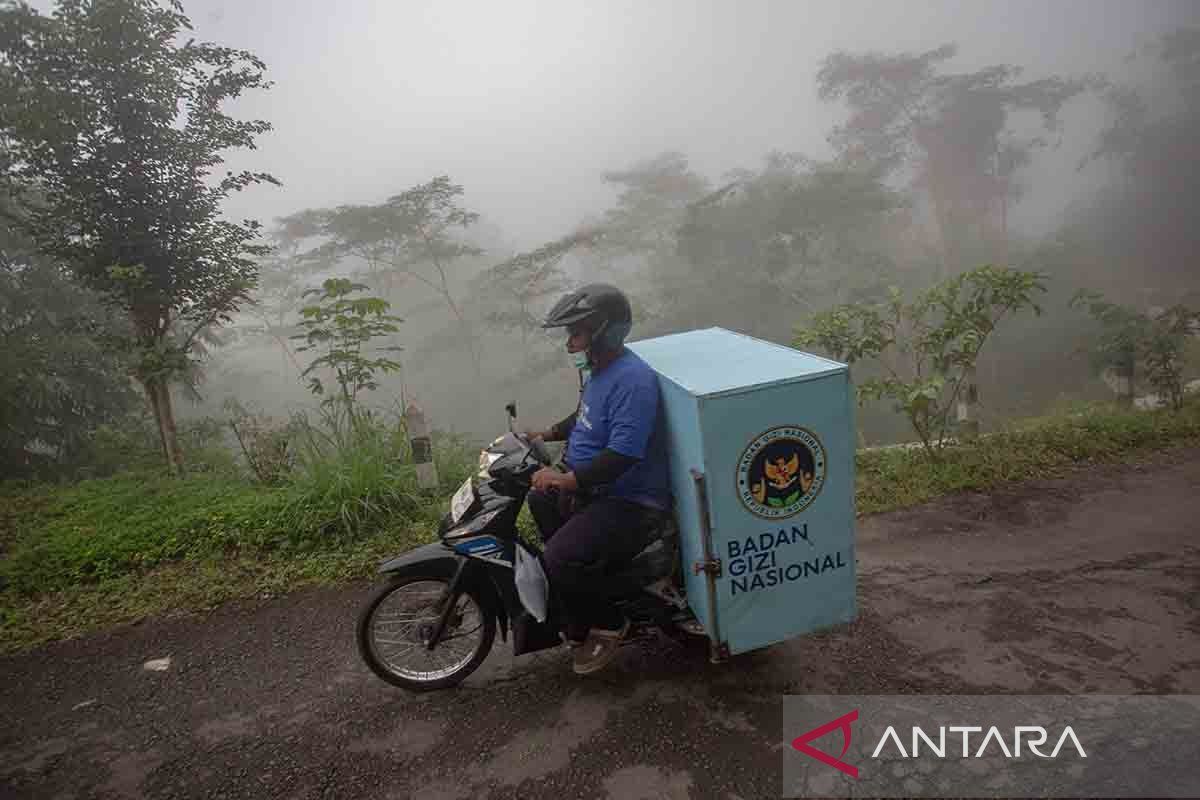
The National Nutrition Agency of Indonesia (BGN) has unveiled its plans to provide electric bikes to enhance the field monitoring operations conducted by heads of the Nutrition Service Units (SPPG). This announcement comes at a time when there is a growing global interest in sustainable technologies, aiming to improve the effectiveness of health programs in the country.
Despite the significant buzz surrounding these plans on social media, the head of the agency, Dadan Hendayana, clarified that the bikes have not yet been officially distributed, as administrative procedures are still underway. He confirmed that these bikes will facilitate the work of SPPG heads in various regions.
Details of the Initiative
The electric bikes in question feature a modern design and a light blue color, classified as Trail Emmo JVX GT and Emmo JVH Max. These bikes are designed to suit various terrains, with the Trail model capable of reaching speeds of up to 80 kilometers per hour and covering distances of up to 70 kilometers on a single charge.
The second model, Emmo JVH Max, can reach speeds of 90 kilometers per hour, making it suitable for urban use. These bikes are equipped with fast-charging technology, allowing the battery to charge from 30% to 80% in just one hour.
Background & Context
This initiative is part of the ongoing efforts by the Indonesian government to enhance nutrition levels and public health in the country. Indonesia faces significant challenges in the field of nutrition, as the government seeks to strengthen monitoring and evaluation programs to ensure that food aid reaches the most needy populations.
The use of electric bikes also reflects the global trend towards sustainable transportation, contributing to reduced carbon emissions and improved air quality in cities.
Impact & Consequences
This initiative is seen as a positive step towards improving the effectiveness of nutrition programs, as electric bikes will help expedite monitoring processes and save time and effort for workers in this field. Additionally, the use of electric bikes demonstrates the Indonesian government's commitment to environmental sustainability.
However, the government must ensure that the information regarding the number of available bikes is accurate, as inaccurate reports circulated claiming there were 70,000 bikes, which the agency denied, confirming that the actual number is 21,085.
Regional Significance
This initiative serves as a model for Arab countries facing similar challenges in nutrition and public health. Arab nations can benefit from Indonesia's experiences in utilizing modern technology to enhance health service delivery.
In conclusion, this step reflects the Indonesian government's commitment to addressing health and nutritional challenges, potentially opening new avenues for cooperation between countries in the fields of public health and nutrition.