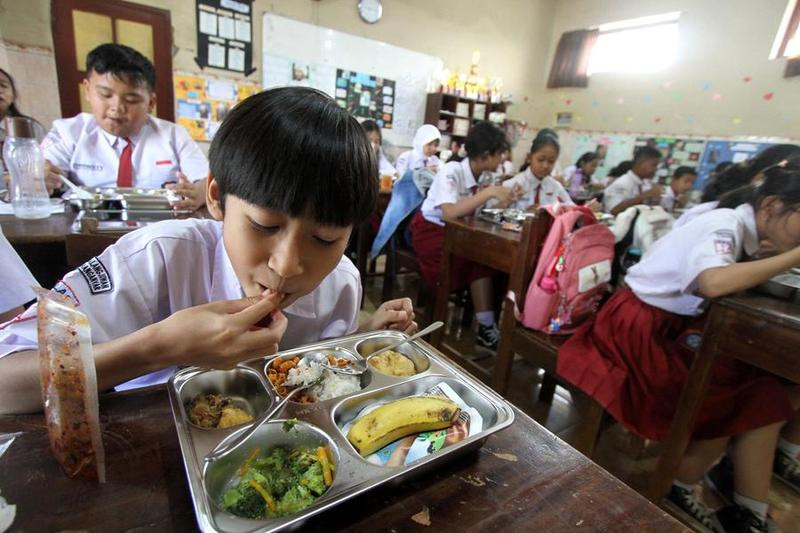
The Indonesian government announced on Monday the start of the "Free Healthy Meals" (MBG) program, which aims to improve nutrition in the country. Subsidies will be halted for entities that are found to be raising food prices. This announcement is part of the government's efforts to enhance food security and improve the health of citizens, especially with the program set to commence on March 31.
In a related context, the Indonesian Ministry of Hajj and Umrah confirmed its readiness to provide comprehensive health services for pilgrims during the Hajj season of 2026, with plans to establish 45 health clinics in both Mecca and Medina. This step aims to ensure the health and safety of Indonesian pilgrims during their rituals.
Event Details
Deputy Head of the National Nutrition Agency, Soni Sonjaya, explained that the "Free Healthy Meals" program represents a significant opportunity to improve the agriculture and livestock sectors in Indonesia. He noted that the program will enhance farmers' ability to provide healthy food products at affordable prices, contributing to an improved standard of living for citizens.
Social Affairs Minister, Syaifullah Yusuf, emphasized the importance of updating the data of beneficiaries of social assistance to ensure that support reaches the most needy groups. This update will help in directing resources more effectively, thereby enhancing the effectiveness of social programs.
Background & Context
Indonesia is one of the largest Muslim countries in the world, with millions of citizens preparing to perform Hajj annually. As the number of pilgrims increases, the need for improved health services becomes more pressing. Historically, Indonesia has witnessed continuous efforts to enhance the quality of health services, particularly during Hajj seasons, where various public health challenges have arisen.
In recent years, the Indonesian government has shown a strong commitment to improving the quality of life for its citizens through various programs aimed at enhancing food and health security. The "Free Healthy Meals" program is part of these efforts, seeking to achieve a balance between supply and demand in the food market.
Impact & Consequences
The "Free Healthy Meals" program is expected to have a positive impact on the Indonesian economy, as it will lead to increased demand for local agricultural products, thereby enhancing farmers' capacity to grow and expand. Additionally, improving nutrition will contribute to reducing diseases associated with malnutrition, alleviating the burden on the healthcare system.
Regarding health services for pilgrims, the establishment of 45 health clinics reflects the government's commitment to providing exceptional healthcare. This initiative may enhance Indonesia's reputation as a primary destination for Hajj, potentially increasing the number of pilgrims in the coming years.
Regional Significance
As one of the largest Muslim countries, Indonesia's success in improving health and food services can serve as a model for other Arab countries. With increasing health and food challenges in the region, adopting similar strategies could contribute to enhancing food and health security in Arab nations.
In conclusion, the "Free Healthy Meals" program and health services for pilgrims represent a positive step towards improving the quality of life in Indonesia and reflect the government's commitment to enhancing public health and the well-being of its citizens.