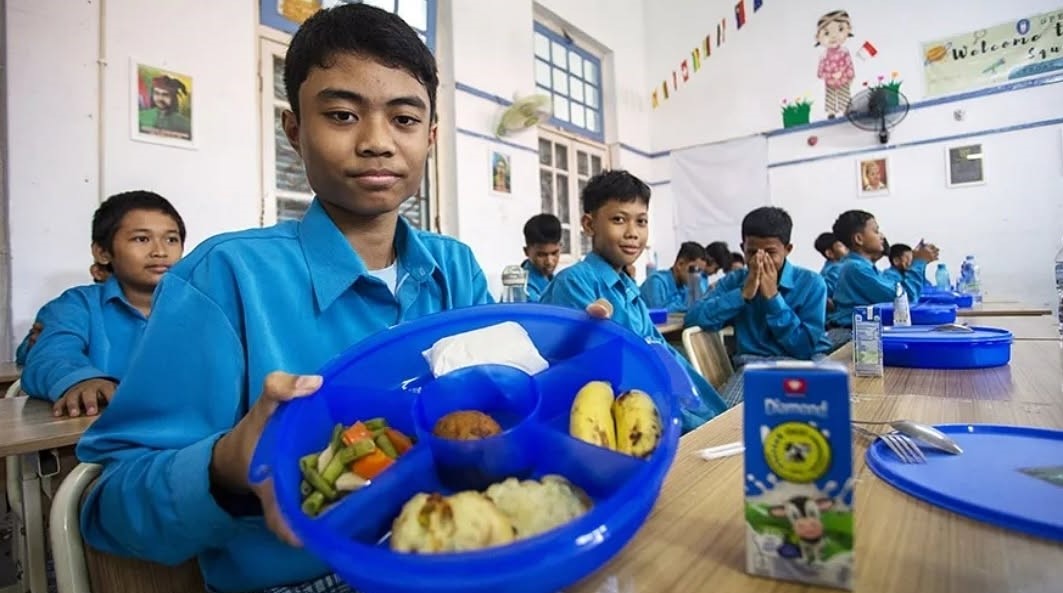
The Indonesian government has announced the launch of a free nutritional program aimed at providing healthy meals to tens of millions of children by 2026. This initiative is part of the country's efforts to improve children's health and combat malnutrition, with a budget of 44 trillion rupiah allocated for this project.
This initiative extends nationwide, as the government seeks to ensure that children receive the necessary nutrition for their growth and proper development. The program was launched in the Slipi area of the capital Jakarta, where healthy meals were distributed to children by their parents.
Details of the Initiative
The program aims to provide balanced meals for children at schools and homes, contributing to reducing malnutrition rates that many families face. The meals are designed to meet children's nutritional needs, focusing on fruits, vegetables, and proteins.
This step comes at a time when Indonesia faces significant public health challenges, with statistics indicating that a large percentage of children suffer from malnutrition. Officials hope that this program will improve children's health and enhance their ability to learn and grow.
Background & Context
Historically, Indonesia has faced significant challenges in nutrition, with malnutrition rates being notably high. Studies have shown that many children in rural areas suffer from deficiencies in essential nutrients, negatively impacting their overall health.
In recent years, the government has taken serious steps to address this issue, including raising awareness about the importance of proper nutrition and providing necessary resources to impoverished families. This program is part of the government's vision to improve the quality of life in the country and ensure a better future for upcoming generations.
Impact & Consequences
This program is expected to have a significant positive impact on children's health in Indonesia. It will help reduce malnutrition rates and thus improve children's academic performance. Additionally, providing free meals may encourage families to send their children to school, enhancing educational opportunities.
Moreover, the program could contribute to boosting the local economy by supporting local farmers who will supply the government with the necessary food ingredients. This could create new job opportunities and enhance economic development in rural areas.
Regional Significance
This initiative serves as a model for Arab countries facing similar challenges in nutrition and public health. Arab nations can benefit from Indonesia's experiences in implementing nutritional programs aimed at improving children's health and combating malnutrition.
Furthermore, enhancing cooperation among countries in the field of health and nutrition can contribute to achieving sustainable development goals, reflecting the importance of collective action to address common challenges.
In conclusion, the launch of this free nutritional program in Indonesia represents a significant step towards improving children's health and ensuring a better future for them. It is essential for governments to continue investing in children's health and providing the necessary resources to ensure their proper nutrition.