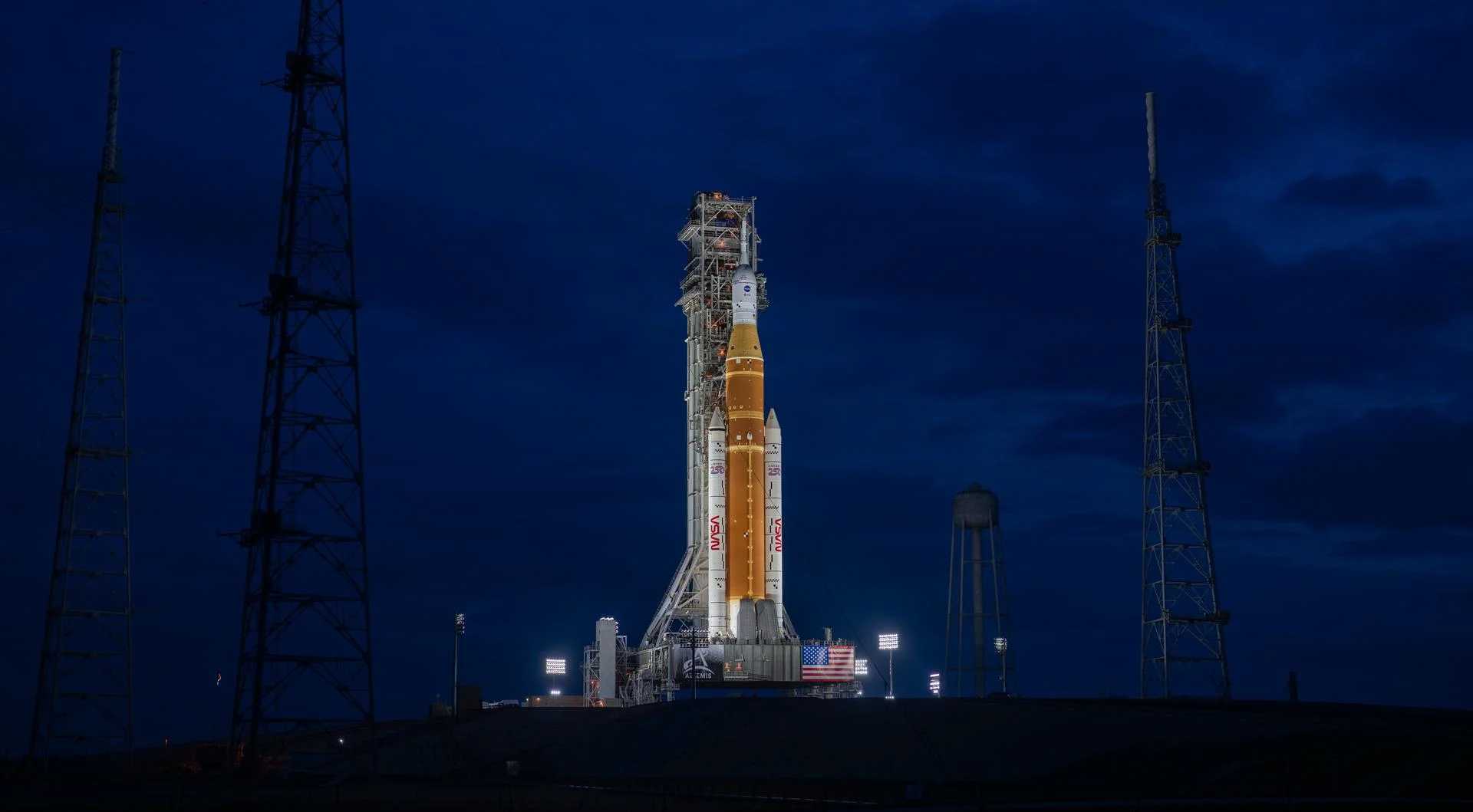
On Wednesday evening, April 1, four astronauts launched from the Kennedy Space Center in Florida, embarking on the Artemis II mission, which is considered the first crewed mission to the moon in over fifty years. This ten-day journey aims to achieve new milestones in space exploration and represents a bold step towards returning humans to the lunar surface before China can achieve its first milestone in this field.
The Space Launch System (SLS) rocket, carrying the Orion capsule, lifted off at 10:35 PM GMT, lighting up the sky with a column of thick white smoke. The Artemis II crew consists of three American astronauts: Reid Wiseman, Victor Glover, and Christina Koch, along with Canadian astronaut Jeremy Hansen.
Event Details
This mission is part of the Artemis program launched by NASA in 2017, which aims to establish a permanent American presence on the moon over the next decade. After nearly three years of training, the Artemis II crew is the first group to fly under this program, marking a significant achievement for the American space agency.
During the flight, the crew will manually control the Orion capsule to test its maneuverability, with the capsule separating from the rocket's upper stage three and a half hours after launch. This mission serves as a critical test for both the Orion capsule and the SLS rocket, which have been developed by companies like Boeing and Northrop Grumman.
Background & Context
Historically, the last crewed mission to the moon was Apollo 17 in 1972. Since then, no space agency has sent astronauts to the moon. However, China plans to send astronauts to the moon by 2030, increasing pressure on the United States to achieve its goal of landing on the lunar surface by 2028.
The Artemis II mission is seen as a first step toward achieving this goal, as it will take the crew deep into space, traveling approximately 406,000 kilometers, the farthest distance humans have traveled in space. The previous mission, Artemis I, was uncrewed and launched in 2022, where the Orion capsule made a similar journey around the moon.
Impact & Consequences
The Artemis II mission is a vital test for the Artemis program, with the next mission, Artemis III, expected to be the first to land an astronaut on the lunar surface. NASA aims to achieve this milestone before China can accomplish its first landing, reflecting the increasing competition in space exploration.
The cost of launching the SLS rocket ranges from $2 to $4 billion, raising questions about the budget and resources allocated to this program. At the same time, private companies like SpaceX and Blue Origin are competing to develop landing vehicles that NASA will use to transport astronauts to the lunar surface.
Regional Significance
As major countries race to explore space, the importance of Arab cooperation in science and technology emerges. Arab nations can benefit from global experiences in space exploration and enhance their space programs, such as the UAE's Mars exploration program, which represents a significant step towards achieving scientific and technological goals.
In conclusion, the Artemis II mission marks a milestone in the history of space exploration, as the United States returns to the lunar arena and opens new horizons for international cooperation in space.