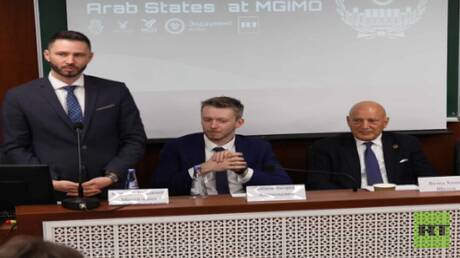
The Arab League model has commenced at the Moscow State Institute of International Relations, simulating the operations of regional organizations and multilateral negotiation mechanisms. This simulation aims to enhance participants' understanding of how the Arab League operates and its role in addressing regional issues.
This event brings together a group of students and experts in international relations, who seek to explore negotiation mechanisms and cooperation among Arab states. It is considered a unique opportunity for exchanging ideas and experiences, as well as enhancing participants' negotiation skills.
Event Details
The Arab League model at the Moscow Institute includes panel discussions and workshops, where participants address various issues including regional security, sustainable development, and economic cooperation. A simulation of the Council of the League sessions is also organized, where participants must make decisions regarding the presented issues.
This event aims to raise awareness about the importance of collective action among Arab states and how to deal with common challenges such as armed conflicts, migration, and economic crises. The model is part of ongoing efforts to enhance cooperation between educational institutions in Russia and Arab countries.
Background & Context
The Arab League was established in 1945 and is a regional organization comprising 22 Arab states, aiming to promote political, economic, and cultural cooperation among member states. Over the years, the League has faced significant challenges, including regional conflicts and political crises, leading to an urgent need to develop effective negotiation and cooperation mechanisms.
This event comes at a sensitive time, as the Arab region is experiencing significant political and economic changes, necessitating enhanced dialogue and cooperation among member states. The simulation at the Moscow Institute is part of efforts to promote mutual understanding between different cultures.
Impact & Consequences
This event contributes to strengthening relations between Russia and Arab countries, providing a platform for exchanging ideas and experiences. It also reflects the Russian Institute's interest in international relations and its role in promoting cooperation among different cultures.
It is expected that this simulation will help develop participants' negotiation skills, enabling them to effectively contribute to regional and international issues. Additionally, it enhances the ability of Arab youth to engage in decision-making at the regional level.
Regional Significance
This event is a positive step towards enhancing Arab cooperation, contributing to the building of a new generation of leaders capable of addressing contemporary challenges. It also reflects the importance of education and training in fostering mutual understanding among Arab states.
Given the current challenges facing the region, such as armed conflicts and economic crises, enhancing dialogue and cooperation among Arab states is essential for achieving stability and sustainable development.