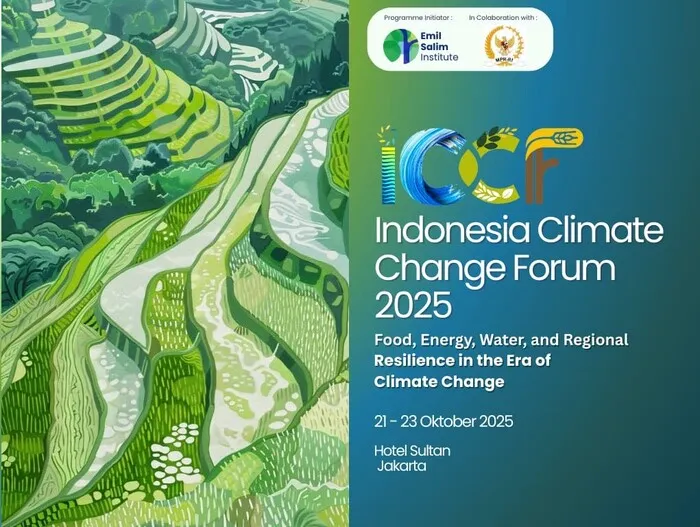
The Director of Climate Change Resource Mobilization at Indonesia's Ministry of Environment, Irwan As'ad, announced the implementation of a new initiative to combat climate change in 12 regions of South Sulawesi, including Luwu. This step is part of the Indonesian government's efforts to enhance environmental management and promote environmental awareness within the community.
During his statements in Makassar, Irwan As'ad emphasized the importance of the initiative named "Gerakan Indonesia ASRI," which translates to "Safe, Healthy, Clean, and Beautiful Indonesia." This initiative was launched by Indonesian President Prabowo Subianto at the beginning of 2026, aiming to enhance environmental awareness and improve the quality of life in the targeted areas.
Details of the Initiative
The initiative focuses on waste management, encouraging the community to handle waste at the source, starting with waste sorting at home, and applying the "3R" concept (Reduce, Reuse, Recycle), in addition to enhancing the role of waste banks in the community. This approach reflects the Indonesian government's commitment to addressing environmental challenges.
In this context, Irwan As'ad met with Luwu's Governor, Patahudhing, who presented a range of strategic programs implemented by the local government to preserve the environment. Among these programs is the planting of fruit trees in various areas, including roads and landslide-prone regions.
Background & Context
Indonesia is considered one of the countries most affected by climate change, increasingly suffering from floods and landslides. In recent years, the Indonesian government has taken tangible steps to confront these challenges by implementing integrated environmental policies aimed at improving quality of life and protecting natural resources.
Historically, Indonesia has heavily relied on agriculture and natural industries, making it vulnerable to the impacts of climate change. Therefore, initiatives like "Gerakan Indonesia ASRI" represent a significant step towards achieving sustainable development.
Impact & Consequences
This initiative is expected to contribute to improved waste management and enhanced environmental awareness within the community. It will also help reduce pollution and improve air and water quality, positively impacting the health of the population.
Furthermore, the planting of fruit trees will provide economic benefits to the local community, as it can contribute to improving livelihoods and enhancing food security. These efforts reflect the Indonesian government's commitment to achieving sustainable development and protecting the environment.
Regional Significance
Climate change and natural resource management issues are also major challenges facing Arab countries. With the increasing impacts of climate change, it is crucial for Arab nations to adopt similar strategies to enhance environmental awareness and improve resource management.
Arab countries can benefit from Indonesia's experiences in addressing climate change by enhancing regional cooperation and exchanging knowledge and expertise in environmental management.