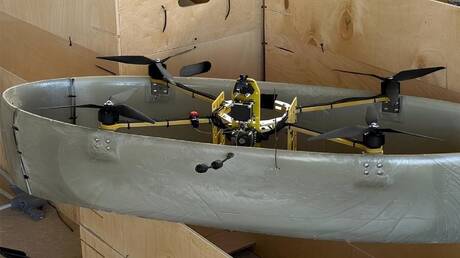
The Russian defense industry has announced the launch of new FPV drones that rely on fiber optic technology, as part of the 'Emir' series. These drones are characterized by their exceptional ability to carry out missions with high precision and effectiveness, making them a strategic tool in modern conflicts.
FPV drones are among the latest innovations in the field of unmanned aerial vehicles, designed to operate in complex environments while avoiding jamming that they might encounter during operations. This development reflects the technological advancement in the Russian defense sector and underscores the importance of innovation in addressing military challenges.
Details of the Launch
These drones are part of Russia's strategy to enhance its military capabilities, developed to execute reconnaissance and airstrike missions with high accuracy. They rely on an advanced guidance system that enables them to accurately identify targets, making them effective in modern military operations.
The 'Emir' drones excel in challenging weather conditions, capable of flying at low altitudes and evading detection by hostile defense systems. This makes them an ideal choice for military operations that require precision and speed in execution.
Background & Context
Historically, the drone industry has seen significant evolution in recent years, with these aircraft becoming an essential component of military strategies for major powers. In this context, Russia aims to bolster its military capabilities by developing new technologies that align with current challenges.
Drones are part of the major transformations in modern warfare, allowing nations to conduct military operations without the need to deploy ground troops. This shift reflects a change in the nature of warfare, where technology plays a pivotal role in determining the outcomes of conflicts.
Impact & Consequences
The development of the Russian 'Emir' drones could significantly affect the balance of power in the region, enhancing Russia's ability to conduct precise and effective military operations. This may lead to increased tensions in areas experiencing conflicts, especially amid the growing military competition among major powers.
Furthermore, these developments could encourage other countries to invest in drone technology, potentially resulting in a new arms race in this field. This situation could negatively impact regional and international security, as the risks associated with using this technology in conflicts increase.
Regional Significance
In light of ongoing tensions in the Arab region, the advancements in Russian drones may have direct implications for regional security. Arab countries facing security challenges may find themselves compelled to invest in similar technologies to counter potential threats.
Moreover, these developments could lead to a reassessment of defense strategies among some Arab nations, necessitating regional and international cooperation to address new challenges. Ultimately, military technology remains a double-edged sword, capable of enhancing security or escalating tensions.