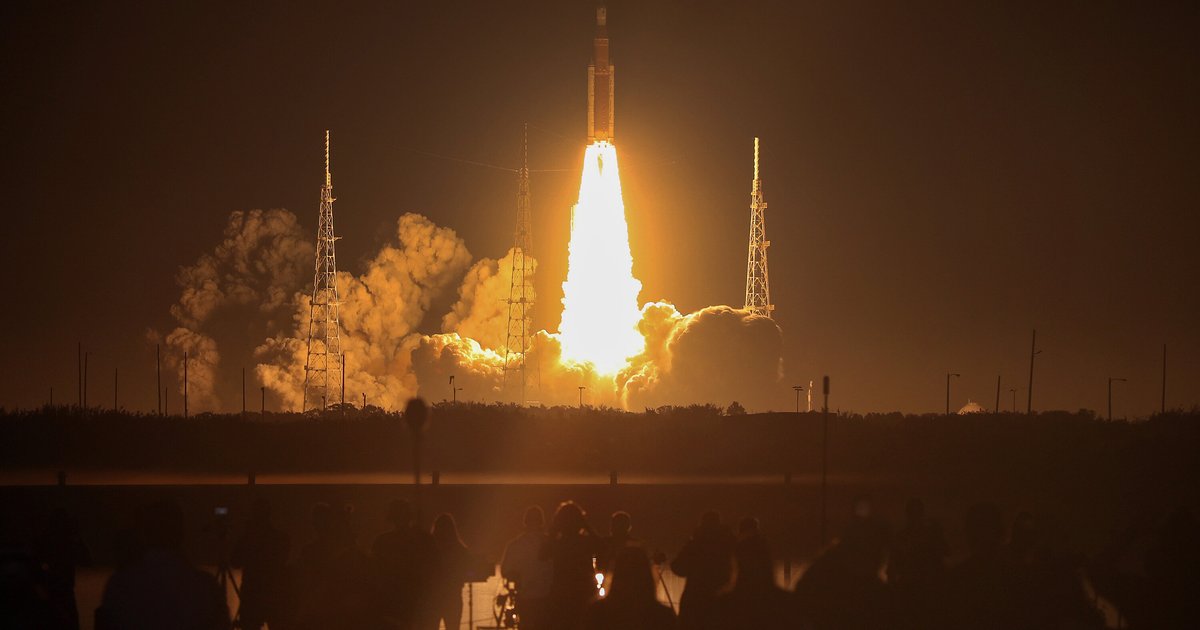
Saudi Arabia achieved a historic milestone with the launch of the 'Shams' satellite, which represents an important step in the field of space, as part of the 'Artemis 2' mission. This launch reflects the Kingdom's commitment to advancing its capabilities in space science and technology.
The 'Shams' satellite, designed to study the sun and its effects on Earth, is one of the ambitious projects through which the Kingdom aims to enhance its position in the space sector. This launch comes at a time when the Kingdom is undergoing a significant transformation in its development strategy, as it seeks to achieve Vision 2030, which aims to diversify the economy and enhance innovation.
Details of the Event
The 'Shams' satellite was launched from the Kennedy Space Center in the United States, representing a part of international cooperation in the field of space. The satellite is equipped with the latest technologies that enable it to collect data about the sun, which will help scientists understand solar phenomena and their impact on Earth's climate.
This mission is part of the 'Artemis 2' program, which aims to return humans to the moon and expand the scope of space exploration. This collaboration between the Kingdom and other countries reflects Saudi Arabia's commitment to enhancing its international partnerships in the fields of science and technology.
Background & Context
This step comes as part of Saudi Arabia's efforts to enhance its capabilities in the field of space, having launched several projects in recent years. The Kingdom aims to be a key player in the space sector, aligning with Vision 2030, which seeks to develop the national economy and promote innovation.
Historically, the Kingdom has relied heavily on oil as a primary source of revenue, but with global economic challenges, it has begun exploring new fields such as space and technology. This shift reflects the Saudi leadership's vision for a sustainable future based on innovation and technology.
Impact & Consequences
The launch of the 'Shams' satellite may open new horizons for scientific research in the region, contributing to enhanced cooperation among Arab countries in the fields of space and science. This achievement may also encourage further investments in the space sector, bolstering the Kingdom's position as a regional center for innovation.
Moreover, the data collected by the satellite will aid in understanding climate changes, highlighting the importance of scientific research in addressing the environmental challenges facing the world today.
Regional Significance
This achievement represents an important step for the Arab region as a whole, reflecting the ability of Arab countries to actively participate in space exploration. This success may encourage other countries in the region to develop their own space programs, enhancing Arab cooperation in this field.
Additionally, the Kingdom's success in this project may contribute to boosting national pride and encouraging Arab youth to engage in science and technology fields, helping to build a new generation of scientists and engineers.
In conclusion, the launch of the 'Shams' satellite is a historic achievement that reflects the Kingdom's commitment to developing its capabilities in the field of space, enhancing its position on the international stage. This achievement is not just a step towards space exploration, but also a step towards achieving Vision 2030, which aims to build a sustainable and prosperous future.