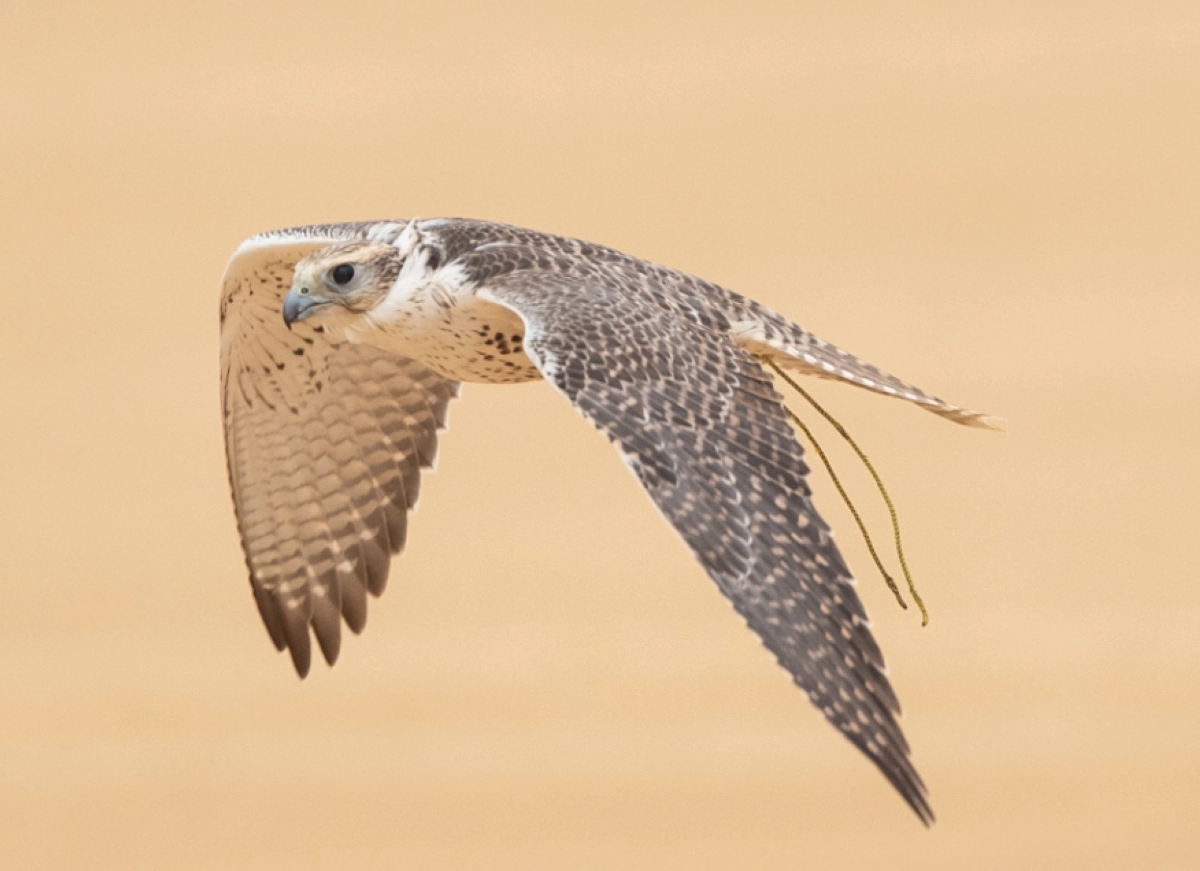
The Saudi Falcons Club has announced its ongoing efforts to release falcons in Kazakhstan as part of the 'Haddad' environmental conservation program. The program aims to reintroduce falcons to their natural habitats and enhance their stability along migration routes. The Altyn Emel National Park in Kazakhstan has been selected as the release site based on environmental and scientific criteria, including habitat suitability and prey availability.
Kazakhstan is considered an ideal launch point for falcons, as it lies on one of the world's most important migration routes, facilitating their adaptation and stability post-release. The program focuses on releasing peregrine falcons and gerfalcons abroad, through a scientific process that includes rehabilitation, site selection, and continuous monitoring to assess their adaptation and breeding. Additionally, the Kingdom plans to release mountain falcons and lanner falcons within its territories.
Event Details
This release is part of the 'Haddad 2026' program, which aims to enhance the stability of falcons along migration routes. The program includes an international release pathway focusing on reintroducing falcons to their natural environments. The selection of Altyn Emel National Park was based on precise scientific studies, ensuring a suitable environment for the falcons and guaranteeing sufficient prey availability.
Falcons are an important part of Arab cultural heritage, symbolizing pride and strength. Therefore, these efforts aim to preserve and enhance this heritage by returning falcons to their natural habitats, contributing to biodiversity conservation.
Background & Context
Historically, falcons have been used in hunting and are an integral part of Arab culture. With increasing environmental challenges, it has become essential to take effective steps to preserve these species. The 'Haddad' program is part of broader efforts to conserve the environment in the Kingdom and reflects Saudi Arabia's commitment to preserving biodiversity.
Kazakhstan is home to many wildlife species, including falcons, making it an ideal site for reintroducing these species. Furthermore, Kazakhstan's geographical location on global migration routes enhances the chances of the program's success.
Impact & Consequences
This initiative is a significant step towards enhancing the stability of falcons and protecting them from extinction. By reintroducing falcons to their natural habitats, ecological balance can be improved, and biodiversity in the region can be enhanced. Moreover, these efforts may inspire other countries in the region to take similar steps to conserve endangered species.
Additionally, the success of the 'Haddad' program could open new avenues for international cooperation in environmental conservation, enhancing the Kingdom's position on the global stage as a major supporter of nature conservation initiatives.
Regional Significance
This initiative serves as a model for the Arab region, where many countries face similar environmental challenges. These efforts can inspire other Arab nations to adopt similar programs to preserve their natural and cultural heritage. Strengthening regional cooperation in environmental conservation can contribute to achieving sustainable development goals.
In conclusion, the release of falcons in Kazakhstan represents an important step towards environmental conservation and enhancing biodiversity. These efforts reflect the Kingdom of Saudi Arabia's commitment to preserving natural and cultural heritage, contributing to sustainable development in the region.