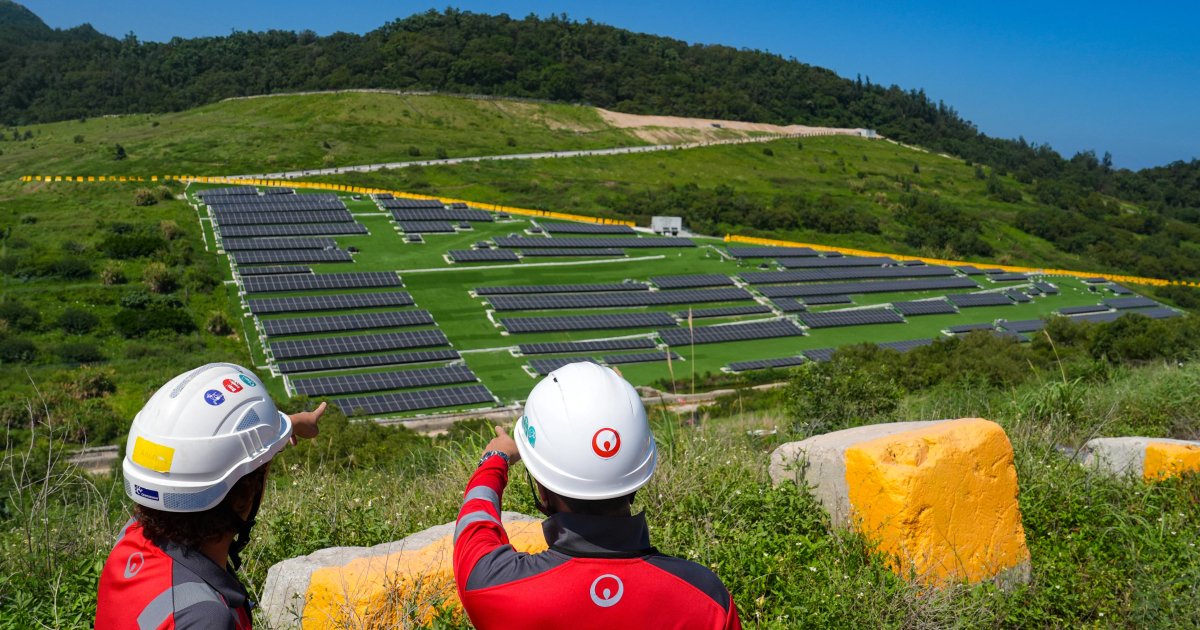
Hong Kong has announced the launch of a new solar power station built on a rehabilitated landfill in the Tsuen Wan area. This initiative aims to reduce carbon emissions equivalent to planting approximately 20,000 trees annually. The station, developed in collaboration with Veolia Environmental Services and property developers Sun Hung Kai and CITIC Pacific, has received government support and is considered a significant step towards achieving sustainability goals in the city.
The new facility features around 1,850 solar panels covering an area of 140,000 square feet, making it the largest solar power station in the region. It is expected that this station will provide energy for over 360 homes, reflecting the increasing trend towards renewable energy use in Hong Kong.
Event Details
This initiative is part of Hong Kong's efforts to reduce carbon emissions and promote the use of clean energy. The station is part of a broader strategy aimed at achieving sustainable development goals by 2030. The site was carefully selected, as the landfill has been rehabilitated to serve as an ideal base for solar energy generation.
The government seeks to enhance investments in renewable energy projects, reflecting its commitment to addressing environmental challenges. This station could serve as a model for other countries looking to improve their environment through clean technology.
Background & Context
Historically, Hong Kong has heavily relied on fossil fuels to meet its energy needs, leading to increased carbon emissions. With growing environmental awareness, the government has begun taking serious steps towards transitioning to renewable energy sources. In recent years, there has been a noticeable increase in solar energy projects, reflecting a shift in public policy.
This new station is part of a global trend towards clean energy use, as many countries strive to reduce their dependence on fossil fuels. In this context, Hong Kong can be seen as a model for how to turn environmental challenges into investment opportunities.
Impact & Consequences
This project is expected to have a significant impact on the local environment, as it will help reduce carbon emissions considerably. It will also contribute to improving air quality in the city, benefiting the health of residents. Additionally, this project may encourage further investments in renewable energy.
Moreover, the success of this station could prompt the government to take more serious steps towards achieving sustainability goals. It may also positively impact the local economy by creating new job opportunities in the renewable energy sector.
Regional Significance
The experience of Hong Kong in utilizing solar energy from landfills serves as a model that Arab countries can benefit from, as they face similar environmental challenges. Arab nations, which have abundant solar energy resources, can leverage this experience to develop similar projects.
Many Arab countries are striving to achieve sustainable development goals, and renewable energy projects can be a crucial part of these strategies. Promoting the use of clean energy in the region can contribute to environmental improvement and reduce dependence on fossil fuels.