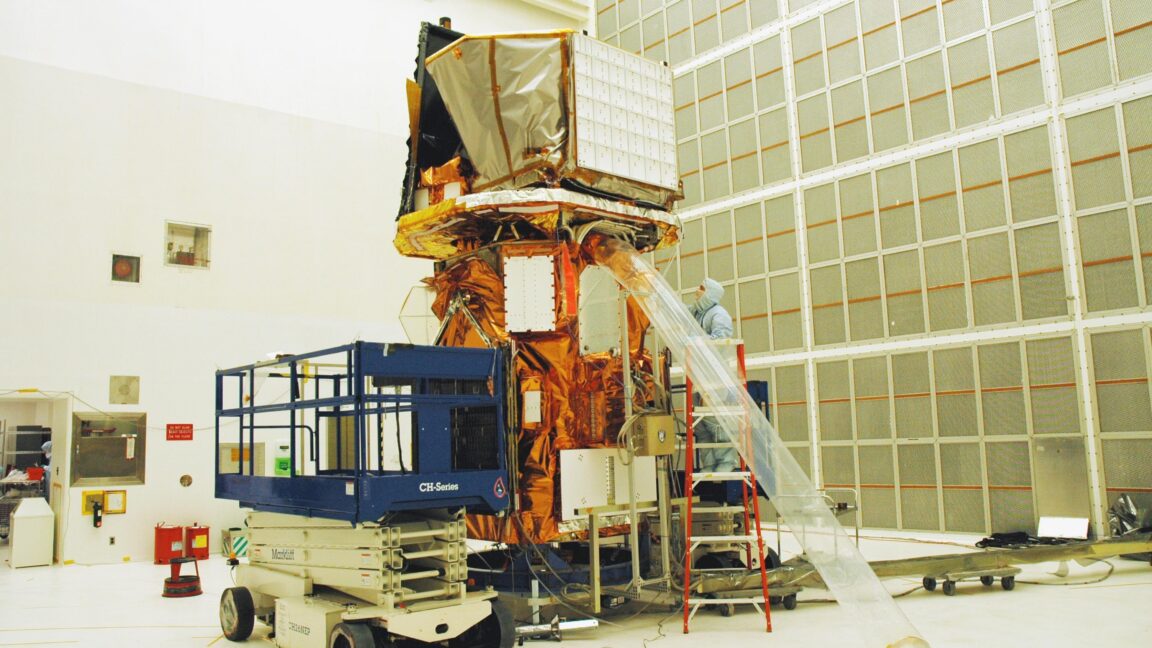
Catalyst Space Technologies has announced the need for a quick rescue mission for the satellite known as 'Swift' before the end of summer. This initiative comes as the satellite faces the risk of losing its orbit, necessitating prompt action.
The 'Swift' satellite, launched for scientific purposes in 2004, is encountering a technical issue that threatens its maintenance in Earth's orbit. This mission represents a significant challenge for engineers and scientists, requiring innovative technological solutions to ensure its preservation and recovery before it loses its vital role in supporting scientific space-related research.
Details of the Mission
Catalyst Space Technologies' plan to launch a new rescue mission is aimed at addressing the common challenges associated with space technology. The objective of this mission is to restore the satellite to its proper orbit, enabling it to resume its research activities studying various scientific phenomena.
The mission involves launching a rocket carrying advanced technical tools and resources capable of tackling the satellite's current problems, including energy and communication system issues. Additionally, it requires international collaboration with other space agencies to leverage available technological expertise.
Background & Context
Over the years, the 'Swift' satellite has provided valuable information about gamma-ray bursts, which are among the most significant cosmic events being observed. This information plays a crucial role in enhancing our understanding of the universe and the solar system. The mission is of paramount importance as it serves as a launching point for understanding how stars are born and evolve.
'Swift' was originally scheduled to cease operations after a certain period; however, it has continued to function thanks to the efforts made by various teams. Nevertheless, the emergence of complications has made the situation more complicated than anticipated.
Impact & Consequences
The repercussions of losing 'Swift' extend beyond the scientific realm. Not only would scientific research be affected, but the effects of this crisis would ripple through other research programs that rely on the data it provides. If we lose this satellite, we will also lose a vast amount of knowledge that has contributed to multiple research projects.
Additionally, this crisis may lead to frustration among the scientists and researchers who have worked for years to develop space capabilities and technologies. These circumstances highlight the urgent need for greater cooperation between nations in the fields of space and space technologies.
Regional Significance
At a time when Arab interest in developing space technology is increasing, this event signifies the importance of establishing the presence of Arab space programs. Many Arab nations, such as the United Arab Emirates and Saudi Arabia, are striving to invest substantial resources in space exploration, necessitating the development of more advanced and reliable technologies.
This situation opens new opportunities for Arab countries to engage in international collaboration, allowing interested countries to develop joint projects that help tackle the unique challenges that may arise in the future. Ultimately, saving 'Swift' is a call to the global scientific community to work together in unity and collaboration to preserve human progress in the realm of space.