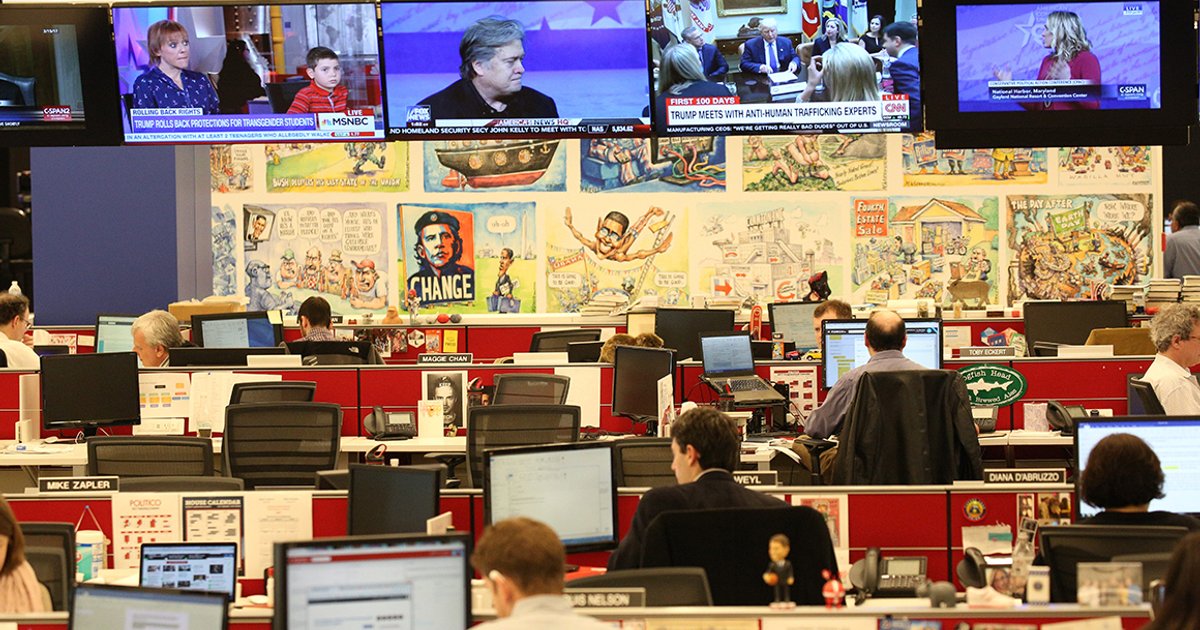
Politico has initiated a comprehensive security investigation after one of its private phone calls was subjected to "interception and spying," followed by a public leak, in an incident described by media circles as a stab in the heart of press freedom.
The details of the incident pertain to a 9-minute call that took place on March 3 between one of the institution's reporters and a senior EU official. The call discussed highly sensitive files related to the relations between Hungary and Ukraine, leading to shock in the media community when the full recording was published on YouTube.
Details of the Incident
In an internal message reassuring its staff, Politico's editorial management confirmed that initial technical reviews found no evidence of a breach of the institution's devices or networks. This suggests that the interception was likely carried out by "external parties" or through targeting the communication method itself. The management emphasized that this "intimidation" attempt would not deter them from continuing their independent reporting, reaffirming their full commitment to protecting their sources and the confidentiality of their information.
For its part, the European Union declined to comment officially on what it described as "recordings produced by unknown entities." Politico also refrained from disclosing the identity of the EU official, adhering to professional conduct rules that mandate source protection, especially since the call was not intended for publication (off the record).
Context and Background
These leaks come at a highly sensitive time, coinciding with the upcoming general elections in Hungary scheduled for April 12. They also align with reports published by the Washington Post regarding secret communications between the government of Hungarian Prime Minister Viktor Orbán and Russia. Pro-government media outlets in Hungary and Slovakia quickly published excerpts from the call, reinforcing the hypothesis of "political motives" behind the espionage operation.
David Ab Iyago, president of the International Press Association in Brussels, described the incident as a "terrifying message" to journalists and their sources alike. He confirmed that intercepting and circulating journalists' materials is illegal under Belgian law, raising difficult questions about how to pursue "international entities" that may be involved in these cyber operations.
Impact and Consequences
This incident raises widespread concerns about press freedom in Europe, as the leak constitutes a violation of journalists' rights and a threat to the safety of their sources. Additionally, this incident may lead to a decline in trust between journalists and government officials, which could negatively impact the quality of news reporting.
Moreover, this incident may increase pressure on media institutions to enhance security and protection measures, potentially necessitating additional investments in technology and cybersecurity. It may also raise questions about the ability of European countries to protect press freedom amid increasing threats.
Regional Significance
This incident serves as a reminder to Arab countries of the importance of protecting press freedom and journalists' rights, as many Arab nations suffer from similar violations. Furthermore, this incident may inspire Arab journalists to uphold their rights and defend their sources amid the challenges facing journalism in the region.
In conclusion, press freedom remains one of the fundamental pillars of democracy, and the international community must work to protect this freedom from any violations, whether from states or non-governmental entities.