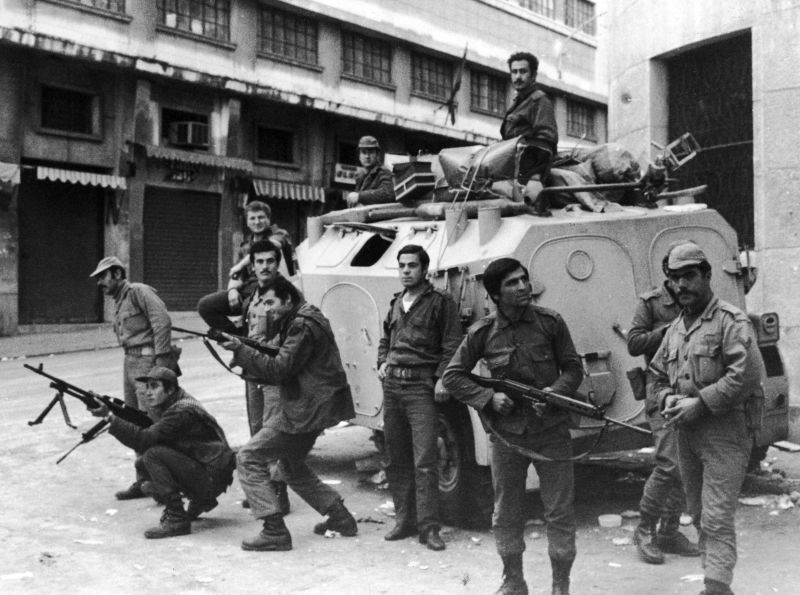
In an interview with Sky News Arabia, Lebanese Minister of Justice Aadel Nassar stated that the war in Lebanon was imposed on the people, highlighting the catastrophic choices faced by the country as a result. Nassar addressed the political and social transformations that Lebanon has undergone over the past three decades, noting that these changes were a result of the instability the country has suffered.
During the interview, Nassar pointed out that Lebanon has witnessed complex political balances, where various political forces have competed for influence, leading to the disintegration of the social fabric. He considered these balances to be a major cause of the outbreak of the civil war, which left deep scars on Lebanese society.
Details of the Event
Nassar discussed how internal conflicts have affected Lebanon's trajectory, indicating that the options available to politicians were limited, forcing the country to pay the price for these choices. He emphasized that war was not a choice but was imposed on the Lebanese, resulting in the destruction of many institutions and the fragmentation of society.
Nassar also addressed the role of external powers in influencing the Lebanese situation, mentioning that foreign interventions have had negative effects on political and economic stability in the country. He believes that Lebanon needs to rebuild trust among various political parties to achieve sustainable stability.
Background & Context
Lebanon has been experiencing political and security conflicts for decades, significantly affected by the civil war that erupted in 1975 and lasted until 1990. This war was a result of sectarian and political tensions, leading to the division of the country into various spheres of influence. After the war, the Taif Agreement was reached in an attempt to rebuild the Lebanese state, yet political tensions persisted.
Over the years, Lebanon has faced numerous political and economic crises, resulting in ongoing instability. Recent crises, including the economic collapse, have further complicated the situation, prompting many Lebanese to seek radical solutions to escape this crisis.
Impact & Consequences
The repercussions of the Lebanese situation extend beyond its borders, as the political and economic crises in Lebanon affect stability throughout the entire region. Lebanon is seen as a crossroads for many regional and international powers, making it susceptible to external interventions. These interventions may exacerbate crises rather than resolve them, further complicating the situation.
Moreover, the ongoing crises in Lebanon impact relations among different sects, increasing social division. This, in turn, could lead to an explosion of tensions at any moment, threatening security and stability in the region.
Regional Significance
The Lebanese situation poses a significant challenge to the Arab region, as any escalation in conditions could affect neighboring countries. Lebanon serves as an example of how internal conflicts can influence regional stability. Many Arab countries have experienced similar conflicts, making the Lebanese experience an important lesson in handling crises.
In conclusion, the statements of Lebanese Minister of Justice Aadel Nassar reflect a complex reality faced by Lebanon and highlight the urgent need for political and economic solutions to ensure the country's stability. Amid significant challenges, hope remains pinned on the Lebanese people's ability to overcome these crises and build a better future.