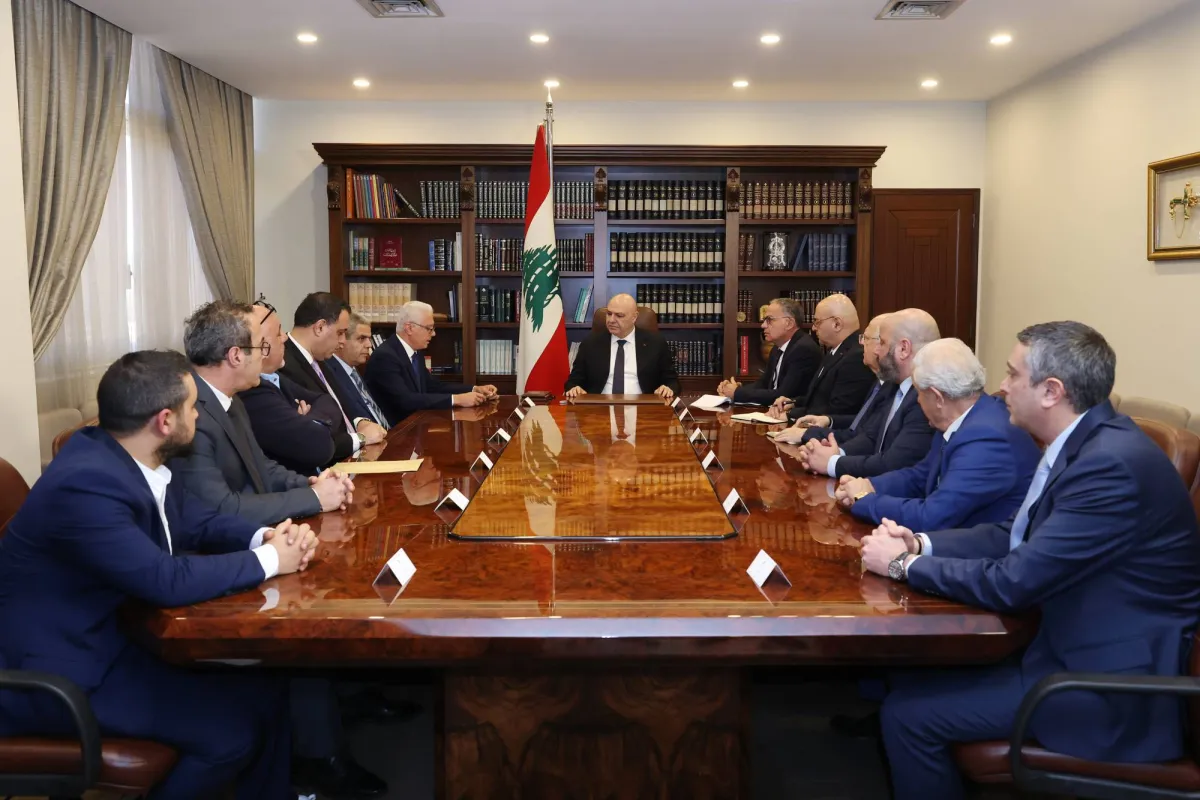
Lebanese President Joseph Aoun has confirmed that he is continuing multiple international communications aimed at pushing towards negotiations and stopping the war amid ongoing escalation in the south. Aoun stressed that security forces are taking decisive steps to prevent any security breaches among the Lebanese, warning that "the hand that reaches for civil peace will be cut off."
These statements came during a series of meetings held at the presidential palace, where he received delegations from various regions, including a delegation from the town of Barghiliya in the Tyre district. Aoun confirmed that security reports indicate there is no actual danger to civil peace, noting that some parties are raising this issue in an attempt to strengthen their position.
Details of the Event
During the meetings, Aoun reiterated that "security forces are closely monitoring the situation and taking necessary measures to prevent any tension." He also pointed out that "no one in Lebanon wishes for the outbreak of a civil war," adding that those who seek to fish in troubled waters will not succeed. He clarified that the issues that occurred previously during the 2024 war have not been repeated in the current conflict, reflecting a better capacity to control the situation and absorb the repercussions.
In a related context, Prime Minister Nawaf Salam confirmed during his reception of a delegation from Barghiliya that "the fate of the Lebanese should not remain subject to calculations that exceed the interests of Lebanon and its people." He noted that the government has taken several bold decisions to reform the situation in the country, including addressing the issue of displaced persons.
Context and Background
These statements come at a time when Lebanon is witnessing military escalation in the south, where Lebanese villages are subjected to repeated Israeli attacks. These assaults have resulted in a number of casualties among civilians and military personnel, increasing tensions in the region. Additionally, the humanitarian situation in the south is deteriorating, with displaced persons suffering from a lack of aid and basic services.
In this context, Aoun indicated that the government is working to support the resilience of citizens in border areas, emphasizing that the current phase requires concerted efforts to maintain stability. He also affirmed that Lebanon is capable of overcoming these challenges through the awareness of its citizens and their commitment to civil peace.
Consequences and Impact
Concerns are growing about the outbreak of a new conflict in Lebanon, especially in light of the Israeli military escalation. These conditions could exacerbate the humanitarian and economic crises that the Lebanese are facing. Moreover, the continuation of Israeli assaults may put the Lebanese government in a difficult position, as it must confront both internal and external pressures.
Many observers believe that the situation in Lebanon requires a swift and effective response from the government and the international community to avoid worsening security and humanitarian conditions. Some point out that any escalation could lead to serious repercussions for regional stability, especially given the multiple crises facing countries in the region.
Impact on the Arab Region
The repercussions of the situation in Lebanon extend beyond its borders, potentially affecting stability across the Arab region as a whole. The recurring crises in Lebanon could revive sectarian and ethnic conflicts, further increasing tensions in neighboring countries. Additionally, the continuation of Israeli assaults may provoke reactions from Arab nations, complicating the security landscape in the region.
In conclusion, the situation in Lebanon remains under scrutiny, requiring the concerted efforts of local and international stakeholders to maintain civil peace and avoid exacerbating crises. The stability of Lebanon is an integral part of regional stability, necessitating urgent attention from all concerned parties.