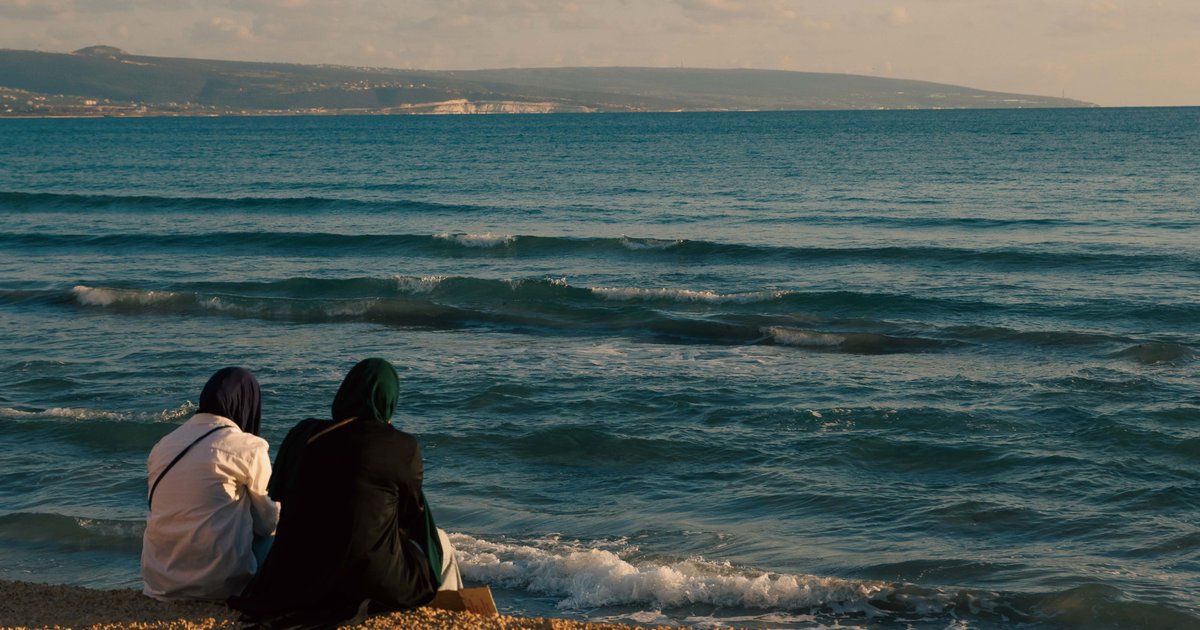
In Tyre, one of the major coastal cities in southern Lebanon, the scene repeats itself daily. From Nabi Berri Street, dozens watch the southern Lebanese coastline, visible to the naked eye up to the border town of Naqoura. Their faces reflect anxiety and disbelief. A local woman points to the large white rocks on the horizon: it is the Bayada cliff, located about eight kilometers away, which has now become an advanced position for Israeli forces as part of their ongoing invasion of southern Lebanon.
Even if the soldiers are not visible, the occupation of the land represents a significant sorrow for the residents of Tyre, reinforcing their constant feeling of being under surveillance. Lina, feeling frustrated, states, "Israel has always wanted to control Naqoura. The headland overlooking the coast provides a clear view of the entire shoreline. We have been under constant surveillance by drones; now we know they are watching us directly from there." Her apartment overlooks what she calls "recently occupied territories."
Details of the Situation
In the surrounding streets, many displaced individuals from villages closer to the Blue Line – the border drawn by the United Nations in 2000 to mark Israel's withdrawal from southern Lebanon – have found refuge, despite the severe damage inflicted upon them by Israeli forces. For many, their lands have become uninhabitable due to shelling or have come under occupation.
After a limited opening of the area to the press by Hezbollah, journalists can travel a few hours south of Tyre. The coastal road that stretches along the beach is almost deserted. Only a few vehicles navigate through a scene of destruction, filled with images of Hezbollah fighters who have died since the Lebanese front opened on October 8, 2023.
A checkpoint controlled by a few Lebanese soldiers appears on the horizon. There is no way to proceed. Israeli forces are no more than one kilometer away, in Bayada, which is the first area on the northern coastal road included in the Israeli "Yellow Line," drawn nearly 10 kilometers inside southern Lebanon.
Background & Context
This designation, imposed by Israel after implementing a ten-day ceasefire, reflects a pattern seen in Gaza, preventing residents of dozens of border communities from returning to their homes. Just a short distance inland lies the village of Mansouri. The scene is repeated throughout southern Lebanon: empty streets and collapsed buildings stretch as far as the eye can see. Everything is in disarray, including the mosque in the village, which has had its minaret cut off.
After the ceasefire came into effect on April 17, another tragedy occurred. A small group of villagers who returned immediately after the announcement of the truce came under fire from Israeli forces. One resident, who spoke anonymously, said, "We scattered in different parts of the village after we came under fire. Security forces or the Red Cross were not allowed to enter our village, this land for which we shed so much blood. We were left alone."
Impact & Consequences
Residents say that any attempt to leave by car was met with Israeli gunfire, whether from the ground or the air. This was followed by a four-day siege, during which they lived on lemons alone. Mohammed, in his thirties, was not there at that time. With a vacant look, he explained that he gathered details of his father's last moments from those who were present. His father was trapped under fire, as Mohammed said, before the building he took refuge in was struck.
More than 2500 people have died in Israeli strikes since March 2. The toll includes 277 women, 177 children, and 100 paramedics, according to the Lebanese Ministry of Health. Officially, Mansouri does not fall within the "Yellow Line," although it is now located on its edge.
Regional Significance
Several kilometers southeast of Mansouri, residents of Majdal Zoun, who are also on the edge of the "Yellow Line," share the same concerns. The small town, located on a hill and typically home to around 5000 people, has now become almost deserted. The effects of Israeli strikes are evident everywhere, making it difficult to find a single intact home. A group of young women, who were forced to seek refuge in Tyre, return every day.
"This is our village. We do not want to abandon it, so we come and go every day. We believe in resistance. We will not leave it for the enemy," they said almost in unison. From the village cemetery, they look towards Tyre on the horizon.
In conclusion, the situation in southern Lebanon remains complex, as residents feel anxious about the ongoing Israeli advances, relying on resistance as their only hope in the face of increasing challenges.