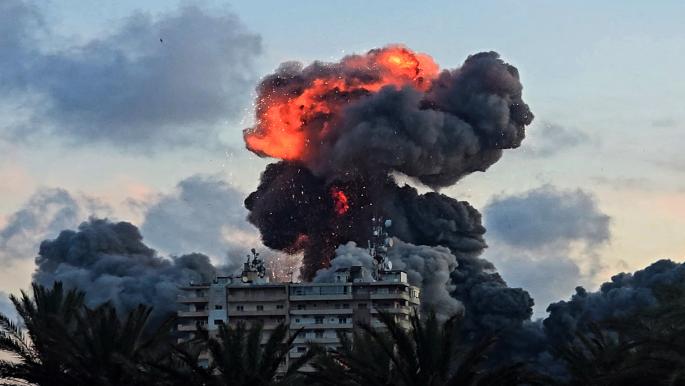
Lebanon is grappling with a worsening internal crisis that signals an imminent explosion, as political division among various forces in the country intensifies. This division could lead to consequences more severe than Israeli aggressions, particularly with the Lebanese government entering negotiations with Israel over sensitive issues.
Concerns are rising that these negotiations may exacerbate the already precarious security and economic situation in Lebanon, which is suffering from multiple crises. The political divisions may manifest on the streets of Lebanon, heightening tensions among different factions.
Details of the Negotiations
The negotiations between the Lebanese government and Israel are part of efforts to resolve outstanding issues, such as maritime borders and natural resources. However, these talks face strong opposition from certain political factions in Lebanon, which view them as unacceptable concessions.
The Lebanese government aims to achieve economic gains through these negotiations, but this move could lead to a surge in popular protests that may spiral out of control. In this context, there is growing concern that these dynamics could trigger an explosion of tensions in the country.
Background & Context
Lebanon has been suffering from crippling political and economic crises for years, with the division among political forces leading to paralysis in government institutions. This situation worsened following the devastating explosion at the Beirut port in 2020, which exposed rampant corruption in the country.
In this context, negotiations with Israel come as a potentially risky step. While some seek to achieve economic benefits, others fear that this move could lead to a further loss of national sovereignty.
Impact & Consequences
If internal division in Lebanon continues, it could exacerbate economic and social crises. The country may witness an increase in popular protests, threatening security stability. Additionally, any agreement with Israel could provoke strong reactions from the Lebanese street, further intensifying divisions.
Some analyses predict that these conditions could affect Lebanon's relations with other Arab countries, especially those supporting the Palestinian cause. Any agreement with Israel may be viewed as a betrayal, potentially increasing Lebanon's isolation on the Arab stage.
Regional Significance
The situation in Lebanon serves as an indicator of rising tensions in the region. The political and economic crises in Lebanon could impact stability in neighboring countries, particularly amid ongoing crises in Syria and Palestine.
Any escalation in the Lebanese situation could have broader repercussions, potentially increasing tensions among regional and international powers. Therefore, observers are closely monitoring these developments, fearing they may lead to an explosion of tensions throughout the region.
In light of these complex circumstances, Lebanon stands at a crossroads. While some seek to gain from negotiations with Israel, internal division may have serious implications for the country's future.