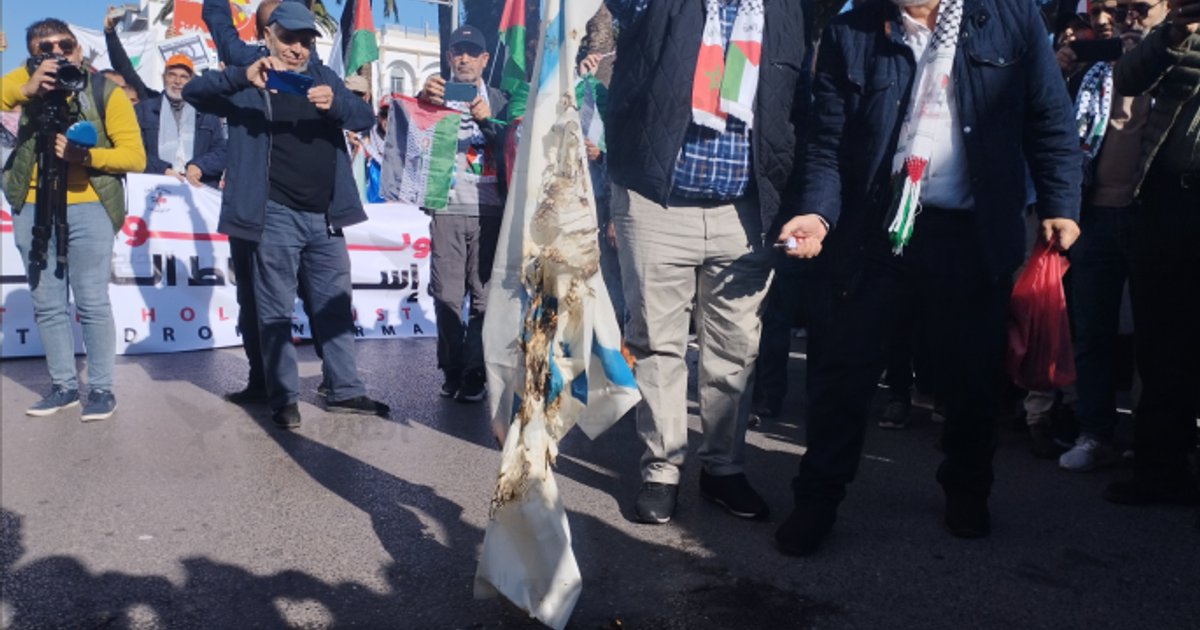
A legal complaint submitted by a Moroccan lawyer to the Public Prosecutor's Office against several activists, accusing them of "burning the flag of Israel," "anti-Semitism," and "incitement against Jews," has sparked varied reactions within Moroccan society. Some consider this move a violation of freedom of expression, while others believe it reflects the need to combat hate.
The complaint followed a series of protests that took place across the country, where demonstrators expressed their rejection of normalization with Israel. These protests have drawn the ire of certain legal and political circles, prompting the lawyer to take legal action against those involved.
Details of the Complaint
In the details of the complaint, the lawyer pointed out that burning the Israeli flag is an illegal act that constitutes incitement to hatred. He based his claim on laws aimed at combating racism and anti-Semitism, which are considered sensitive issues in Morocco. This lawsuit has ignited a broad debate regarding the limits of freedom of expression in the country.
On the other hand, human rights activists defended their right to express their opinions, asserting that freedom of expression should encompass all views, even those that may provoke controversy. They regarded the complaint as an attempt to suppress dissenting voices.
Background & Context
Historically, Morocco has undergone significant transformations in its relations with Israel, having signed normalization agreements in recent years. This normalization has sparked widespread debate within Moroccan society, which views the Palestinian cause as a central issue. There have been ongoing calls from certain popular groups to boycott Israeli products and express their rejection of Israeli policies towards Palestinians.
Moreover, Morocco has a long history of coexistence among various cultures and religions, making the issues of freedom of expression and anti-Semitism particularly sensitive. In recent years, the country has witnessed an increase in political and social activities expressing diverse opinions on these matters.
Impact & Consequences
The potential ramifications of this complaint could be significant, as it may lead to further divisions within Moroccan society. If the lawsuit is accepted, the activists could face legal penalties, which might deter others from expressing their opinions. At the same time, this could increase support for anti-normalization movements.
Conversely, this case may affect Morocco's international image, especially amid pressures from human rights organizations. The Moroccan government could face criticism for its inability to protect freedom of expression, which may impact its relations with Western countries.
Regional Significance
This event reflects the increasing tensions in the Arab region regarding normalization with Israel. While some countries seek to strengthen their ties with Israel, there remains significant popular resistance in many Arab nations. These dynamics could influence political and social stability in the region.
Ultimately, the issue of freedom of expression in Morocco remains a complex topic that requires a balance between protecting individual rights and combating hate. It is crucial that discussions on these issues continue to ensure that diverse voices within society are not marginalized.