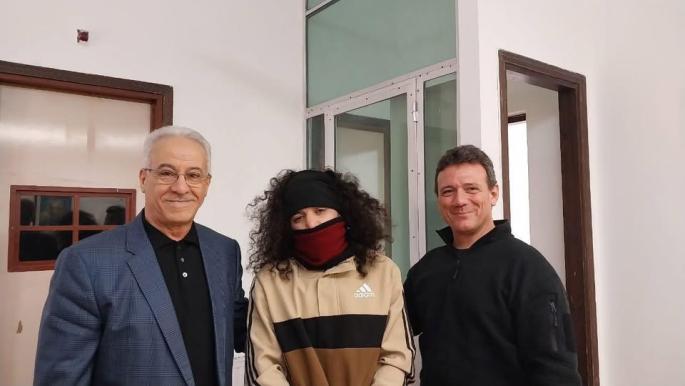
A widely circulated video on social media showcases an unprecedented protest by a Libyan detainee named Mohannad Khashiba, who sewed his mouth shut in an Italian prison. This bold act reflects his despair over the lack of response from Libyan authorities regarding his case and those of his fellow detainees held in Italian prisons.
Protests among Libyan detainees abroad are on the rise, with many suffering from harsh conditions and a lack of attention from the Libyan government. Khashiba, who was arrested in Italy, expresses his frustration over the absence of any action from Libyan authorities to resolve his situation.
Details of the Incident
The video that has gone viral shows Khashiba sewing his mouth shut as a means of expressing his protest. This step comes at a sensitive time, as many Libyan detainees in Italy face an uncertain fate, amid a lack of legal and humanitarian support from the Libyan government.
This protest illustrates the level of frustration felt by detainees, who believe their cases do not receive adequate attention. It also reflects a state of despair that detainees experience under the difficult conditions they face.
Background & Context
Historically, Libya has witnessed numerous political and social crises that have led to widespread arbitrary detention. Following the Libyan revolution in 2011, the country has suffered from political chaos, negatively impacting human rights. Many Libyans attempting to migrate to Europe have faced similar fates, being detained in countries like Italy.
The plight of Libyan detainees abroad is one of the contentious issues that requires greater attention from the government. Many of these detainees lack legal support, exacerbating their suffering.
Impact & Consequences
These protests may increase pressure on the Libyan government to improve the conditions of detainees abroad. They could also help shed light on human rights issues in Libya, potentially prompting international intervention.
If this phenomenon continues, it could worsen conditions within Italian prisons, where detainees may resort to more extreme forms of protest. This could negatively impact relations between Libya and Italy, complicating the situation further.
Regional Significance
This issue exemplifies the challenges many Arab countries face regarding human rights. With the rise of arbitrary detention cases, Arab governments must consider the rights of their citizens both domestically and abroad.
These events could also affect Libya's image in the international community, as it may be seen as a country unable to protect the rights of its citizens. Under these circumstances, the international community must take a clear stance on human rights issues in Libya.
In conclusion, Mohannad Khashiba's protest reflects the painful reality experienced by many Libyan detainees abroad. Urgent action is required from Libyan authorities to ensure the rights of these detainees and provide them with the necessary support.