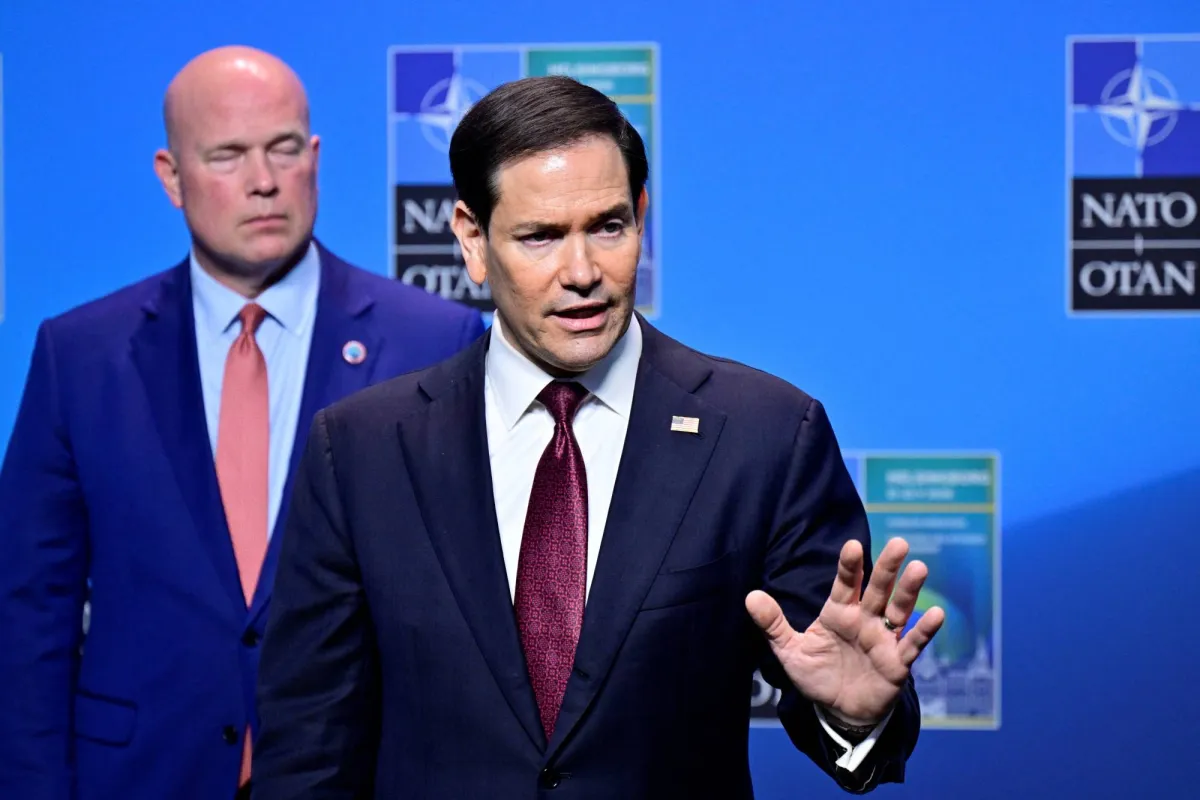
US Secretary of State Marco Rubio stated on Friday that there has been limited progress in the discussions with Iran, but he added that he does not want to overstate this progress, noting that both sides have not yet reached an agreement.
Rubio's remarks came during a meeting of NATO foreign ministers in Helsingborg, Sweden, where he pointed out that Pakistan continues to play a key role in these talks. He confirmed that all parties involved are seeking to reach an agreement with Iran.
Details of the Event
In this context, Rubio discussed the situation in the Strait of Hormuz, clarifying that there has not been a specific request for NATO assistance regarding this strait. He emphasized the need to have an alternative plan in case Iran refuses to reopen it, mentioning that former US President Donald Trump had criticized NATO countries for not providing help in addressing the closure of this vital passage.
It is worth noting that the Strait of Hormuz is one of the most important maritime passages in the world, through which approximately 20% of global oil and natural gas shipments pass. The region has witnessed increasing tensions in recent years, affecting global energy supplies.
Background & Context
These statements coincide with escalating tensions between Iran and the United States, as the latter seeks to reimpose restrictions on Iran's nuclear program. This has raised concerns among several countries in the region, which fear the repercussions of any military escalation.
Furthermore, Iran has raised its demands regarding the Strait of Hormuz, aiming to assert its rights over this strategic passage. Some observers have indicated that Iran is using this issue as leverage in negotiations related to its nuclear program.
Impact & Consequences
The situation in the Strait of Hormuz is a sensitive issue that affects both regional and international security. Any escalation in this strait could lead to significant disruptions in global energy markets, which may impact the global economy as a whole.
Moreover, tensions in the region could increase divisions among major powers, complicating peace and stability efforts. If Iran continues to raise its demands, this could lead to new rounds of negotiations that may take a long time to resolve.
Regional Significance
Developments in the Strait of Hormuz directly affect Arab countries, especially those that rely on oil as a primary source of revenue. Any escalation in this strait could impact oil prices, which may negatively affect the economies of these nations.
Additionally, regional tensions could lead to increased military investments, potentially intensifying existing conflicts. Therefore, maintaining stability in the Strait of Hormuz is crucial for regional security.
In conclusion, the situation in the Strait of Hormuz remains under scrutiny, with attention focused on any new developments that may arise in the talks between Iran and the United States and their impact on security and stability in the region.