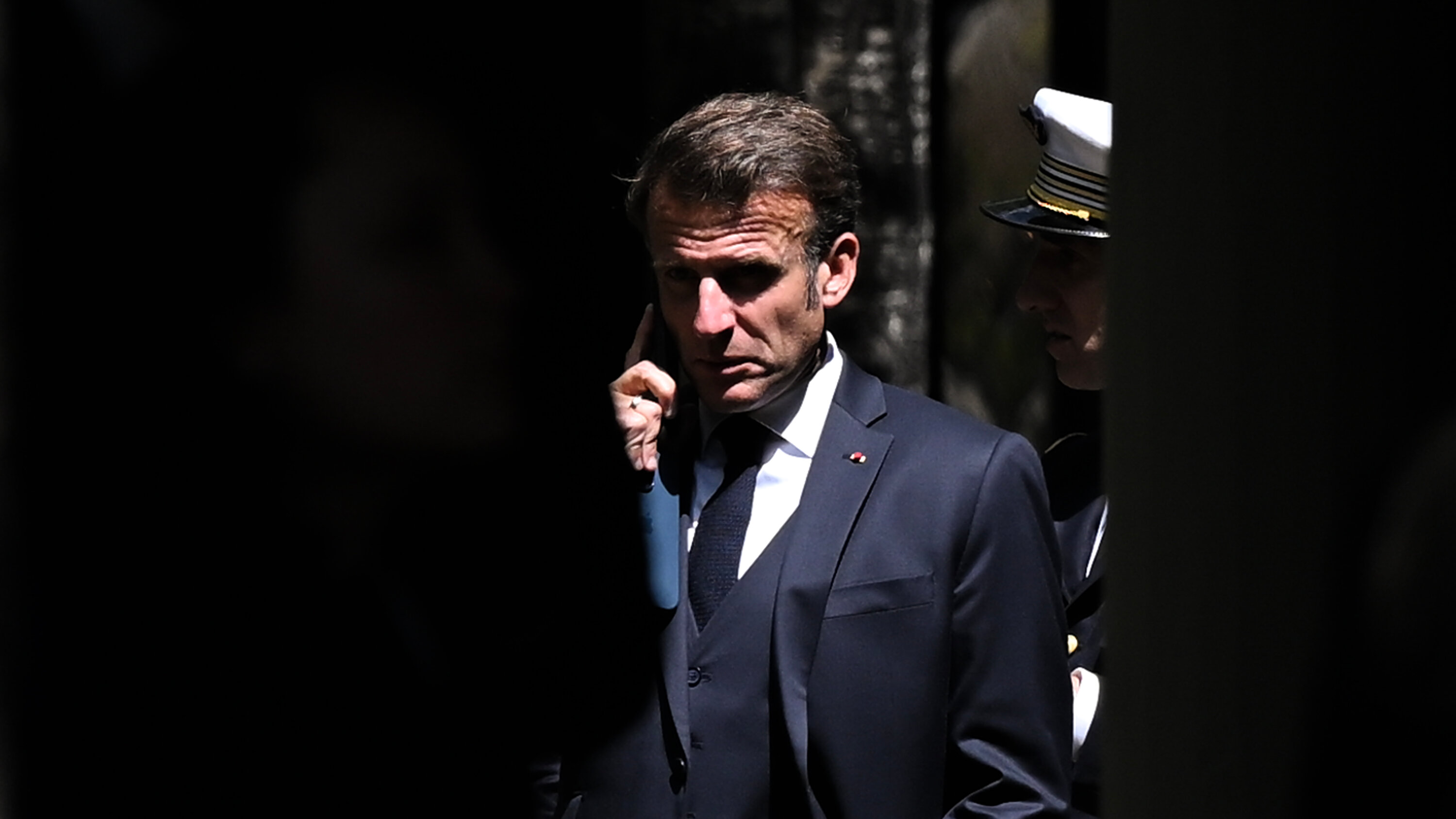
French President Emmanuel Macron announced that France will not be part of the war being waged by the United States and Israel against Iran. Macron confirmed that his country was not consulted regarding these military operations, which reflects Paris's independent stance in foreign policy.
Macron's statements came at a time when tensions in the region are escalating, as the United States and Israel seek to confront what they perceive as threats from Iran. These military operations have raised concerns among many countries, including France, which aims to maintain stability in the region.
Details of the Announcement
In a press conference, Macron reiterated that France will not participate in any military action against Iran, pointing out that his country seeks dialogue and diplomacy as a means to resolve conflicts. He clarified that Paris was not consulted on military plans, reflecting a lack of coordination among allies on this matter.
This position comes amid rising tensions between Iran on one side and the United States and Israel on the other, with Washington and Tehran accusing each other of planning military operations that could lead to greater escalation in the region. France has expressed its desire to play a mediating role in this crisis, reflecting its foreign policy focus on diplomacy.
Background & Context
Historically, relations between France and Iran have been tense, especially following the Islamic Revolution in 1979. However, in recent years, France has sought to improve its relations with Iran, particularly in the context of the nuclear agreement reached in 2015. But with the United States withdrawing from the agreement in 2018, relations deteriorated once again.
France is considered one of the European countries that seeks to preserve the nuclear agreement with Iran, viewing dialogue as the optimal solution to address security challenges. Nevertheless, its refusal to participate in military operations reflects its desire to avoid being drawn into military conflicts that could affect its interests in the region.
Impact & Consequences
Macron's statements may strengthen France's position as a supporter of dialogue and diplomacy in the Middle East. They could also raise questions about the extent of policy coordination among Western allies in facing Iranian threats.
This stance is likely to affect relations between France and the United States, as Paris may be seen as less supportive of American military policies in the region. Additionally, this position may reflect a divergence in strategies between European countries and the United States in dealing with Iran.
Regional Significance
Macron's statements are particularly significant for Arab countries, as they reflect the varying positions among Western nations towards Iran. While some Arab countries seek to confront Iran militarily, France and other European nations prefer a diplomatic approach.
This divergence in positions may complicate relations between Arab countries and Western nations, as some Arab states may find themselves in a difficult position between supporting American and Israeli military operations and adhering to European calls for dialogue.
In conclusion, Macron's stance on the war against Iran reflects France's desire to maintain the independence of its foreign policy and underscores the importance of dialogue as a means to resolve conflicts in the Middle East.