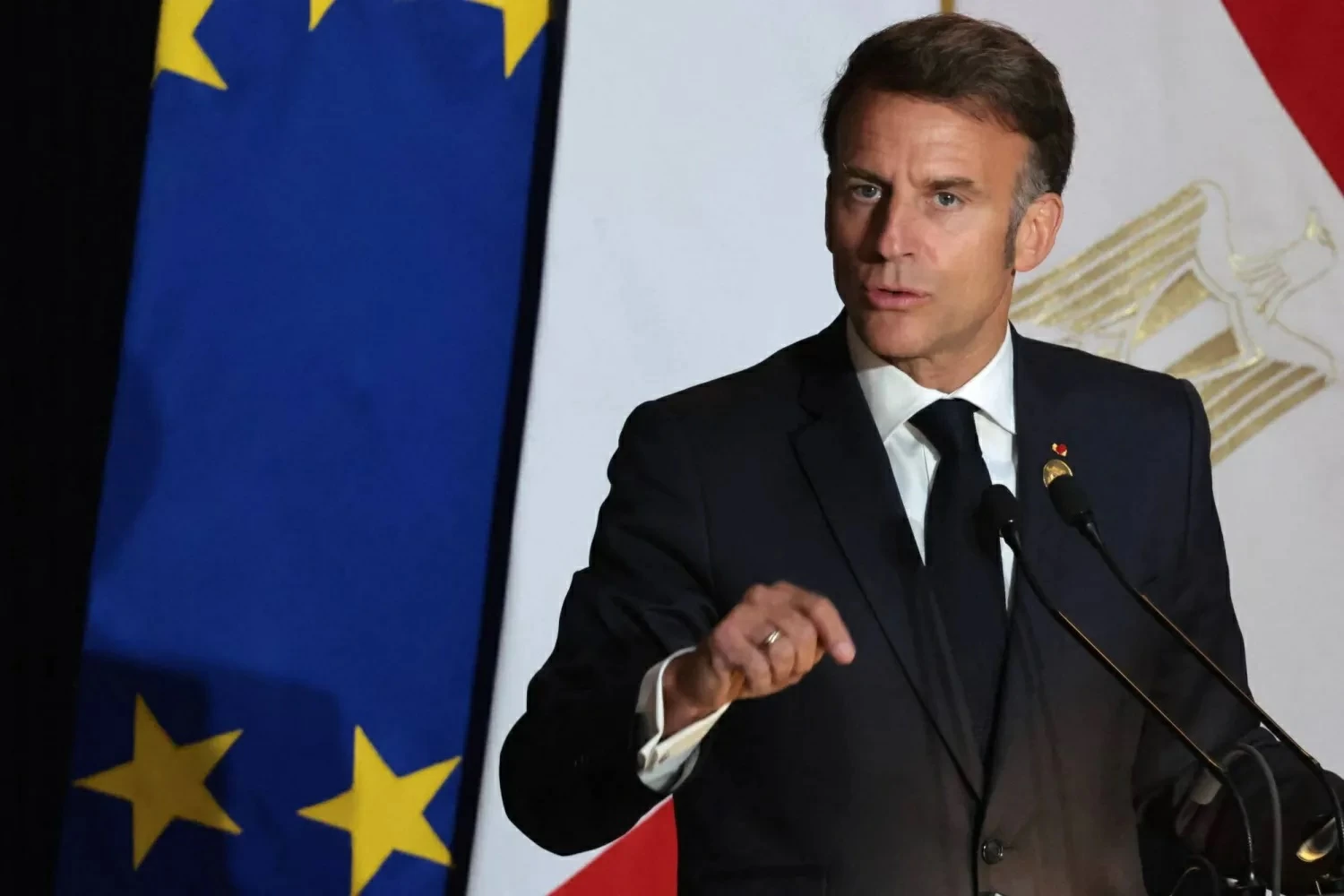
French President Emmanuel Macron denied today (Saturday) any intention to deploy warships in the Strait of Hormuz, clarifying that Paris has never considered this step and is focused on securing maritime navigation in coordination with Iran.
During a press conference in Nairobi, Macron reaffirmed this stance after an Iranian official threatened a decisive and immediate response against France and Britain if they deployed warships in the strait. This statement has raised growing concerns in the region, as the Strait of Hormuz is a vital corridor for oil and gas transport.
Details of the Incident
Iranian television reported that Deputy Foreign Minister Kazem Gharib Abadi stated that any French-British movement in the Strait of Hormuz under the pretext of enhancing navigation freedom represents the militarization of a vital waterway, prompting Tehran to respond. Abadi warned against deploying destroyers in the vicinity of the Strait of Hormuz under claims of protecting navigation, noting that such actions would only escalate the crisis.
The Iranian Deputy Foreign Minister also emphasized that providing security for navigation cannot be achieved through military displays, especially by parties that are themselves part of the problems. He added, "The Strait of Hormuz is not a common property for outside powers; it is a sensitive waterway adjacent to the coastal states."
Background & Context
In a related context, a Pakistani government official stated that his country has received Iran's response to the American proposal and has sent it to the United States. The official Iranian news agency IRNA reported that Tehran sent its response to the American proposal regarding ending the war through Pakistan, indicating that the proposed plan focuses on negotiations aimed at ending the war.
Tensions in the region have significantly increased in recent years, especially following the United States' withdrawal from the nuclear deal with Iran. This withdrawal has led to escalating tensions between Tehran and Western countries, making the Strait of Hormuz a focal point in the regional conflict.
Impact & Consequences
Macron's and Iran's statements are part of a complex political game concerning regional security. If tensions continue, they could lead to military escalation in the region, significantly impacting global oil markets.
Any military movements by France or Britain could provoke strong reactions from Iran, increasing the likelihood of military conflict in a region considered vital for the global economy. These events may also affect international relations in general, especially among major powers.
Regional Significance
The Arabian Gulf region is one of the most sensitive areas in the world, with many Arab countries relying on its stability to secure energy supplies. Any escalation in tensions could affect oil prices and increase economic burdens on Arab nations.
Moreover, these events could impact regional security, necessitating that Arab countries take clear positions regarding these tensions and work to enhance security cooperation among themselves.
In conclusion, amid these tense conditions, hope remains pinned on diplomacy to resolve disputes and avoid military escalation, as peace and stability in the region are what everyone needs.