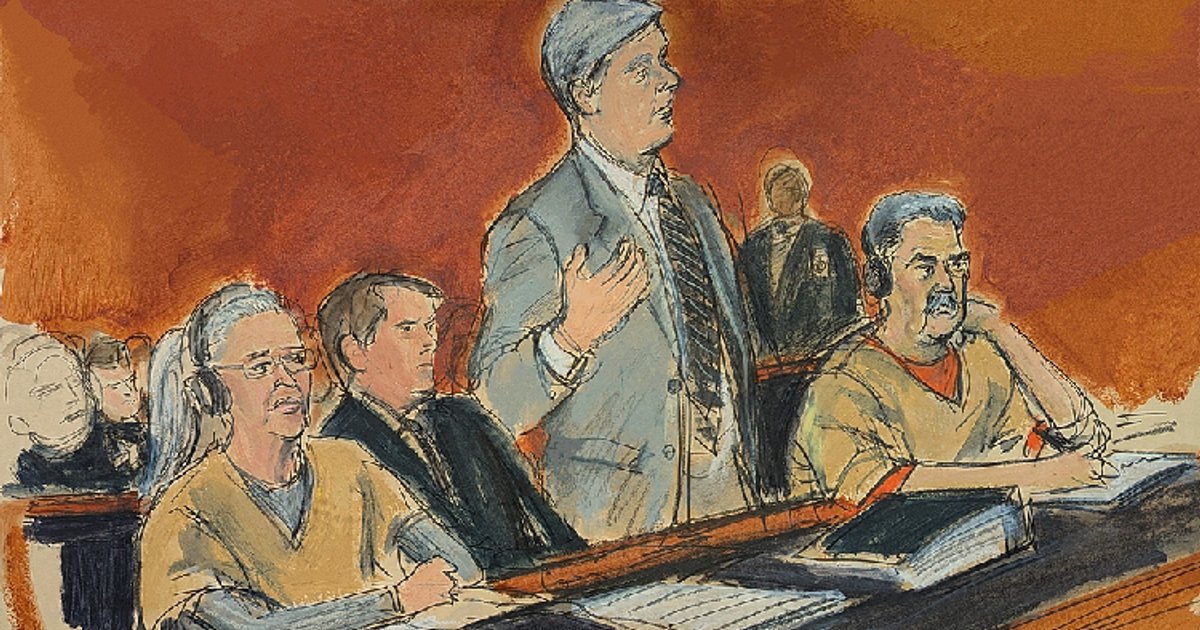
Venezuelan President Nicolás Maduro made his second appearance in a New York court on Thursday morning after being forcibly detained by U.S. forces during a military operation in Caracas last January. This appearance comes at a critical time for Venezuela, as international pressure on his government intensifies.
During the session, details of the arrest that took place earlier this year were presented, sparking widespread debate about Venezuela's national sovereignty and human rights. Maduro, who is considered a controversial leader by many, faces multiple accusations related to corruption and human rights violations, complicating his position on the international stage.
Details of the Arrest
Maduro was arrested on January 5, 2023, when U.S. forces executed a military operation in Caracas, storming his home and detaining him. This arrest was part of the United States' efforts to overthrow his regime, which many observers deem authoritarian. After his arrest, he was transferred to New York, where he was brought before the court.
During the session, evidence presented by the prosecution included recordings and photographs supporting the charges against Maduro. For his part, Maduro denied all allegations, asserting that the arrest is part of an international conspiracy aimed at undermining his legitimate government.
Background & Context
The political history of Venezuela is fraught with tensions and conflicts. Since 2013, when Maduro took power following the death of Hugo Chávez, the country has experienced a crippling economic crisis, leading to a deterioration of living conditions. In recent years, protests against the government have escalated, prompting the United States and Western countries to impose sanctions on the Venezuelan regime.
Relations between Venezuela and the United States have long been strained, with Washington accusing the Venezuelan government of human rights violations and monopolizing power. In contrast, Maduro views these pressures as blatant interference in his country's affairs.
Impact & Consequences
These events raise questions about Maduro's future and his regime. If international pressures continue, he may face greater challenges domestically, especially with rising public discontent. Additionally, the arrest could pave the way for further foreign interventions in Venezuelan affairs, complicating the situation even more.
Moreover, these events may affect relations between Venezuela and other Latin American countries, as some nations may take pro or anti-Maduro stances, increasing divisions in the region.
Regional Significance
The events in Venezuela hold particular significance for the Arab region, reflecting the political and economic struggles faced by many countries. Foreign interventions in the internal affairs of nations may serve as a lesson for Arab states facing similar challenges.
Ultimately, the situation in Venezuela remains under scrutiny, as the world watches the developments of the case and its impact on regional and international stability.