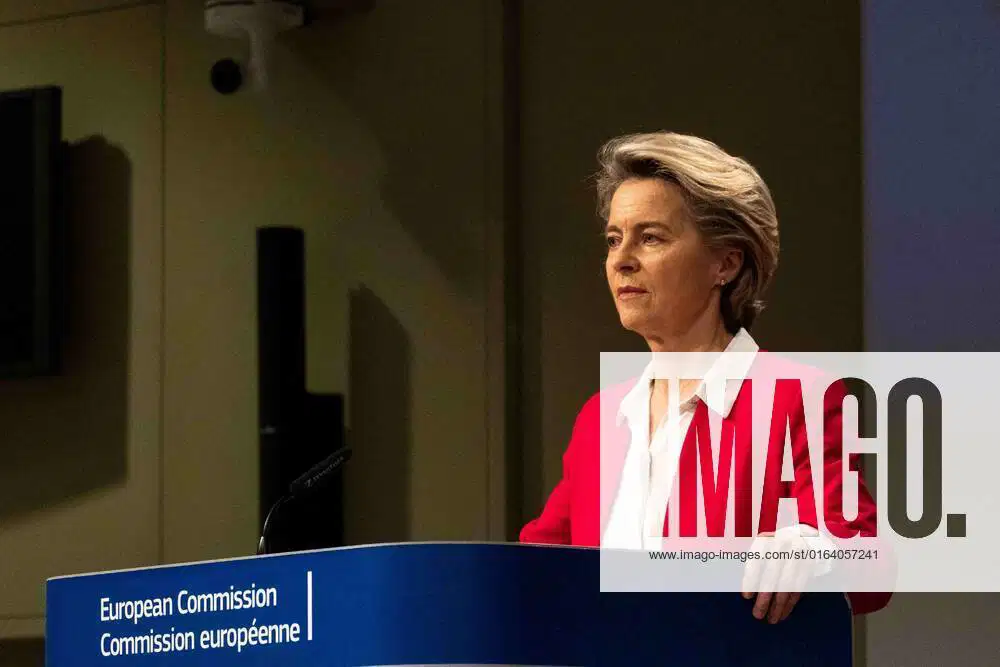
European Commission President Ursula von der Leyen confirmed during a press conference in Berlin that it is premature to ease the sanctions imposed on Iran. She explained that these sanctions were enacted due to the repression exercised by the Iranian regime against its people, making it essential to see fundamental changes before contemplating their lifting.
Von der Leyen pointed out that sanctions are not an end in themselves but rather a tool to pressure the Iranian regime to improve its behavior regarding human rights. In this context, she affirmed that the European Union is closely monitoring the situation in Iran, and any decision regarding sanctions will depend on genuine changes in the policies of the Iranian government.
Details of the Event
Von der Leyen's statements came at a time when international pressure on Iran is increasing due to human rights violations, especially following the widespread protests that have occurred in the country in recent years. Many European countries have expressed concern over the continued repression, leading to additional sanctions on Iranian figures and institutions.
The Commission President also confirmed that the EU is committed to supporting the Iranian people in their quest for freedom and democracy, noting that the sanctions aim to change the regime's behavior rather than punish the people.
Background & Context
The roots of the sanctions imposed on Iran date back several years, beginning with the Iranian nuclear program that raised concerns in the international community. Over time, the sanctions expanded to include areas of human rights, particularly after the protests that erupted in 2019 against the government.
These sanctions are part of a broader strategy aimed at pressuring Iran to change its policies, both in the nuclear field and in human rights. Relations between Iran and the EU have seen increasing tensions as a result of these policies.
Impact & Consequences
Von der Leyen's remarks underscore the EU's firm stance towards Iran, which may affect future relations between the two parties. The sanctions are likely to continue impacting the Iranian economy, increasing pressure on the government.
Moreover, the continuation of sanctions could exacerbate humanitarian conditions in Iran, raising international concerns regarding human rights. At the same time, Iran may seek to strengthen its relations with non-European countries to mitigate the effects of these sanctions.
Regional Significance
The sanctions imposed on Iran are a sensitive topic in the Arab region, affecting relations between Arab states and Iran. Many Arab countries are concerned about Iranian influence in the region, prompting them to support the continuation of international pressure on Tehran.
These sanctions could enhance cooperation between Arab states and the West, especially in security and defense areas. Additionally, the situation in Iran may impact stability in neighboring countries, necessitating close monitoring by Arab states.
In conclusion, the sanctions imposed on Iran remain an important tool in the hands of the international community to pressure the Iranian regime, but their impact on the Iranian people and regional stability requires deep consideration on how to address this issue.